A window that works perfectly in mild Southern California can be a liability on a Chicago winter morning. Cracks in the seal allow cold air in, poorly fit glass creates condensation problems.
Incorrectly sized frames bend against the pressure of high-rise winds. These are not uncommon instances. They are exactly just how homeowners and builders choose windows without taking into account the areas they reside.
Requirements vary with different living situations, and there are performance priorities that differ from one to another. This guide will help you understand the particularities of awning windows, the impact of your surroundings on your needs and how to coordinate the perfect fit with your home.
What Is an Awning Window?
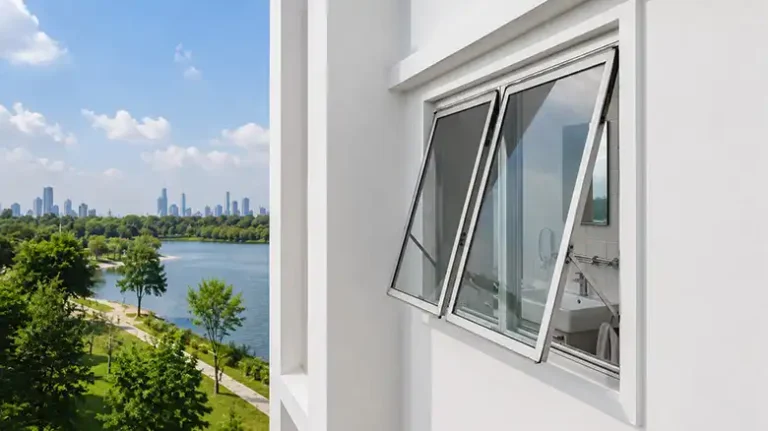
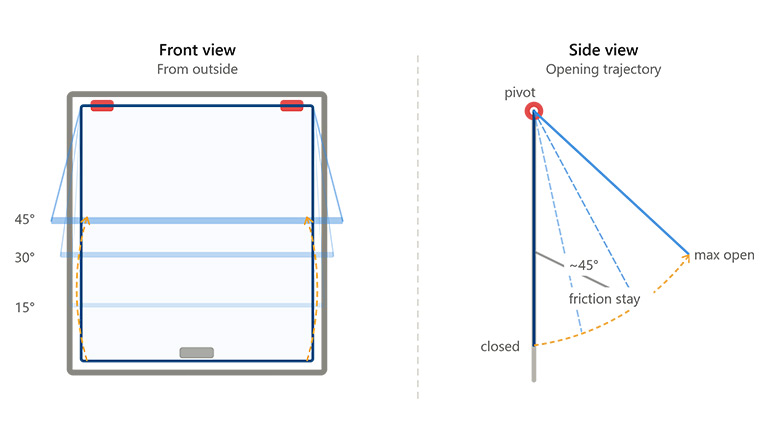
An awning window is a window that is pivoted toward the outside at the bottom, and at the top is pivoted toward the interior. This rain guarding panel is angled upwards and water glides off the glass and does not drip within. It vents any water safely, preventing water damage even during light rain.
One design difference between the awning windows and the casement windows is that the awning windows open up like a fan. The superior top hinge operation resists wind pressure from opening the sash. Instead of driving it against the seal, it helps to increase the sash’s energy efficiency and weatherproofing when closed.
At a glance the key advantages:
- Allows airflow while keeping rainwater out.
- High air tightness (low air infiltration)
- Easy installation—over counter tops, in bathrooms or in tandem under fixed windows.
- More secure as the locking system is resistant to outside forced entry.
How Your Living Environment Shapes Window Selection
1. Climate
Your window will have to do a lot of work on a daily basis, depending on the climate. The three axes of performance are rain resistance, wind resistance and thermal insulation – and each one of them will be more important for you than another, depending on the climate you live in.
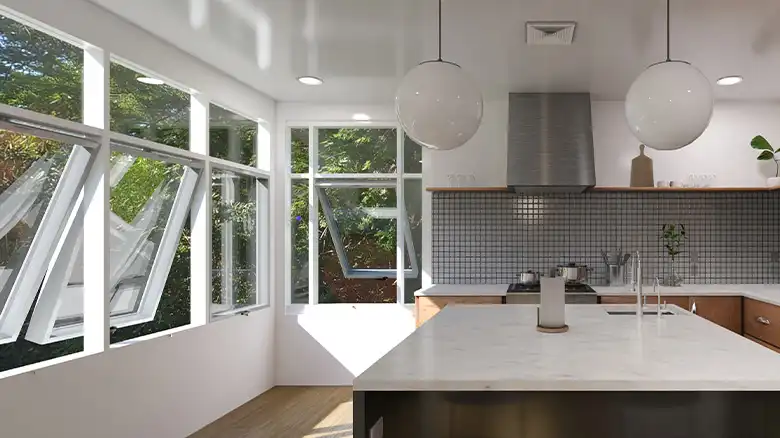
A window designed for a rainy Pacific Northwest is built quite differently than one in Minnesota to prepare for winter. Making a selection without taking climate into account only comes to light when the selection is made up in the draft, by water stains or by sky-high energy bills after installation.
2. Building Type
Operational requirements, code compliance and wind pressure exposure varies with building type. The higher the window goes, the greater the force of the wind against it will be, so a window that protects the ground floor may not perform well on the 15th floor.
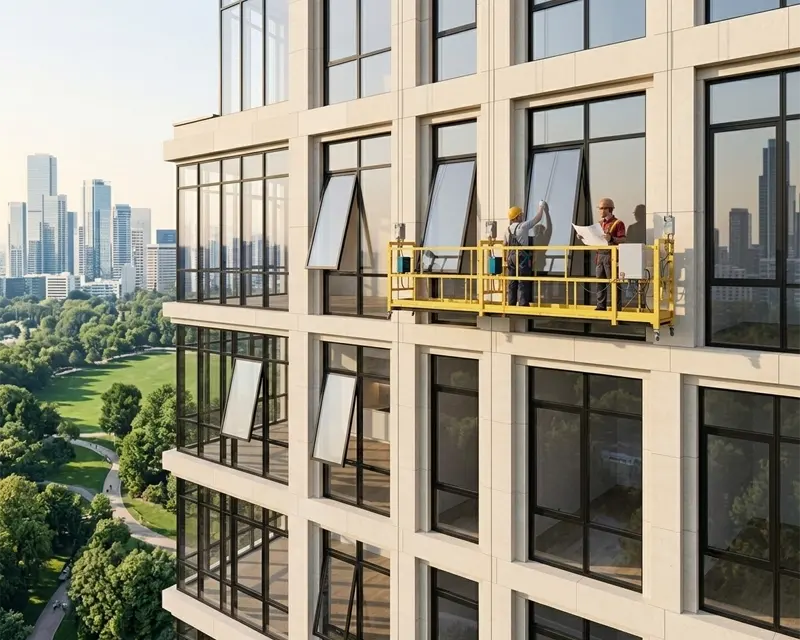
Local codes may have minimum performance requirements for commercial buildings. For the purposes of a house for a craftsman cottage and a three-story townhouse, the need for structure is different and a common, and avoidable, error is selecting the same window for both.
3. Usage Space
Awning windows are not standard windows that are in the main window sill in a room. They are problem-solvers in specific problem areas in specific places:
- Kitchen: Exhausts heat and steam from cooking above the counter, but does not obstruct the workspace or rain in the kitchen.
- Bathroom: High on the wall, allows enough breath room, while privacy is still maintained as it is not on the street level.
- Basement: Close to the ceiling – fresh air in and water and debris out.
- Bedroom: Serves as an additional ventilation window – particularly in warm climates.
AWning Window solutions for different environments
1. Rainy regions
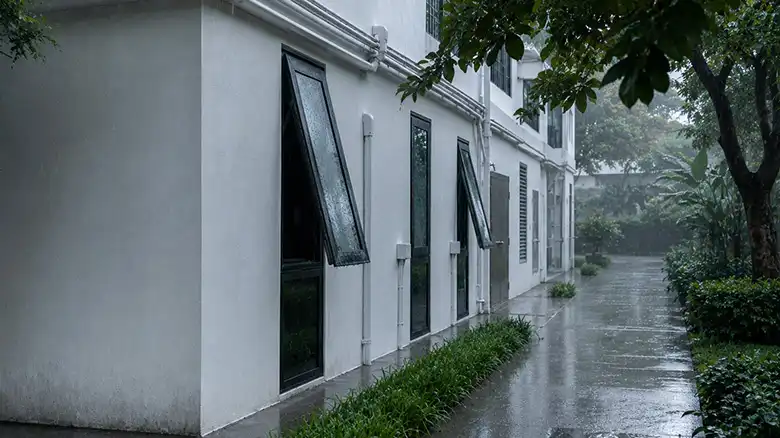
Where there is high rainfall (Pacific Northwest, Gulf Coast), the real issue is ventilation resistance. Many windows have to make a compromise—open them up, and let in the water, or close them and miss out on fresh air. This is solved by using awning windows.
In rainy climates, consider aluminum thermal break frames that do not warp or swell in extended wet conditions, more than one drainage channel in the sill area and high quality EPDM sealing strips that will not lose their flexibility with seasonal cycling. All three are part of SUMMIT’s thermal break aluminum awning windows.
Request a quote at summitdw.com
to find the right waterproof configuration for your project.
2. High-Rise and High-Wind Areas
Wind loading is a major consideration in the hurricane belt in Florida, coastal Texas, or if there is a high-rise, on the upper floors. The frame might buckle, seals might leak, and hardware may be hard to use under prolonged wind gusts.
The awning window is especially suited here: the sash doesn’t open or fall away from the seal, but is pushed against it by the wind; and once latched, the compression closure is very predictable and tight.
Ensure that the frames are of high strength and rated to withstand higher wind loads, equipped with multi-point locking mechanism, and professionally installed, fixed into the structural opening. Heavy duty hardware designed for demanding conditions and detailed installation instructions to ensure that contractors can install with peace of mind.
3. Cold Regions
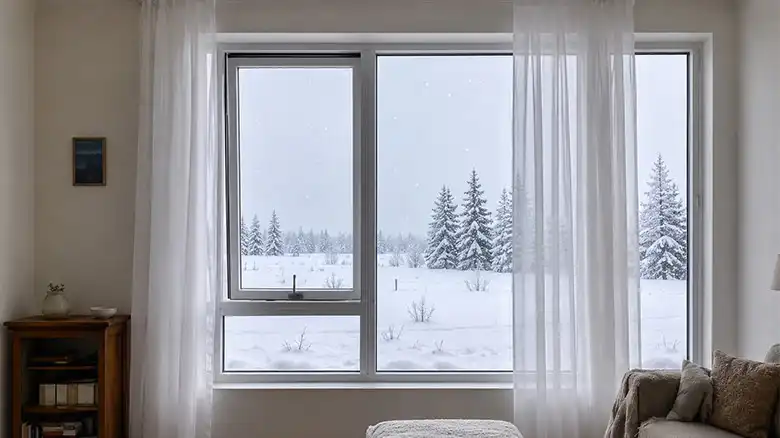
Windows are a large portion of the heating energy consumed in residences. In cold climates, the effects are very apparent: cold drafts around the frame; condensation on the glass; rooms that remain cold no matter how high the thermostat is set.
In cold climates, awning windows are effective at preventing air leakage through the window so they work better than sliding windows.
The right combination is key: a thermal break frame will help keep condensation from forming on the inside profile, double pane insulated glass units will keep the heat from escaping through the glass as it is filled with a layer of argon gas, and Low E coatings will help to reflect heat back into the room during the winter months.
All SUMMIT window and door products are ENERGY STAR certified – are the best indicator for cold climate projects.
Buying Guide for Awning Windows
1. Material
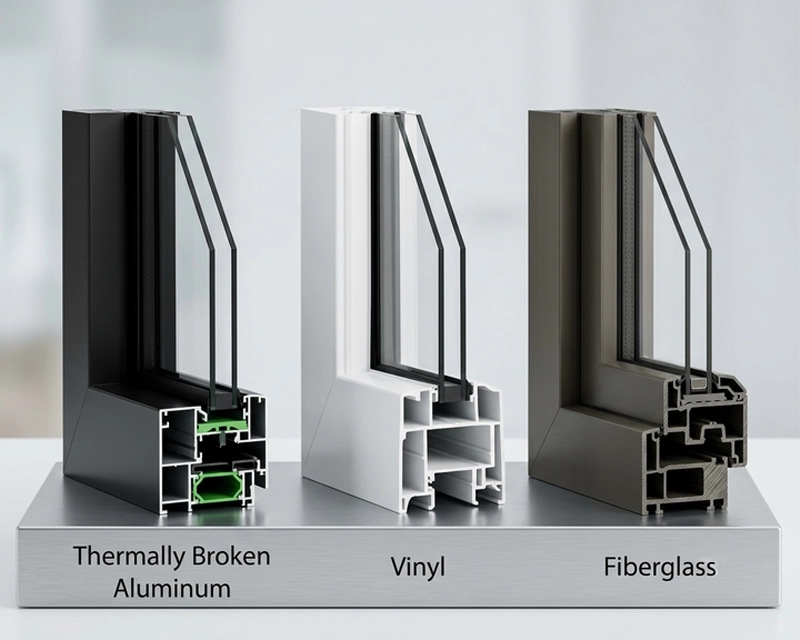
Thermally broken aluminum is the preferred option for many projects in the United States – it is low maintenance, easy to maintain, stable in size, corrosion resistant and comes in custom colors.
Vinyl is less expensive and is fine for moderate climates, but may swell and shrink in extreme heat and cold. Fiberglass has the highest insulation and stability, but is more expensive, and less readily available.
2. Glass Configuration
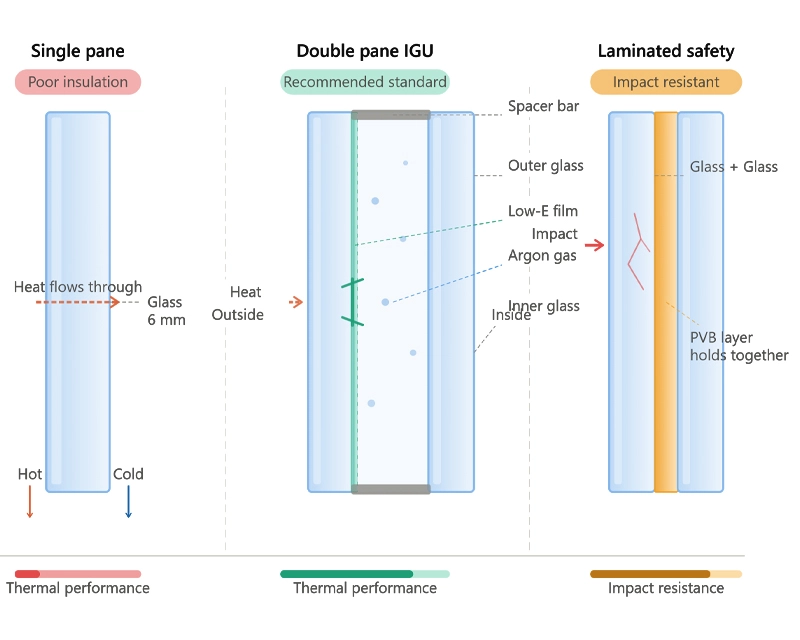
The covers with glass have the largest surface area, therefore, they also have the greatest contribution to thermal performance. Single pane glass is very poorly insulated and is not suggested for colder climates with a large temperature swing.
The home standard is double pane insulated glass units (IGUs) – two panes with an argon gas in between. Install a Low-E film for use in cold or hot climates to help improve energy efficiency.
In areas prone to typhoons, the use of laminated safety glass can enhance impact resistance; this applies even if the location is not coastal or subject to high pedestrian traffic.
3. Manufacturer
The only way that specs for material and glass are important is if it is a consistent quality control from the manufacturer. When considering suppliers, consider: Third party certifications (ENERGY STAR, CSA, CE); customisation for non-standard dimensions and colors; after sales responsiveness.
Based in Los Angeles, California, SUMMIT Windows and Doors fulfills all three criteria. They come with ENERGY STAR, CSA and CE certifications and are custom sized and available in various finishes for your awning windows.
SUPPORT: With a dedicated team to care for you and shipping next day on in-stock products, SUMMIT is built for builders and developers who value reliability without long lead times.
Frequently Asked Questions
Yes, they are one of the best options. The top-hinged panel provides a natural rain deflector, ensuring airflow even in light rain. Quality EPDM seals and well-drained frames round it off.
It works very well if properly set up. The compression seal is more effective at keeping air out than sliding windows. For best performance in cold conditions, combine with a thermal break frame and double pane Low-E windows.
Yes. The top hinge design allows wind pressure to help the sash seal itself. For high rise or stormy applications, seek frames rated for a higher wind load and multiple locking points.
Thermally broken aluminum. It is not affected by moisture in any way, such as swelling, warping, or corrosion; and will not require any maintenance over time.
It indicates that the product was tested and verified by an independent agency to meet the energy efficiency requirements of the U.S. EPA for a designated climate zone—the strongest indicator of energy efficiency performance that is available.
Conclusion
The key questions when deciding on what kind of awning window to get are: What type of environment do you live in? What kind of building is it that you are working on? And what is the particular room required? When you match the answer with the right frame material, glass configuration, and hardware, the window will last for decades.
If you’re ready to move forward or still working through the options, request a quote from SUMMIT Windows and Doors. We can match a certified, high-quality customizable awning window to your environment without a second thought.