Selecting the appropriate door can appear quite easy. However, since there are many types of doors, selecting the appropriate one can actually become a daunting task for most consumers who concentrate more on how the doors look than functionality, space, insulating and longevity.
For this reason, they can later run into various troubles related to these factors. The issues might include poor ventilation, unnecessary loss of space, and doors that are inconvenient for daily use.
Every type of door is made for different purpose. There are five types of doors named as casement doors, sliding doors, folding doors, lift-and-slide doors, and pivot doors, each with its own uniqueness. There are also certain disadvantages associated with these doors.
Information about them can easily be found. It can be rather hard to find comparative information on the above-mentioned types of doors.
This guide describes the key features of each type of door, their pros and cons, price, and intended usage.
Casement Doors
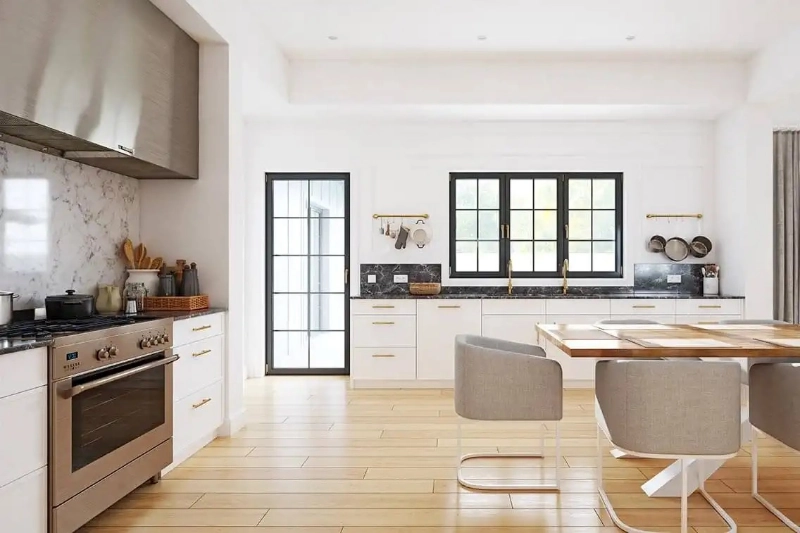
Casement doors are one of the oldest and most widely used door systems. They are attached to the frame with side hinges and open both ways inward as well as outward. Their simple design makes them a practical and first choice for many homes and commercial properties. These doors are available in materials such as aluminum, wood, steel, uPVC, and composite materials.
Advantages
- Strong and durable design
- Fewer moving parts than many other door systems
- Good thermal insulation and weather sealing
- Allows the entire doorway to open
- Easy to operate
- Requires little maintenance
- Suitable for both modern and traditional buildings
Disadvantages
- Needs enough space for the door to swing open
- Large panels can become heavy
- Not ideal for tight spaces
Applications and Cost
Casement doors can be used as front doorways, balcony doors, patio doors, and indoor doors. Aluminum is the choice of many people due to their strength, whereas wood is used for its beauty. uPVC is one type of casement door that most cost-effective people use.Their price may vary from $200 to $2,000 and above.
Sliding Doors
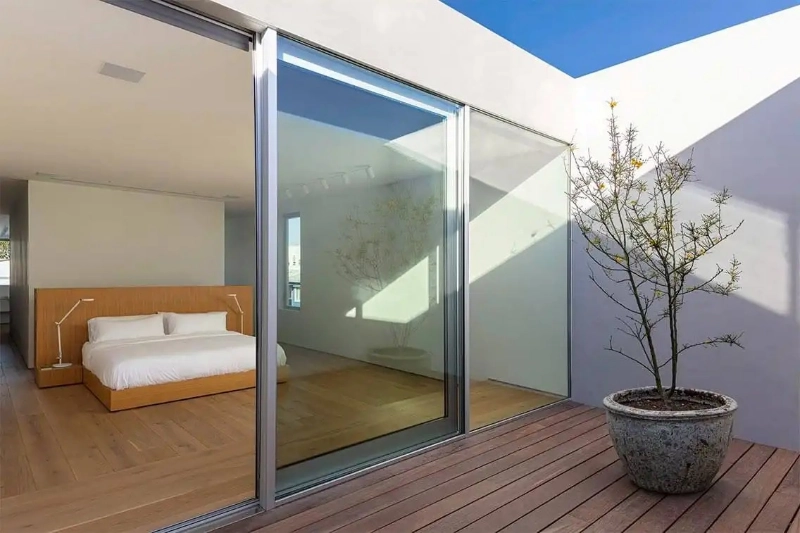
The sliding doors are opened by moving them in a horizontal direction in relation to the guide rails. Due to their design and compactness, they are widely used in contemporary houses and apartments. Sliding doors can be made of aluminum, glass, wood, uPVC, and composite materials.
Advantages
- Space-saving both indoors and outdoors
- Allows more natural light to come in via glass panels
- Gives the impression of cleanliness and modernity
- Can be easily accessed from a patio or balcony
- Good match for energy-efficient windows
- Uninterrupted view of outdoors possible
Disadvantages
- Tracks require frequent cleaning
- A portion of the door opening cannot be utilized at one time
- Reduction in sound insulation due to seal breakdown
- Expensive repairs due to damaged rollers
Applications and Cost
Sliding doors are often found in living rooms, kitchen areas, balconies, patios, and gardens. Aluminum framed sliding doors are especially preferred because they have high strength and can hold bigger glass panels. The cost varies between $500 and $5,000 or even more.
Folding Doors
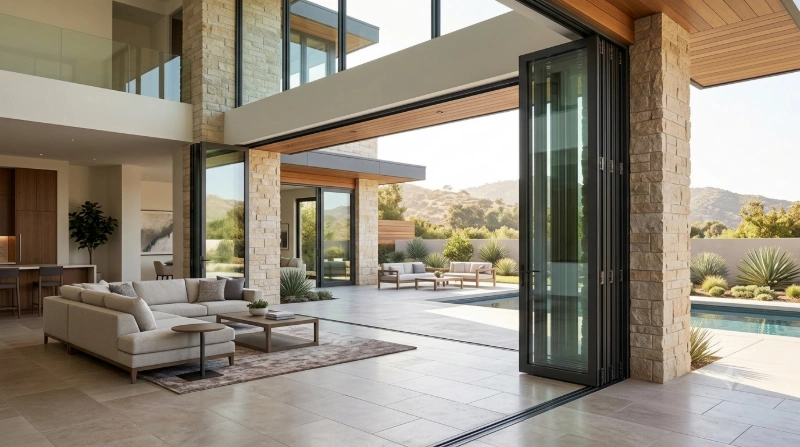
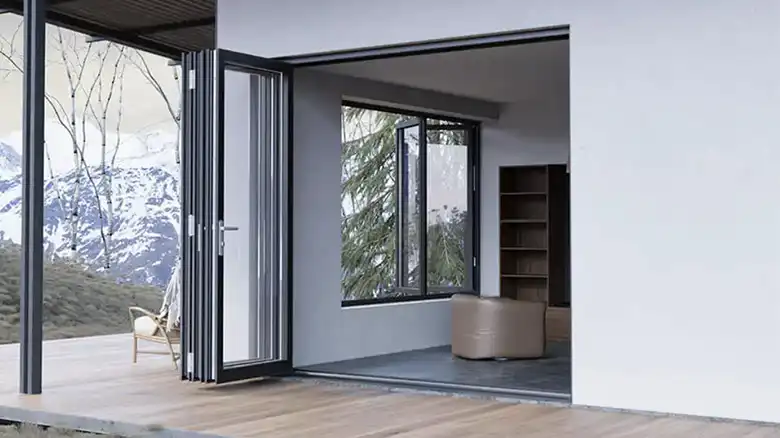
Folding door system comprises of a series of panels joined together and which folds up on one side after opening, thereby forming a large entrance to join both the interior and exterior environments. These can be made from a variety of materials including aluminum, wood, uPVC, and composite materials.
Advantages
- Facilitates seamless indoor-outdoor connection
- Increases natural light
- Promotes better ventilation
- Allows large spaces to open up
- Provides a luxury appearance to a house
- May lead to more living area
Disadvantages
- Need for maintenance more than other types of doors
- Many hinges and tracks that require maintenance
- Higher installation cost
- Complex repairs required
Applications and Cost
Aluminum is by far the most common material for folding doors, priced between $1,500 and $6,000 depending on width and panel count. Thermally broken aluminum systems typically start at $3,000.
Lift-and-Slide Doors
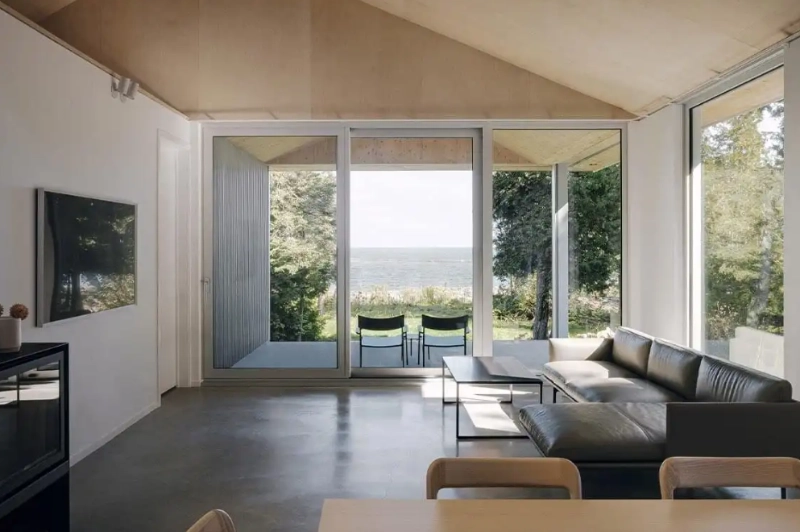
The Lift and Slide Doors form an advance form of the conventional sliding doors. The lift and slide doors have a feature where the door will lift before gliding on the track.
Advantages
- Superb air and water seals
- Greater noise insulator
- Runs smoothly even with large glass doors
- Suitable for large openings
- Good for designing energy-saving buildings
- Better lock systems provide greater security
Disadvantages
- More expensive to install
- Installation by professionals only
- Needs special maintenance
- Repairs could be costly
Applications and Cost
This door is mainly used in high-end buildings or any type of buildings that have access to beaches. This is due to the fact that aluminum and aluminum-timber systems are commonly used because of their energy-saving property.The cost of such doors ranges anywhere between $2,500 and $15,000.
Pivot Doors
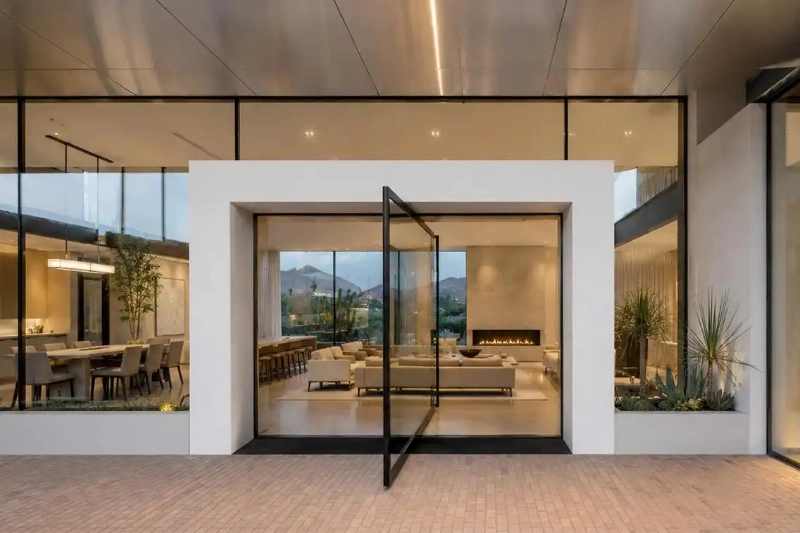
Pivot doors use pivot mechanism rather than hinges on either side of the doors. These doors pivot around pivot points which are present at the top and bottom of the door.
Advantages
- Provides uniqueness and opulence
- Good for large doors
- Moves smoothly and gracefully
- Improves architectural beauty
- Increases the value of the property
- Has good visual effect
Disadvantages
- Needs more installation space
- More costly than ordinary doors
- Needs special maintenance of hardware
- Not good for small properties
Applications and Cost
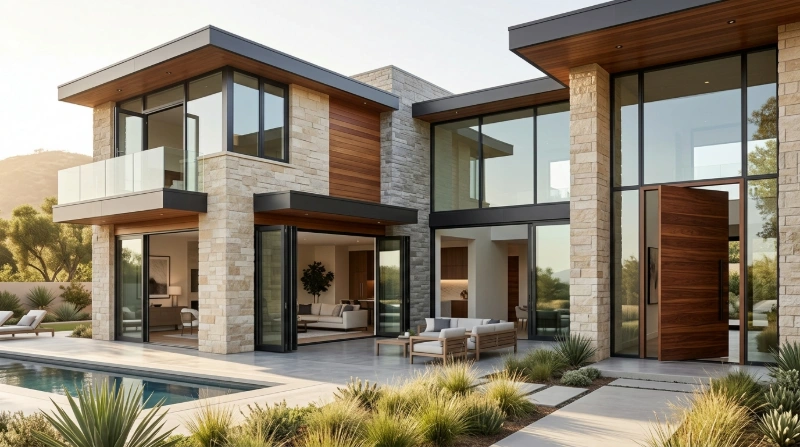
The pivot doors are mostly used in luxury homes, villas, hotels, and commercial buildings. The pivot doors are used when one wants to make an impressive statement. The cost ranges from $3,000 to $20,000 or more.
Quick Comparison Table
The table provided below gives a side-by-side comparison of the most popular door systems that would allow you to easily compare their features, suitable applications, pros, and typical prices.
| Door Type | Opening Method | Main Advantage | Consideration | Materials | Price Range |
|---|---|---|---|---|---|
| Casement Doors | Opens inward or outward on side-mounted hinges | Reliable & Weather Tight | Requires Swing Space | Aluminum, Wood, uPVC | $200–$2,000+ |
| Sliding Doors | Moves sideways along a track system | Space Saving | Partial Opening | Aluminum, Glass, uPVC | $500–$5,000+ |
| Folding Doors | Multiple panels fold and stack to one side | Maximum Opening | More Maintenance | Aluminum, Wood, Composite | $1,500–$10,000+ |
| Lift-and-Slide Doors | Panel lifts slightly before sliding along the track | Best Insulation | Higher Cost | Aluminum, Composite Systems | $2,500–$15,000+ |
| Pivot Doors | Rotates around a pivot point instead of side hinges | Luxury Design | Requires Large Space | Aluminum, Steel, Wood, Glass | $3,000–$20,000+ |
Quickly Identify Your Needs
Before choosing a door, identify where it will be installed and the performance features that matter most, as different spaces and environments require different door solutions.
What Type of Space Is Yours?
The selection process of different kinds of doors will become much more obvious once you consider the room where the door is going to be used.
Each room is unique in terms of the functions that it serves, and therefore the door that is best suited to one room may not work well in another room.
- Room: Consider factors such as sound proofing, privacy, and movement. Casement doors are suggested.
- Kitchen:Sealing, cleaning, and smell-proofing are some of the factors to consider. Sliding doors are suitable in spacious and compact rooms.
- Bathroom: pick moisture-resistant and private doors.
- Balcony/Patio:Use your door for maximum lightness and panoramic views. Use sliding, folding, or lift and slide doors.
- Living Room:looking for large openings and aesthetic design. Folding and lift and slide doors make room airy and elegant looking.
- Entrance/Villas:focus on security and longevity of the door. The best choice would be pivot doors.
What Is Your Living Environment?
When deciding which type of door to install, avoid concentrating solely on the room location. The climatic and living conditions will play an equal part since they have a direct impact on the door’s longevity, performance, and maintenance needs.
- Florida, USA: Hurricanes, rain, moisture, and harsh sunlight mean that hurricane-proof casement doors or heavy sliding doors should be chosen, as well as doors with good wind load performance.
- Canada: Winters, temperature differences, and heating will make lift-and-slide doors or energy efficient sliding doors with Energy Star, NFRC, and CSA standards a good choice.
- High Rise Buildings:Wind pressure and street noise will make lift-and-slide doors ideal due to better seal ability and acoustic insulation.
- Coastal Locations:Salt and moisture call for durable aluminium doors.
- Urban Places: Soundproofing and casement/lift-and-slide doors should be used.
Thus, making sure to choose a suitable door system based on your environment, you can avoid additional costs.
FAQs
The lift-and-slide doors have an efficient soundproofing system thanks to their tight seal. Casement doors can be considered if one has a tight budget.
Indeed, if one desires to have an expansive patio or living space. But they are costly and hard to maintain; therefore, they should be selected based on their added values.
Yes, since the former doors give better sealing and insulation than the latter.
The bottom line
Picking the right door is all about determining what’s most important to you in terms of style, function, energy efficiency, and space. For dependable performance day to day, consider a casement door. For maximum natural light, there’s no better choice than a sliding door. Folding doors make indoor/outdoor living a breeze.
Looking for a stylish door to meet your requirements? SUMMIT has the perfect solution for you.
Contact SUMMIT and receive a professional opinion on your choice without any scores.