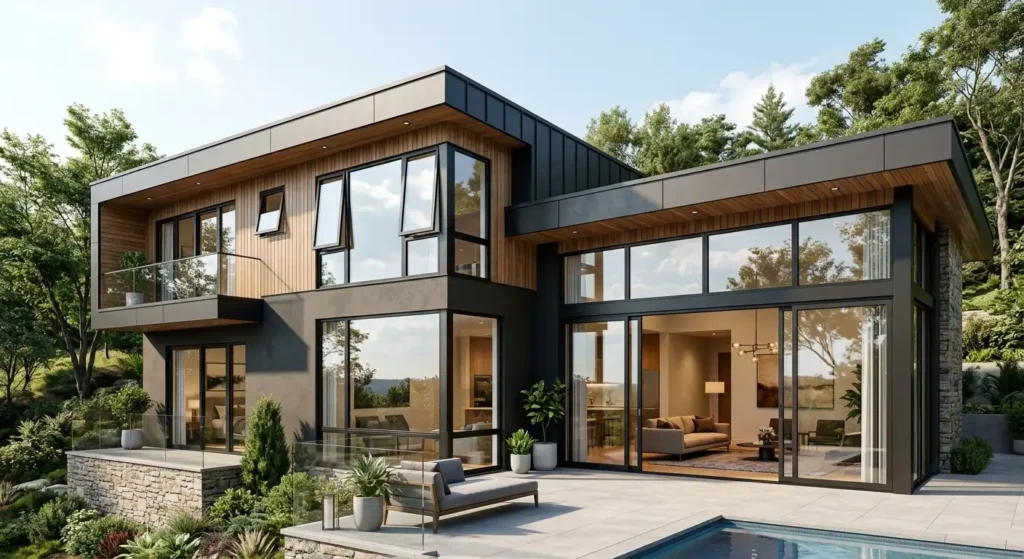
Here’s a confession from people who sell windows for a living: most homeowners walk into our showroom not knowing what a casement is. And honestly? That’s completely normal. Nobody sits around memorizing window styles.
Chances are that you rarely consider your windows except for two instances in your life: when a window breaks or during a renovation.
At times like this, you find yourself in a window showroom being presented with various options such as single-hung windows or awning windows; it may, on the other hand, make you think about whether casement refers to the frame around the window or the window itself.
So let’s fix that. This guide walks through the different types of residential windows one at a time — what each one does well, where it falls short, and which rooms it actually belongs in. No jargon without an explanation, promise.
The Basic Components of Windows
Quick vocabulary lesson first, because the rest of this guide makes way more sense once you know four or five terms. Bear with me — it takes two minutes.
The frame is the outer border that holds everything together. The top piece is the head, sides are the jambs, bottom is the sill.
Inside the frame sits the sash. That’s the part holding the glass, and it’s the part that moves — or doesn’t, depending on the style.
The glass itself is called glazing, and these days almost everything worth buying is double-glazed: two panes with an insulating gas layer sandwiched between them. That gap does more for your energy bill than you’d expect as it is an energy-efficient window.
Then there’s the small stuff that turns out not to be small at all. Weatherstripping seals the gaps. Hardware — the cranks, locks, and hinges — decides whether your window still opens smoothly in ten years or it needs window replacement.
Single-Hung Windows
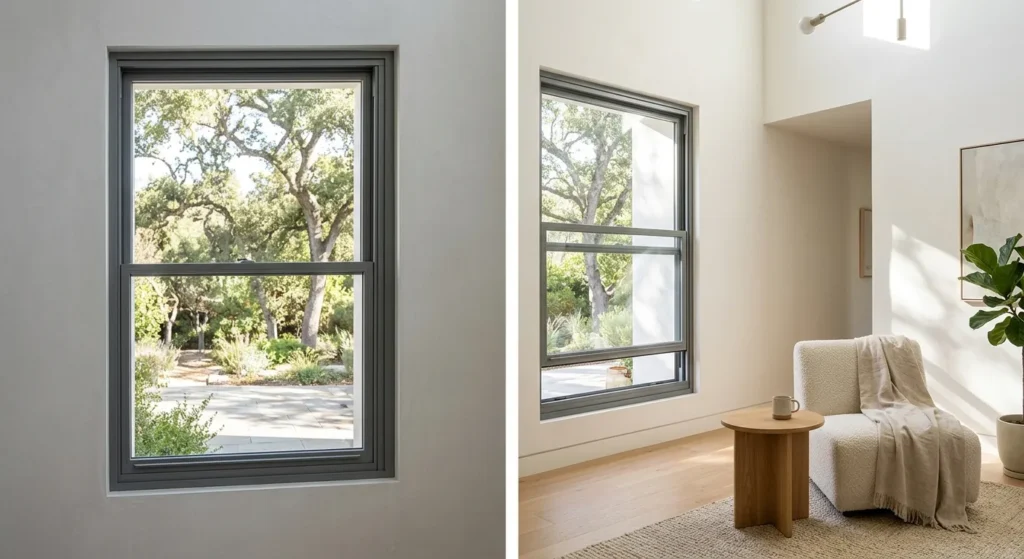
Single-hung windows are something that you are likely to recall from your childhood experience. Two glass parts situated one above the other, with only the lower one that moves. Simply push it to have fresh air or pull it down when your neighbor starts to mow his lawn early in the morning.
Why do builders love them? Money, mostly — but in a good way. One moving sash means fewer parts to manufacture and fewer seals that can wear out, so single-hungs usually cost less than any other window that opens. The fixed top sash is also one less spot for drafts to sneak through.
Still, for bedrooms, hallways, and any project where the budget is doing heavy lifting, they’re hard to argue with. SUMMIT’s aluminum single hung windows keep the classic look but ditch the chunky frames — slim profiles, more glass, less maintenance.
Double-Hung Windows
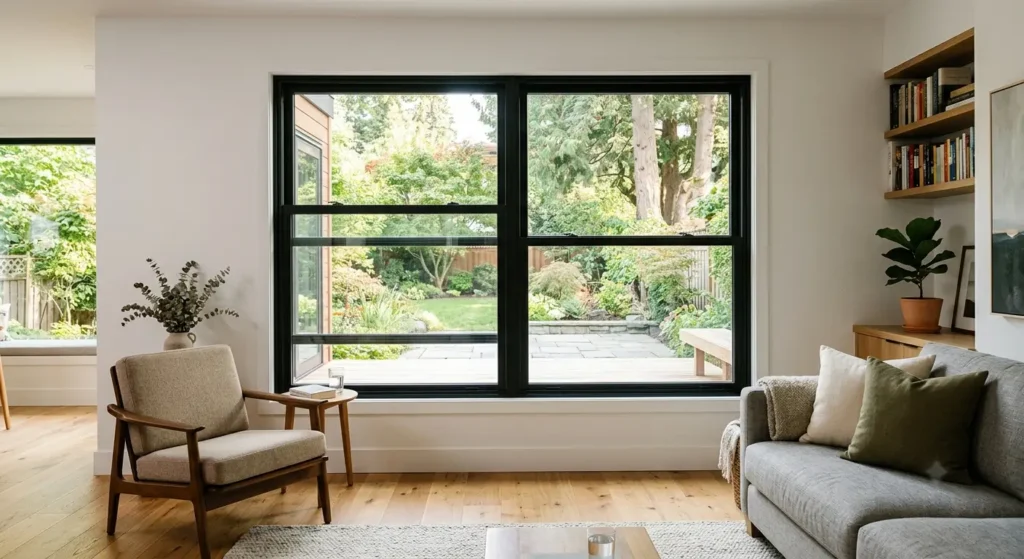
At first glance, a double-hung looks identical to a single-hung window. Same stacked sashes, same silhouette. The difference hides in the top sash: on double-hung windows, both sashes slide.
One small change, several nice payoffs. Crack the top sash and the bottom sash at the same time, and physics does the rest — warm air drifts out the top while cooler air slips in below.
Got young kids? Open only the top and the room gets fresh air while the reachable half stays locked. And most modern double-hungs tilt inward, which means you can wash both sides of the glass while standing in your living room in your socks.
Casement Windows
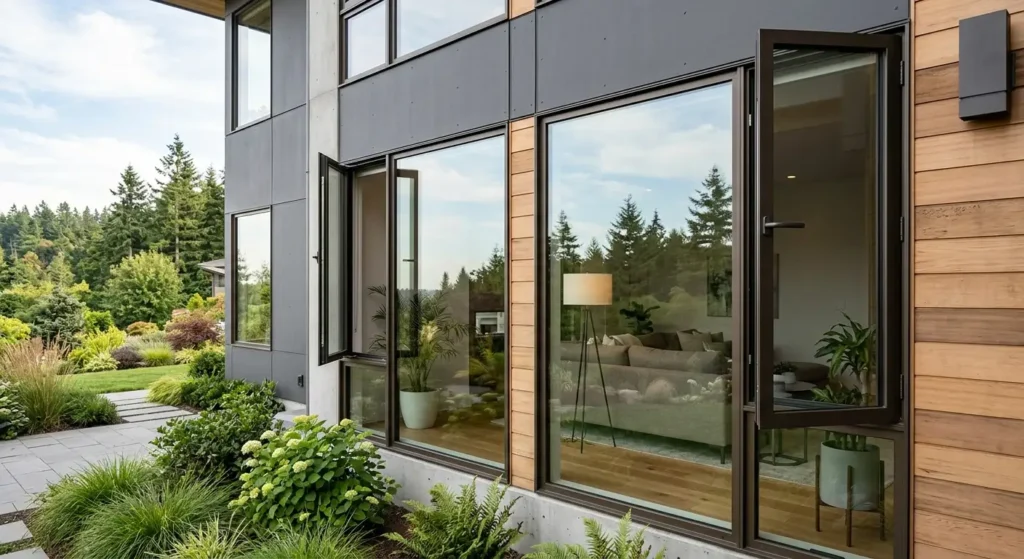
Every month “what is a casement window?” is searched by thousands of individuals, which means you are not alone. The definition is quite basic: a type of window that is hinged from one side and opens outwards like a small door, operated by turning a crank.
The difference between a hung window in which one of the glass parts is sliding and a casement window which moves by pivoting. That’s it. Mystery solved.
Why do people love them? Two reasons, and they’re both good ones.
First, ventilation. A casement opens the entire sash — not half, all of it. Better yet, angle one into a breeze and the open sash works like a scoop, catching air that would’ve slid right past a sliding window and funneling it into the room.
Second, the seal. Crank a casement closed and the sash presses flat against the frame. When wind hits the house, it actually pushes the window tighter shut. That’s why casements keep showing up at the top of energy-efficiency comparisons, year after year.
Because the sash swings outward, think about what’s out there before you commit. A casement opening onto a walkway or a patio becomes something people walk into. (Ask me how I know.)
And since the hinges and crank carry the full weight of the sash, hardware quality isn’t a detail — it’s the whole ballgame. SUMMIT builds its casement windows with reinforced aluminum frames and heavy-duty hardware for exactly that reason.
Awning Windows
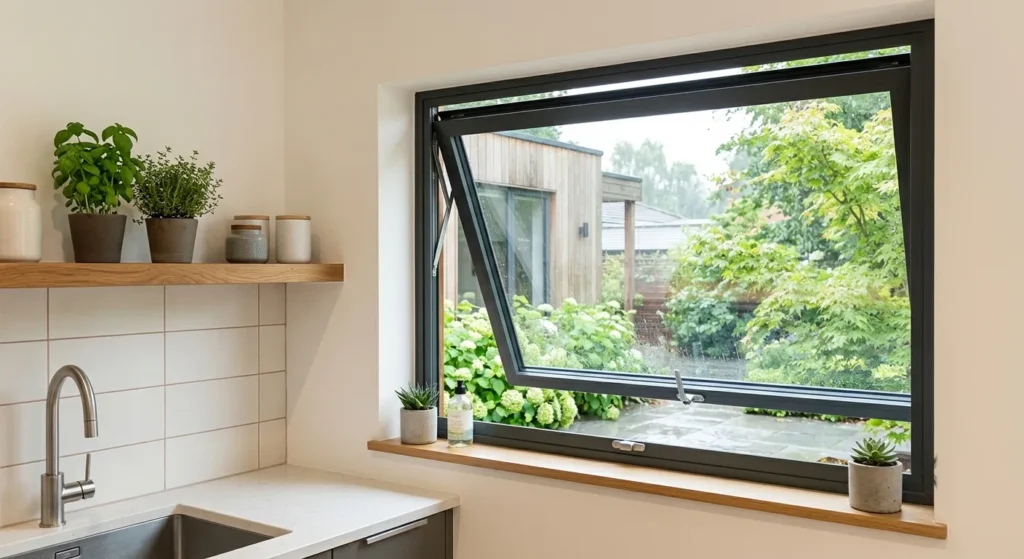
Picture a casement, rotate it sideways, and move the hinge to the top. Now it swings out from the bottom, and the open sash forms a little glass roof over the opening. That’s an awning window, and the name suddenly makes sense.
That glass roof is the entire sales pitch — and it’s a good one. Rain hits the tilted pane and rolls off away from the opening, which means you can leave an awning window open during a storm. If you’ve never fallen asleep to rain with a window open and no wet floor in the morning, you’re missing out.
They’re the natural pick for bathrooms, basements, and above kitchen sinks — anywhere you want air plus privacy. Designers also love mounting them high on a wall or stacking them under big fixed panes. Have a look at SUMMIT’s awning windows — small windows, surprisingly big presence.
Folding Windows
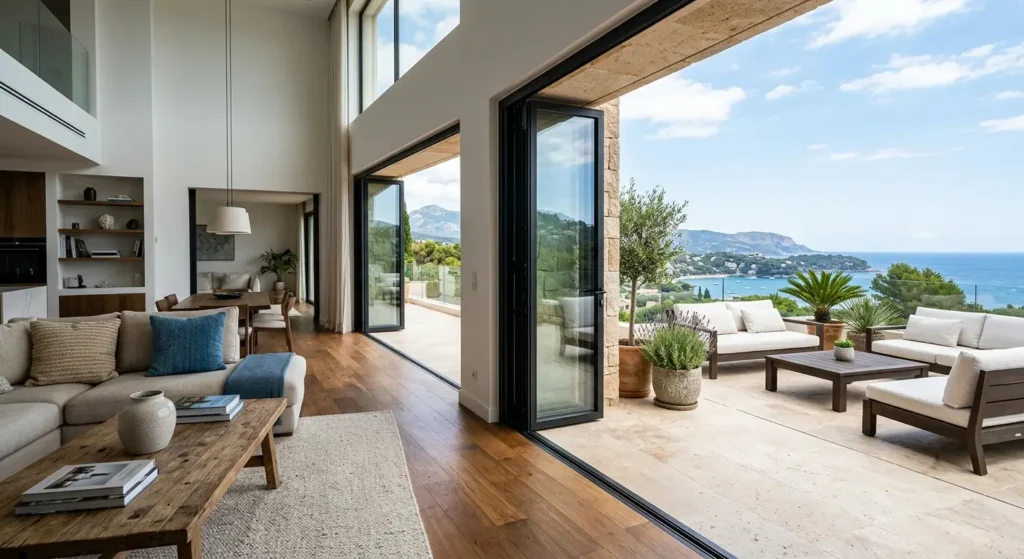
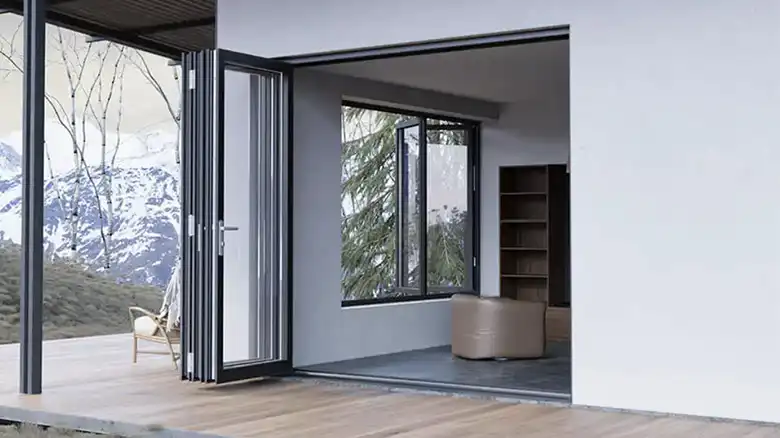
Now for the showstopper. Folding windows — you’ll also hear “bifold” — are several glass panels hinged together on a track. Push, and they fold against each other like an accordion until nearly the whole wall opening is just… gone.
Nothing else on this list changes a space like this. Put one over a kitchen counter facing the patio and you’ve built yourself a pass-through bar. Run one along a living room wall and on a nice evening the line between inside and outside simply stops existing.
In a climate like California’s, where “a nice evening” describes most of the year, they make an awfully strong case for themselves. SUMMIT’s bifold windows run on smooth-rolling tracks with sturdy aluminum frames built to stay effortless for years.
Fixed Windows
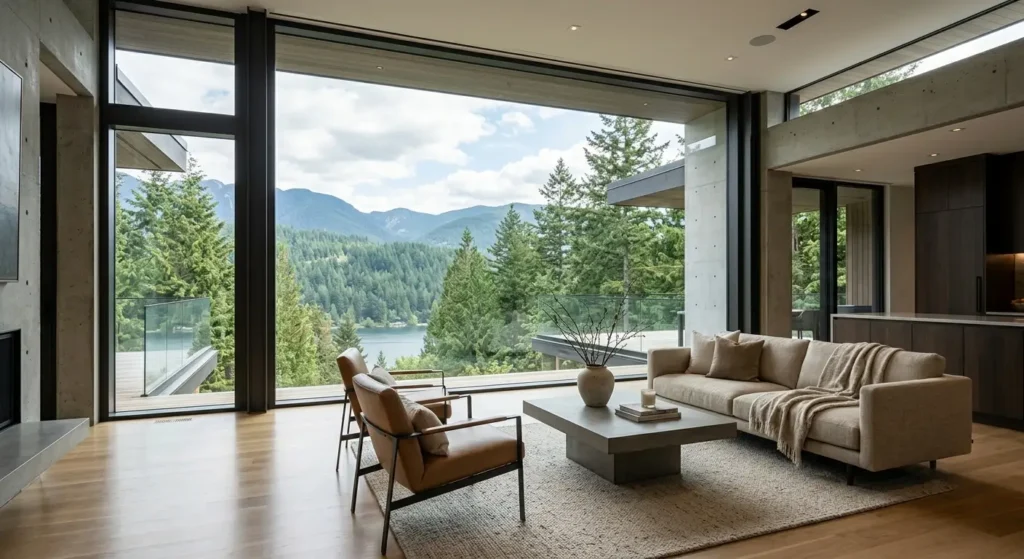
Fixed windows don’t open. Ever. And weirdly, that’s their superpower.
No sash, no hinges, no crank — so there’s nothing to leak, nothing to rattle, nothing to break. You get the tightest seal of any window type, the lowest price per square foot of glass, and maintenance that consists entirely of washing it occasionally.
Use them where the job is light and views rather than airflow: stairwells, gables, that high strip of wall above the sofa, or as a big picture window framing something worth framing.
The classic move is pairing them with operable units — one large fixed pane flanked by two casements gives you the panorama and the cross-breeze.
One obvious warning, stated anyway: a room with only fixed windows needs to get its fresh air from somewhere else.
Bay Windows
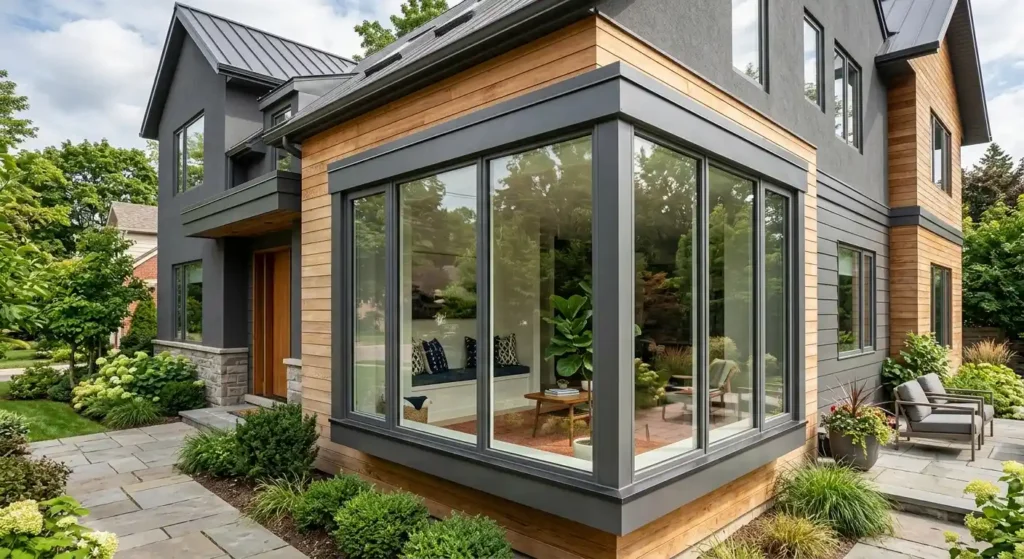
Bay windows are less a window type and more a small piece of architecture. They project out from the wall — typically one big center window plus two angled side windows — and they’re assembled from the styles you’ve already met. Fixed pane in the middle, usually, with casements or hung windows on the flanks.
What do you get for the extra complexity? Quite a lot. A ledge deep enough for a reading nook or a window seat. Light entering from three directions instead of one. And serious curb appeal — real estate listings name-drop bay windows for a reason.
The honest downside: this is the most involved installation on the list. There’s structural support to consider, flashing, sometimes a miniature roof. It’s not a weekend job, and it’s definitely not the project to hand to the lowest bidder. Ask your installer how many they’ve done. If they hesitate, keep looking.
Quick Comparison: Which Window Fits Where
Reading seven styles back to back is a lot to hold in your head at once, so here’s the cheat sheet — the version you’d actually screenshot or hand to a contractor.
| Window Type | Energy Efficiency | Maintenance | Best For | Price Range |
|---|---|---|---|---|
| Single-Hung | Good | Low | Bedrooms, hallways, tight budgets | $ |
| Double-Hung | Good | Moderate | Kids' rooms, anywhere you want top-down airflow | $$ |
| Casement | Excellent | Moderate | Kitchens, sinks, hard-to-reach spots | $$ |
| Awning | Excellent | Low-Moderate | Bathrooms, basements, rainy climates | $$ |
| Folding/Bifold | Moderate | Higher | Patios, kitchen pass-throughs, indoor-outdoor living | $$$$ |
| Fixed | Best in class | Lowest | Stairwells, gables, picture views | $ |
| Bay | Good | Highest | Living rooms, reading nooks, dining areas | $$$ |
A word of caution on the dollar signs: they’re relative to each other, not a quote. Actual pricing shifts with size, glazing upgrades, and frame material, so treat this table as a way to narrow your shortlist to two or three styles — then call for real numbers on your specific openings.
So Which Windows Should You Choose?
Deep breath. Three questions get you most of the way there.
What does the room need most?
Airflow points to casements and awnings. Views and light point to fixed, bay, or folding. Bedrooms tend to be happy with hung windows.
What’s directly outside?
A walkway or deck rules out outswing styles. Lots of rain makes awnings shine.
What’s the budget?
Single-hung and fixed stretch your dollars furthest. And remember — nobody’s making you pick just one style. Most homes mix three or four, and they should.
FAQs
Usually. Foggy glass and a sash that sticks are exactly the kind of thing an inspector flags on page one — and once it's in the report, it becomes a bargaining chip. Not listing for another year or two? A good clean and fresh hardware gets you most of that benefit for a fraction of the cost.
Go for it — honestly, almost nobody has just one style throughout their whole house. The trick is keeping the details that actually catch the eye consistent: same frame color, same glass tint. Do that, and different shapes read as a design choice, not leftovers from whatever was on sale.
They help, though I wouldn't sell it to you as a miracle fix. Double-glazing and a tight seal typically knock 10–25% off heating and cooling costs — real money, but the exact number depends on your climate and just how bad your old windows were to begin with.
Room by room is easier on the wallet, no argument there. Just know that finishes and hardware get discontinued, so the longer you stretch it out, the harder it gets to match later rounds to the first.
Foggy glass between the panes, a warped frame, or hardware no amount of tightening will fix all mean it's time to replace. A stiff crank or worn weatherstripping, on the other hand, is usually a quick repair.
A single swap is often done in under an hour. A whole-house project runs one to three days, longer if a bay window or other structural work is part of the job.
Talk to a Professional Window Supplier
Here’s the last honest thing this guide will tell you: even the perfect window choice fails if the product is flimsy or the measurements are off. A professional window supplier checks the numbers, matches the glazing to your climate, and picks up the phone after the sale.
That’s the job SUMMIT Windows and Doors does every day from Brea, California. Casement, awning, single-hung, sliding, bifold — high-quality aluminum windows in stock for fast delivery, with custom sizing when your project needs it. Every unit goes through strict safety and quality testing before it ships, and design consultations are free.
Not sure where to start? Give SUMMIT a call at (626) 636-5158 — a real product expert, not a script — or request a quote online. Ten minutes on the phone will save you ten hours of going back and forth in your own head.