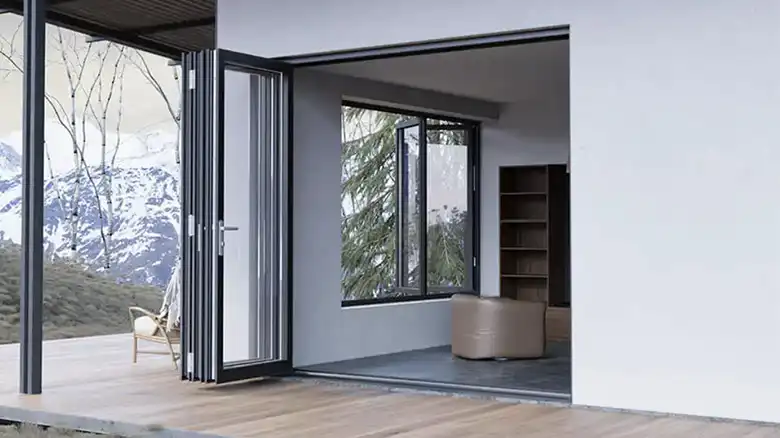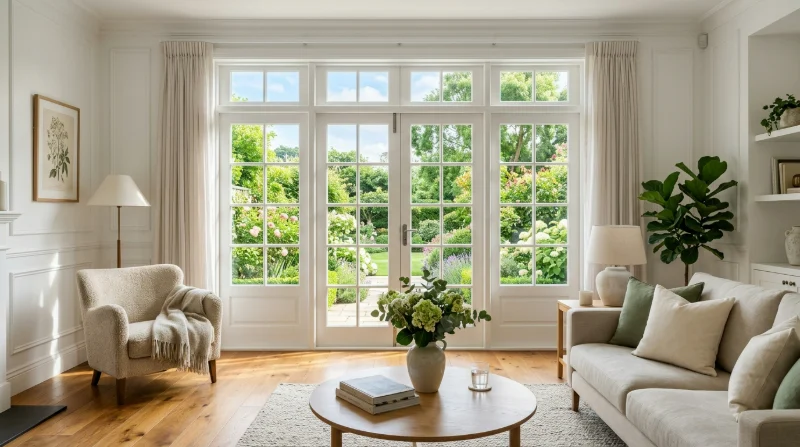
Anyone who has fallen for French doors will tell you the same thing: it’s the light. They make a room feel more open and add a timeless look that works almost anywhere, from kitchens and living rooms to backyard entrances.
But then comes the second thought, usually right after the first: with all that glass, are French doors actually safe?
A French door isn’t built like a standard door, so it changes how you think about locks, glass, and frames too. Here’s the sum up: a French door built well and set up right can be as secure as a solid front door. You need to know what to look for. That’s what this guide is for.
What Are the Security Risks of French Doors?
Most of what people worry about with French doors traces back to three features. None of them are flaws. They’re just design choices that come with a few extra questions.
Large Glass Area
The glass is the whole point of a French door. It lets a small room seem bigger, and a dark hallway feels less dark. That’s why people choose them over a solid panel door in the first place. But glass and security have always been complicated, and not every pane is built the same.
Standard glass can crack with a hard hit. Laminated or safety glass holds its shape even when it’s struck, which makes a lot of noise. You don’t have to give up the light. You just need the right glass doing the work behind it.
Double Door Design
A regular door swings against a fixed frame. A French door is two panels meeting each other in the middle, at a strip called the astragal, instead of locking straight into a wall.
That’s exactly what makes them so useful: throw both open and you’ve got a doorway wide enough for furniture or fresh air. But it also means the lock isn’t holding one panel to a frame. It’s holding two moving panels to each other.
So the hardware at that center meeting point matters just as much as anything else on the door, maybe more.
High Frequency of Use
French doors get plenty of use, especially those leading to a patio or yard. Every opening and closing puts wear on the hinges and locking mechanism over time. A door that once closed smoothly may eventually start sticking, while a lock that fails to engage properly cannot provide reliable security.
Choosing durable hardware from the start helps reduce wear and keeps the door working smoothly for longer.
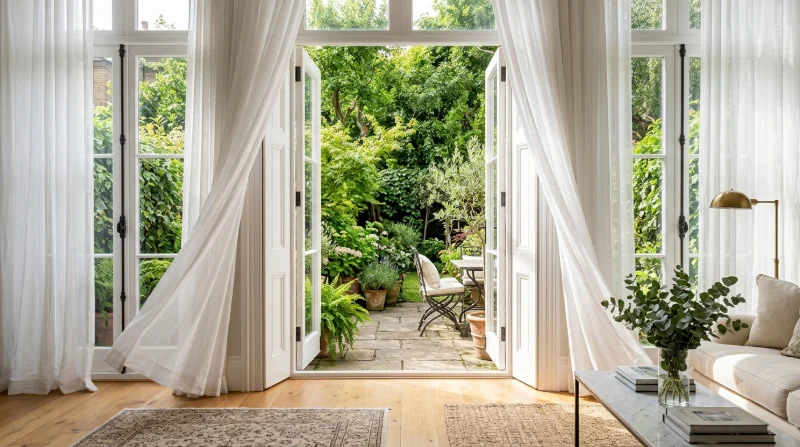
How to Improve the Security of French Doors in Different Locations
A front entrance and a backyard french door are not facing the same risks, so they shouldn’t get the same approach. Here’s how you can reduce the risks of French doors:
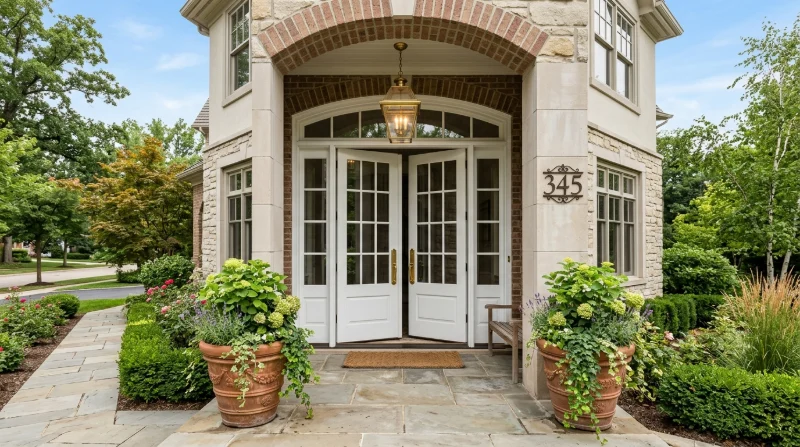
Entryway French Doors
Your front entrance gets more traffic and more attention than any other door on the house, from guests and from anyone casing the place too.
Entryway French Doors need to do two jobs at once: look inviting, and quietly handle serious security in the background. That means a real multi-point lock that secures both panels, not just the one you actually use, a frame that won’t flex if someone leans into it, and glass built to hold together under impact.
None of that costs you the look. A well-made entryway French door can be elegant and still be hard to get through.
Entryway French Doors
Backyard French Doors carry a different kind of risk. They sit at the back of the house, out of view from the street and usually from the neighbors too, which gives anyone up to no good more time and privacy to work. They’re also used constantly, letting the dog out, grabbing something off the grill, so the hardware wears faster.
A backyard door deserves more attention than the front one. A reinforced door with glass, a multi-point lock, and either motion-sensor lights or door sensors help in securing the door. It is easy to neglect a door that nobody sees. Worth checking on it anyway.
Street-Facing French Doors
Street-facing doors bring a different worry entirely. It’s not just about keeping someone out; it’s about what anyone walking by can see in. All that clear glass is great for light, but it can also turn your living room into a display case for anyone walking by.
The fix isn’t to block the light. It’s to filter it. Textured or tinted glass allows daylight to pass through while keeping the inside of your home and business private. Add a strong lock and a frame, and street-facing French doors provide privacy and French door security.
Daily Protection and Maintenance
Even a great French door needs looking after. Hinges loosen. Weatherstripping wears down. Frames shift, just slightly, over the years, and that happens even with good doors. It chips away at the security you had.
A few habits fix most of it:
Check whether or not the door latches properly every single time. Just because your door looks shut doesn’t mean it remains locked.
Additionally, once in a while it’s smart to check the hinges and the screws of the strike plate. Things get loose through repeated use, so you should always make it a point to check these small details.
None of this takes long, and it doesn’t require special tools. A few minutes every few months is all it takes. Homeowners who build this into a seasonal routine tend to catch the small stuff before it turns into an actual security problem.
If you’re shopping for a new French door and want maintenance built in from the start rather than added on later, this is where construction quality matters more than most buyers realize. SUMMIT’s French doors pair reinforced glass options with multi-point locking hardware, so security isn’t something you bolt; it’s part of the door.
Conclusion
After all of that- glass types, locking systems, the different risks depending on where the door sits, here’s the thing worth remembering: French doors aren’t unsafe. They’re just different, and being different means they need a few deliberate choices around hardware, glass, and upkeep. Get those right, and a French door can hold its own against any other entry point in the house.
Are French doors the right fit for your place?
You don’t have to figure it out yourself. SUMMIT’s team talks you through the glass, lock, and frame options that fit your home. Result: a door that looks exactly the way you pictured it, and holds up when it matters.
FAQs
Not necessarily. They are designed differently, having two doors and glass, which involves proper locks and glass for maximum security as well. Seek expert opinion on the use of the multi-point locking mechanism and laminated glass before you make your decision.
Not always. If your glass is standard, a security film or a laminated glass upgrade adds real strength without swapping the whole door. A quick look at what you already have tells you which option makes sense.
It should be done twice a year, with the changing seasons. This way, it would be possible to fix all issues in locks, hinges, and screws before there are major problems with the door.
For most homeowners, yes. Smart locks add monitoring and remote control on top of good mechanical hardware. Just pair one with a strong multi-point lock; don't use it in place of one.
The center point where the two panels meet, and the glass itself. Reinforce both with quality hardware and safety glass, and you've handled the most common risks.
Yes. Laminated and tinted glass keep the light coming in while adding strength or privacy, so you're not trading one for the other.
Often, yes, mainly because they're harder to see from the street. Motion lighting, a door sensor, and a solid lock close most of that gap quickly.
Not necessarily. Security film, better flush bolts, and a door sensor are all budget-friendly ways to add protection without replacing the door.