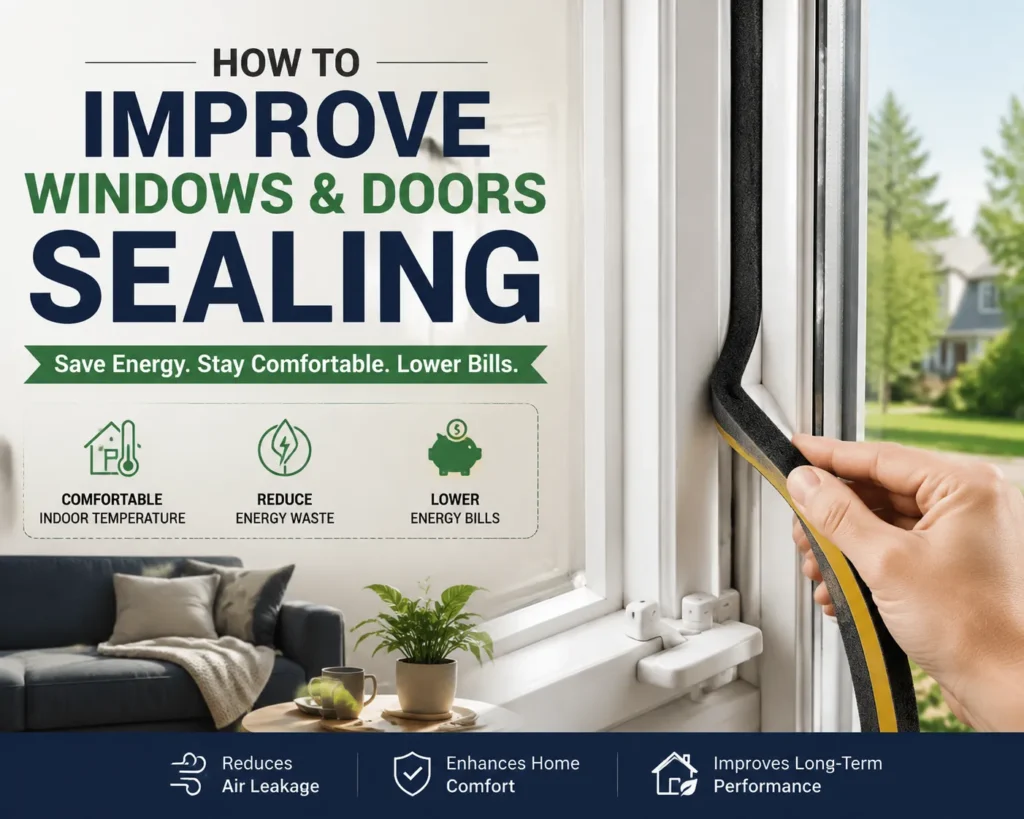
Increasing energy costs, rooms that are uncomfortable, and/or heating or cooling systems that are constantly on the move are often telltale signs of window and door sealing problems.
Hot summer days often have homeowners running their air conditioners all day and all night as places inside the homes become hot. During winter, the heating systems might not keep the rooms warm enough since they may have unwanted air leakages that can cause the heat to escape.
The importance of the sealing performance of windows and doors is in the control of indoor temperature, energy waste reduction, and home comfort. Broken seals, holes, and lack of insulation may lead to higher energy usage in the long run.
This article discusses practical ways to Improve Windows and Doors Sealing. It assists in troubleshooting and enhances power savings. Homeowners will be able to understand efficient ways to minimise air leakage and investigate energy-efficient ways to achieve improved long-term performance.
The Effects of Poor Windows and Doors Sealing
Poorly sealed windows and doors can result in various problems, which affect both the comfort of the house, energy use and the general state of the building. These impacts are determined to make the homeowners aware of why it is necessary to improve windows and doors sealing.
Higher Energy Consumption and Utility Costs
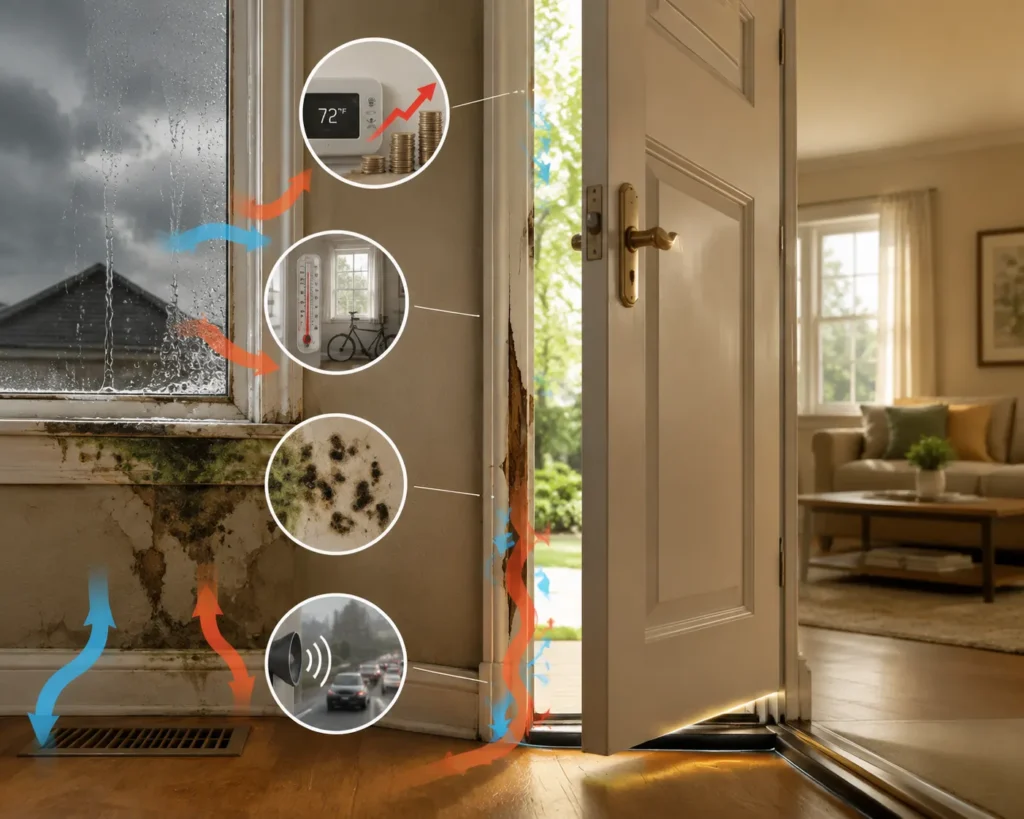
Well-ventilated buildings have poorly sealed windows and doors that help the conditioned air to escape and outdoor air to enter. Consequently, cots and heaters have to work more, which causes the consumption of more energy and higher monthly bills.
Unstable Indoor Temperatures
With openings at the windows and doors, it is difficult to keep the temperature in the house the same. Summer may cause some areas of the home to be warmer, and fall in winter, since they will not create a more comfortable home overall, despite the HVAC performing normally.
Moisture Damage and Mould Risks
Broken seals might permit water to enter during rainy seasons or when it is damp. Gradually, the accumulation of moisture can lead to condensation, damage to the wall, rotting of the frame and the development of moulds, making it expensive for the owner to repair the house.
Reduced Sound Insulation
Sealing should also be poor to decrease the capacity of windows and doors to block outside noise. Privacy and relaxation of the indoors can be more easily intruded upon by the outside environment of traffic, local activity and other distractions.
Improving windows and doors sealing helps to decrease energy wastage, provide comfort and avoid unnecessary harm to the house. Weatherstripping, sealants, window and door components should be checked by the homeowner on a regular basis to detect problems as early as possible.
How to Tell If Your Windows and Doors Have Sealing Problems
Several typical warning signs allow homeowners to determine whether their windows and doors require some maintenance or sealing enhancement. Early identification may assist in avoiding increased energy expenses, decreased comfort, and potential damage to property.
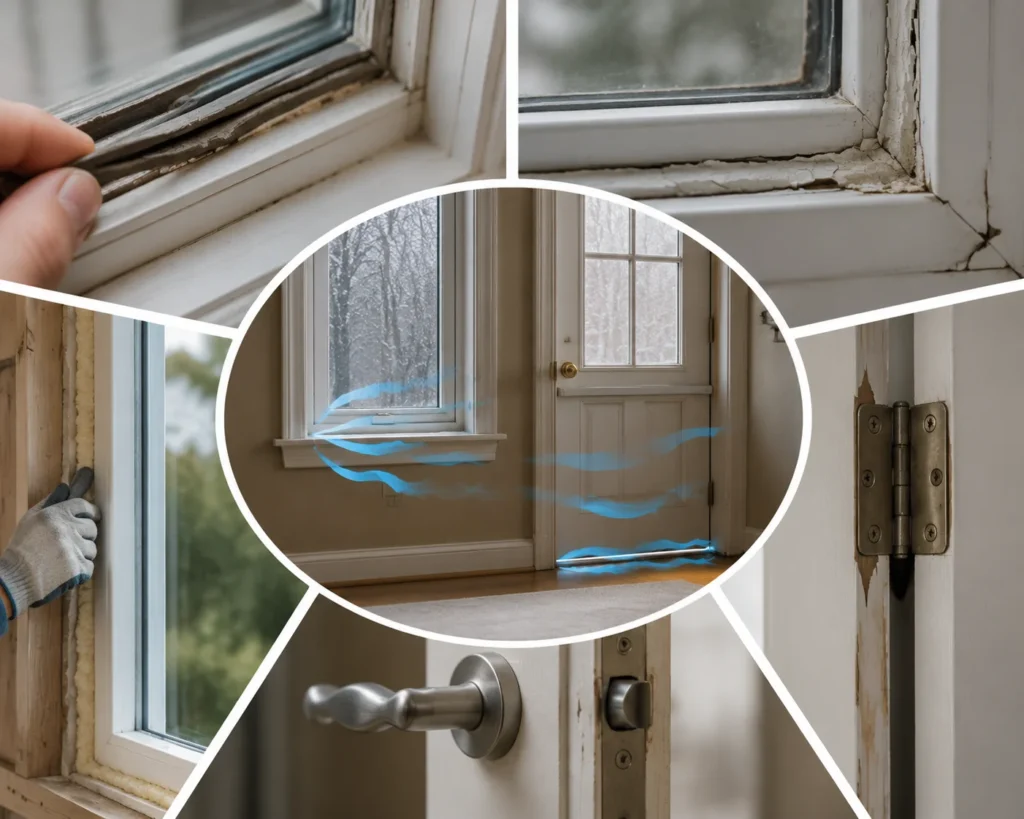
Checking sealing problems is one of the easiest tasks to perform by feeling noticeable drafts in the areas of the window and door frames. Movement of air along edges, gaps or areas of openings tends to show that there is either an outside air intrusion or escaping conditioned air.
The bad sealing performance is hard to maintain comfortable temperatures inside. It may happen that the insulation around the windows and doors is not working in a room or two when it appears to be warmer in summer and colder in winter, even when the heating and cooling are regularly used.
Weatherstripping and sealant of windows and doors should be inspected by the homeowner regularly. Airtightness can be compromised by cracks, gaps, shrinking sealant or damaged weatherstripping, which enables air or moisture to enter.
The presence of condensation, watermarks or moisture around the frames of windows can also be a sign of seal failure. Early response to these problems can aid in minimising the chances of water damage, mould development, and expensive repairs and enhance overall energy efficiency.
Common Causes of Drafty Windows and Doors
Many issues commonly lead to drafts around windows and doors, as opposed to a single problem. Although the appearance of windows and doors may be normal, the effectiveness of their sealing may decrease over time because of the effects of aging, exposure to weather, and frequent use.
Worn weatherstripping is one of the reasons. Materials used in sealing may become hard or shrink over time, or get damaged with some small orifices that allow the entrance of outdoor air and the exit of conditioned air. Airtightness may often be enhanced by replacing damaged weatherstripping.
Another important cause of air leakage is cracked or old sealant. Continuous contact with the sun, rain and temperature could cause cracking, separation or loss of the ability of sealants and allow air and moisture to penetrate cracks.
Poor installation may also lower the performance of windows and doors in terms of sealing. Wrong measurements, unbalanced installation or inadequate sealing of frames can create concealed openings, which can influence energy efficiency and indoor comfort.
Hardware issues also have to be taken into consideration. Poorly installed or worn locks, loose hinges and similar features may ensure that windows and doors do not close tightly and limit their resistance to air infiltration.
Outdated windows and doors may still function but become inefficient over time. Knowing the cause of drafts will assist the homeowners in selecting the appropriate cure, such as maintenance, repairs, upgrading of hardware or installation of more energy-efficient windows and doors.
How can Windows and Doors Sealing be Improved to Enhance Energy Efficiency?
Homeowners can use several measures to enhance window and door sealing performance. Homeowners may begin by taking small steps in maintenance and look into upgrades when they find that current solutions do not give them the desired output.
Replace Worn Weatherstripping
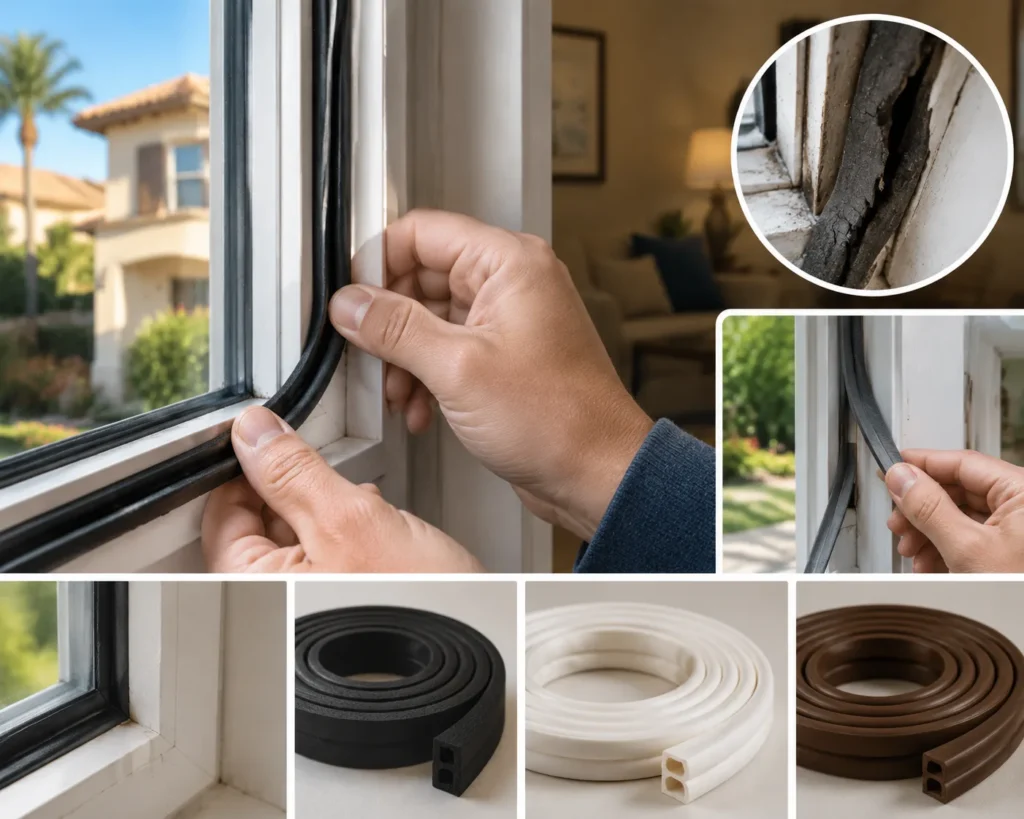
One of the easiest and least expensive ways to improve windows and doors sealing is to change deteriorated weatherstripping. Weatherstripping that is ruined may provide holes allowing drafts, outside air, and moisture to get in.
The weather stripping makes the building airtight and a better barrier between the indoors and the outdoors. It reduces the amount of air leaks and maximises the energy efficiency of windows and doors.
Various windows and doors have varying weatherstripping materials. Popular alternatives are EPDM, silicone, and PVC. The materials should be durable and able to withstand weather conditions, temperature changes, and ageing.
In the case of California homes, the weatherstripping must also resist extreme UV and temperatures. The choice of long-lasting sealing material helps in providing long-life performance and comfort.
Repair or Reapply Sealant
Sealant is an important element in preventing air and water leakage along windows and doors. It forms a shield that helps to maintain better sealing performance and enhance energy efficiency of windows and doors.
Sealant can be affected over time by sunlight, rain and temperature variations. It is capable of cracking, shrinking or peeling off. Even the small holes can offer air escapes and water escapes.
Homeowners are advised to inspect the sealant in places around the window frames, door frames, joints and exterior edges. The sealant can be repaired or replaced in case of cracks or separation to provide comfort and keep the house dry.
Adjust Windows and Doors Hardware
Windows and doors hardware are significant in sealing performance. The properly adjusted hardware assists the windows and doors in closing well, increasing the airtightness and minimising air leaks.
With time, hinges, locks, handles, rollers and closing mechanisms can become loose or worn. Such problems may lead to inappropriate closing and leave small holes that influence the efficiency of energy.
Homeowners should clean the hardware, check moving parts, and lubricate the necessary components. It extends the life of hardware, increases the sealing performance and keeps a smooth functioning of windows and doors.
Upgrade to Energy-Efficient Windows and Doors
In cases where the repeated repairs are no longer effective in sealing the problem, drafts are still present, or the old products are costing a lot to maintain energy, then consider changing to more energy-saving windows and doors. Old windows and doors can lose their insulation and airtightness capabilities.
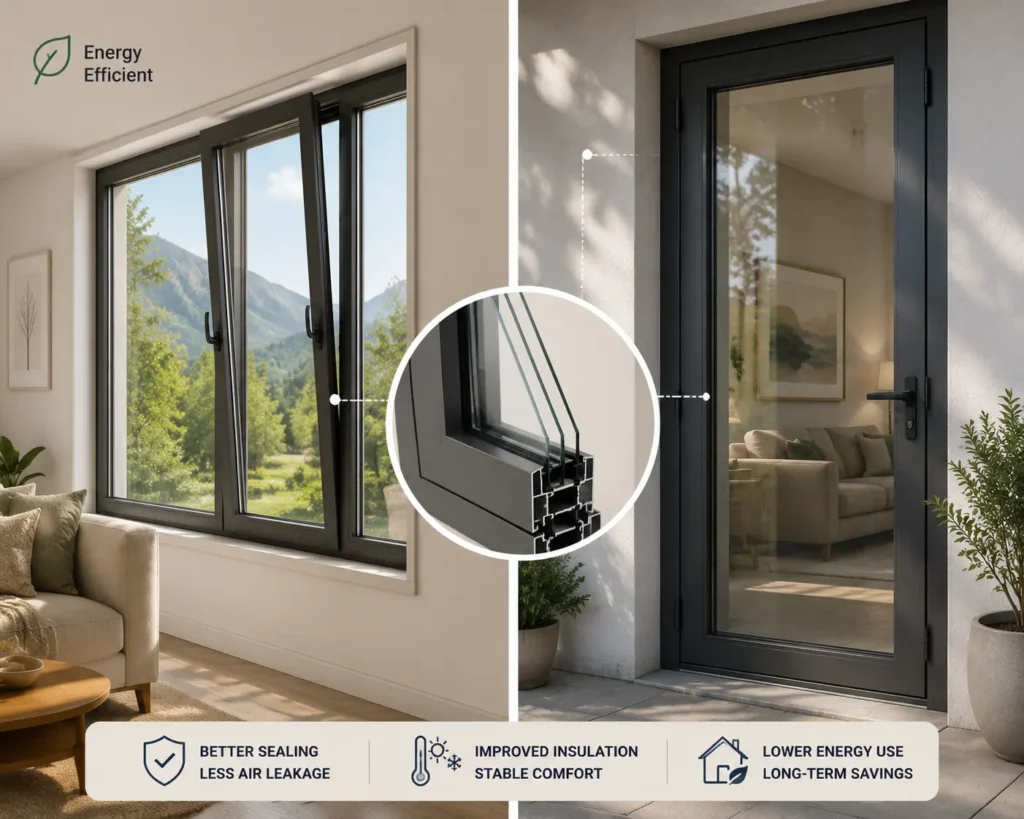
The performance of window and door sealing solutions is enhanced by energy-efficient windows and doors that have sophisticated frames, quality weatherstripping, insulated glass and enhanced hardware systems. These characteristics contribute to reduce air leakage, minimising heat transfer, and maintaining more stable indoor temperatures.
The energy-efficient doors of SUMMIT are engineered to have performance features. The tilt and turn windows in SUMMIT have durable EPDM weatherstrip, premium hardware, insulated glass windows with 2 or 3 panes and thermal break aluminium frames that aid in minimising heat loss.
ENERGY STAR, NFRC, and CSA also certify these windows and are another guarantee of their performance and efficiency. Energy-efficient solutions can provide homeowners with superior comfort, durability, and sealing performance to meet their long-term improvement needs.
Conclusion
The effective use of windows and doors in terms of proper sealing is significant in enhancing the comfort of the home and wasting less energy. Some ways to Improve Windows and Doors Sealing and overall performance are simple fixes such as changing old weather stripping, fixing sealant, maintaining hardware or updating old products.
The homeowner ought to decide on the solution to use depending on the state of the available windows and doors, the local weather, and long-term goals of saving energy. Professional guidance can help them make a more assertive selection.
SUMMIT offers energy-efficient windows and doors featuring superior sealing features, reliable materials and quality performance. Discover the windows and doors solution offered by SUMMIT and get a quote to enhance the comfort, efficiency, and future worth of your home.
FAQ
The indicators of problems with sealing are such signs as drafts, unequal temperatures, condensation, or increased energy bills. The problems will usually suggest air leaks or broken seals. Check the window weatherstripping and sealant to ascertain the problem.
Yes, even minor cracks can lead to the loss of energy. Leakage of air lets out heated or cooled air, thus requiring more work by HVAC systems. Homeowners should repair damaged seals on the checks beforehand to keep them comfortable.
It depends on the condition and age of your products. Homeowners can address minor problems through maintenance, while older systems with recurring issues may require replacement. Consider window and door seal repair costs and make a decision.
Yes, they are able to enhance comfort and long-term performance. Homeowners can reduce energy wastage by using better window sealing solutions, insulation, and materials. They should consider ENERGY STAR certified windows and doors when renovating their homes.
Homeowners should check this regularly to avoid bigger issues. The weather and aging can cause a decrease in seal performance. Check seals when you do seasonal maintenance or when you suspect drafts.
Yes, to ensure good airtightness, proper installation is necessary. Inadequate installation may decrease the performance of the products. Select skilled workers to install and provide support.