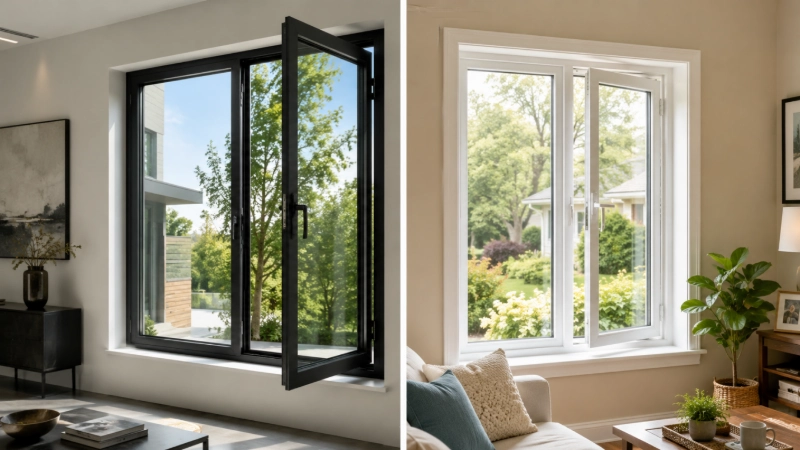
If you’re renovating a living room or trying to bring more light into a kitchen that always feels a bit closed off, you’ve probably come to the same fork in the road as many homeowners: bifold windows or sliding windows.
Perhaps you’re after that open indoor-outdoor feel everyone talks about. Or maybe you just need something reliable, that won’t leak air in winter and won’t blow your budget either.
Here is the short version. Bifold windows open in stacked panels to offer a wider opening and more dramatic look, but are more expensive and can be a little less consistent in their sealing. Sliding windows are cheaper and easier to live with day to day, but they don’t open nearly as far.
This guide explains the real difference between bifold window and sliding window options, point by point, so you understand which one is really right for your project, not just which one sounds better on paper.
What Are Bifold Windows and Sliding Windows?
Bifold Windows: Best for Large Openings
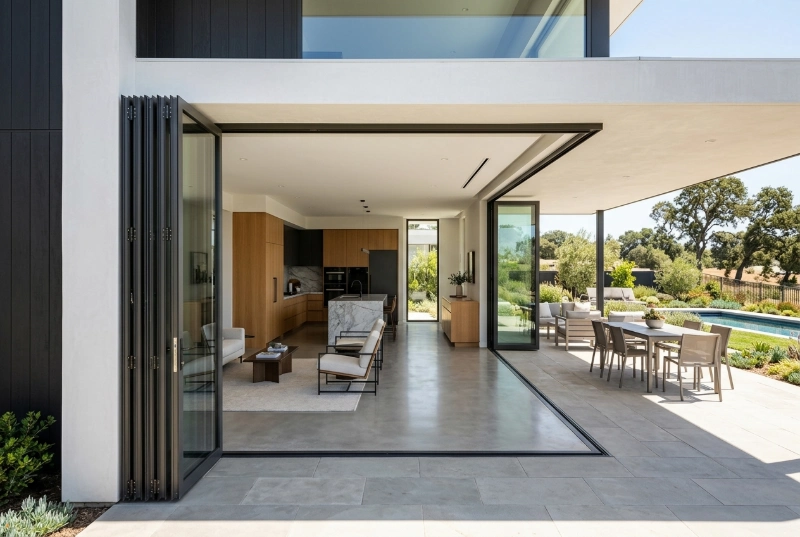
Most normal windows don’t quite erase the line between inside and out.
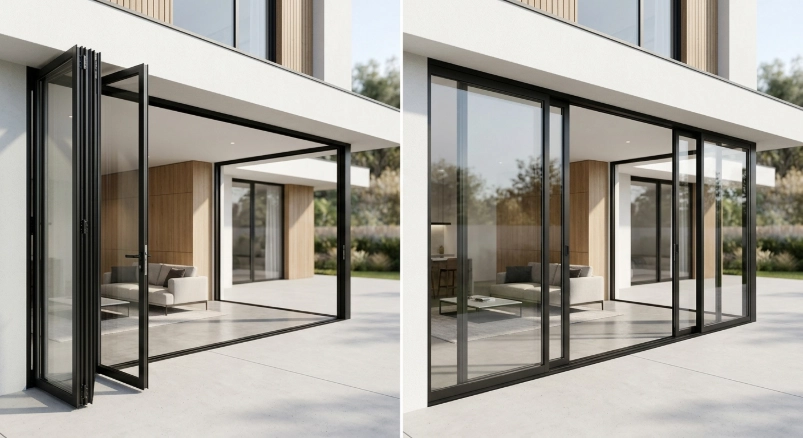
What are bifold windows, then? They are a series of panels hinged together and fold back on themselves and stack neatly to one side like a folding screen.
This turns the entire opening into usable space, instead of just a portion of it. The vast majority of bifold windows are made from uPVC or aluminum, as both of these can handle the weight of several panels.
Bifold windows will usually be featured in pass-through kitchen counters, garden rooms and any place a homeowner wants a strong visual connection between indoors and outdoors.
SUMMIT’s collection of aluminum bifold windows is a great example of how this style works in a real residential setting, with panels that fold completely to one side for an unobstructed view.
Sliding Windows: A Traditional, Practical Option
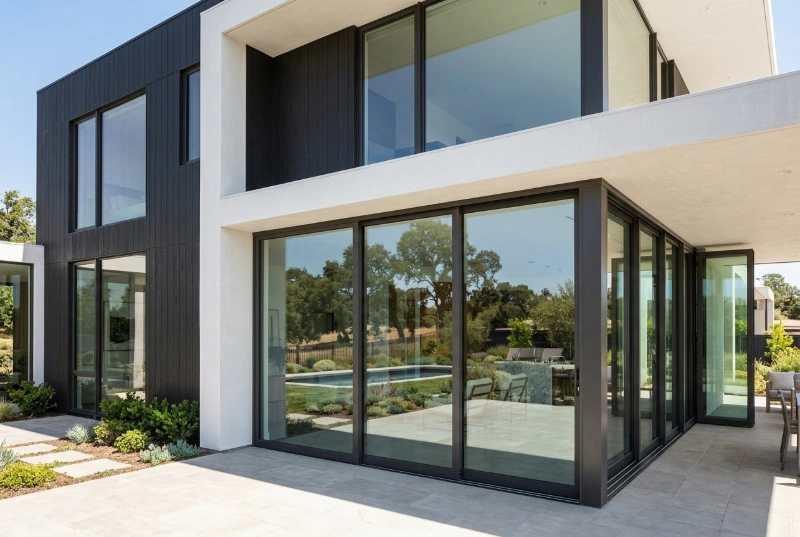
And while bifold windows may be making a splash, sliding windows are still the most popular choice for residential projects. It’s not because they’re cheaper per se. It’s because they stand up to daily use.
A sliding window is pretty straightforward. It slides horizontally on a track and usually overlaps a fixed pane. No folding, fewer moving parts. And that’s just why sliding window advantages are often about low maintenance and dependability. Common frame materials include aluminum, vinyl and uPVC.
Sliding windows are not only in bedrooms, kitchens, hallways, but they’re in all the places where it’s a question of steady performance over a showpiece opening. If you want a window that just works without thinking about it, this is the safer bet.
Aluminum Bifold Windows vs Sliding Windows: A Full Comparison
1. Opening Mechanisms
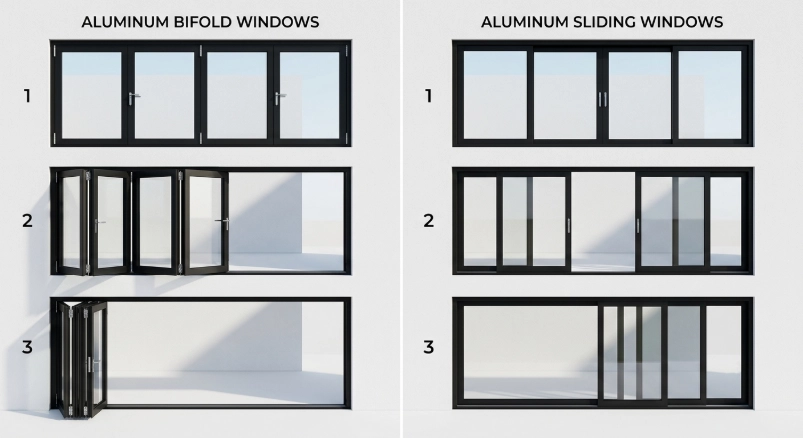
The difference between bifold windows and sliding windows in terms of opening mechanism is the movement.
Bifold windows fold in and fold to the side, opening the whole space. Sliding windows travel on a track and there is always at least one pane overlapping the other so that the usable opening is approximately one-half of the total width.
This soon becomes the vernacular. If you do a bifold system you can open the space fully or cracked for a breeze. A sliding window trades that flexibility for a smoother, simpler motion.
Bifold systems also need space on the side where the panels stack so they are more suitable for homes where there is space to spare on the side of the wall, rather than tight layouts.
For fully opening up the space, go for bifold. If you want it to be easy to use day-to-day, try sliding.
2. Natural Lighting and Ventilation
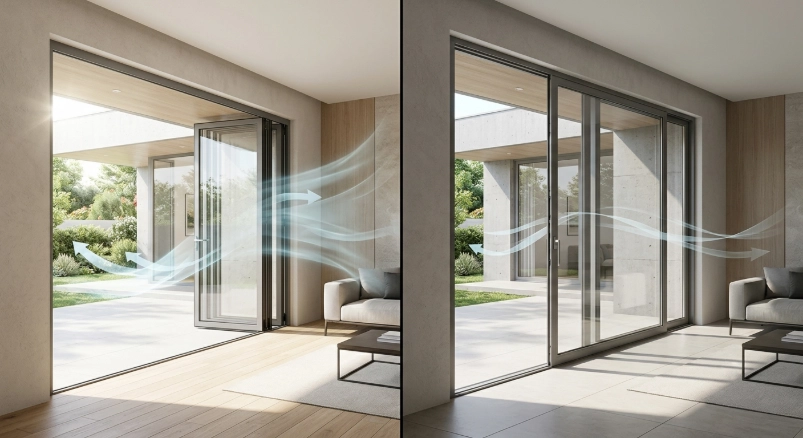
The more glass you have without frames or panels, the more light you can let into a room.
When a bifold window is fully opened, there is not much space left for anything else. It lets the sunlight in and offers an unobstructed view. The sliding window always has a vertical frame member and at least one fixed panel, so it is always blocking light at least when it is fully open.
Ventilation is on same patterns. A massive air channel for rapid fresh air exchange from a wide open bifold – handy in kitchens or any room that needs fresh air quickly.
Sliding windows provide a more contained, gentler airflow, ideal for bedrooms. The frame design and opening method are just as important as the size of the window in how much light or air you get.
3.Structural Strength and Stability
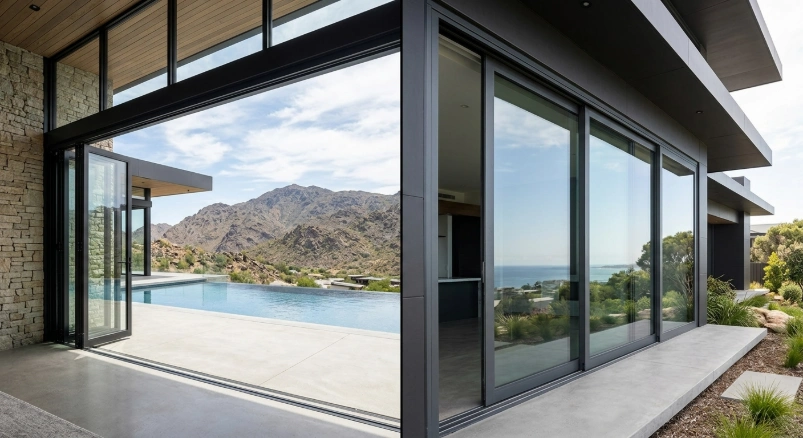
Bifold windows have more hardware, and a few connected panels hold everything in place. Single or double track sliding windows are a simpler system with less hardware and may need to be adjusted from time to time.
This difference changes the load-bearing capacity, wind resistance and resistance to deformation over time. When strength is your main priority, start by looking at aluminum or steel frames. Both materials resist warping and will take wind pressure.
That doesn’t mean bifold systems are flimsy. A quality aluminum bifold window, like the patio door styles in SUMMIT’s bifold collection, can fill the bill nicely.
But the lower number of moving parts generally means fewer things to break down or wear out, making sliding windows a more attractive option for high-rise buildings or areas with heavy wind loads.
4.Sealing Performance Comparison
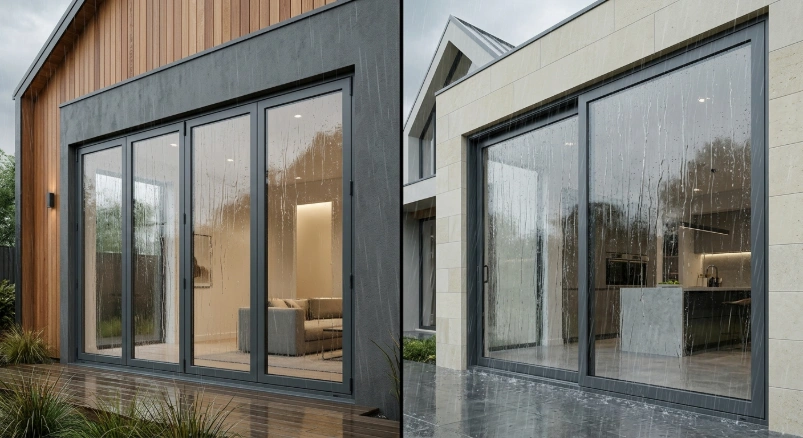
The sealing performance of a window is related to its structural complexity and the number of sealing points.
Sliding windows tend to provide more consistent window sealing performance given they have fewer joints and a more continuous structure. Bifold windows have more joints by construction, and so their sealing is more dependent on the quality of the hardware and the accuracy of the manufacture.
How much this matters depends on the climate. In places like Florida that have a lot of coastline, wind resistance is the issue. In high-rise areas like Vancouver, the issue is airtightness. Thermal insulation is a necessity in cold climates like Toronto. Waterproofing is a priority in rainy areas such as Seattle.
Sliding windows are usually the safer bet if stable sealing is your priority. If you’re going for the open feel of a bifold system, choose wisely and look for well-known certifications such as Energy Star, NFRC, or CSA that prove a product has been tested, not just marketed as efficient.
5.Design and Aesthetics
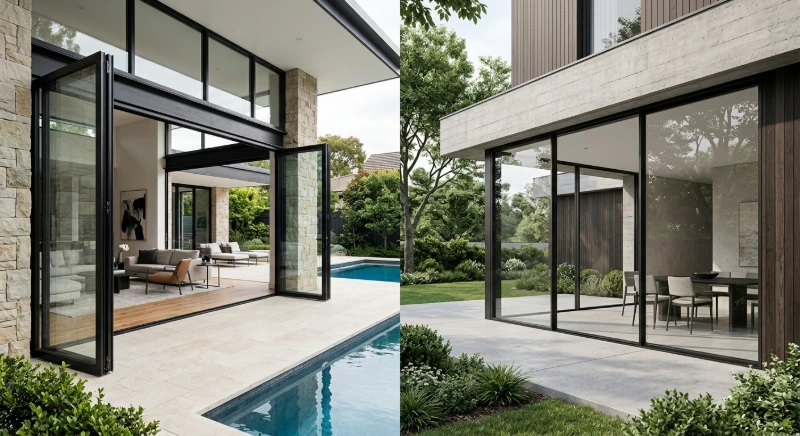
“People don’t realize how much windows can define a building’s character. They affect the proportions of the facade and whether a room feels claustrophobic or truly open to the outside.
Bifold windows are in use in the modern architectural design for their openness and expansion of the space. Sliding windows love clean lines and visual order that are easy to mingle with across architectural styles.
If you’re looking for a bold, design-forward statement, go bifold. Slide into a timeless look that goes with just about anything. Both styles come in a variety of finishes and configurations at SUMMIT, including their casement and sliding window lineup, so you can match materials and hardware to your actual design goals.
How to Choose the Right One?
Assessing Your Needs
Begin with, “What does the space actually need to do?” Bifold windows are usually the more suitable choice for open plan areas, villas, courtyards and commercial fronts.
If you want something practical for everyday use in a regular home, kitchen or bedroom, sliding windows are typically the more practical option. Once you know what your priority is, it’s not a guessing game anymore.
Budget Considerations
Not all bi-fold windows are expensive and not all sliding windows are cheap. The price depends on the window type, glazing, hardware, system configuration and certifications.
As a rough guide: entry level budgets are best for standard sliding windows, mid-range budgets will cover higher spec sliding systems or smaller bifold setups and high-end budgets can cover full bifold systems with premium hardware.
FAQs
It depends on the project. Bifolds win on opening size and visual impact, while slidings win on cost and sealing consistency.
Yes, for spaces where you want to open up the entire wall, such as a kitchen pass-through. Perhaps not in a bedroom that only requires ventilation.
Generally, yes, because sliding windows always have a fixed panel and frame member in the opening.
Often due to easier sealing, a certified high-quality bifold system can also do well. Look for Energy Star, NFRC, or CSA ratings in either case.
Sliding windows, generally, thanks to fewer moving parts and joints.
Quality aluminum bifold systems can. However, in extreme wind zones, sliding windows still have a structural edge.
Conclusion
It’s not a matter of which bifold window or sliding window style is objectively better. It’s about which one works for how you really use the space.
Bifold windows provide a wider opening and stronger design impact but come at a higher price. Sliding windows sacrifice a bit of that openness for stability, simplicity and a friendlier budget.
If open space and design are your priorities, go bifold. If budget and durability are more important, go sliding. Either way, match the window to your needs, not which option sounds more impressive.
SUMMIT manufactures bifold and sliding window systems from aluminum, and can produce single home orders and big volume commercial projects.
See certifications, shipping timelines, or browse their full product catalog and get a quote that fits your project on their about page.