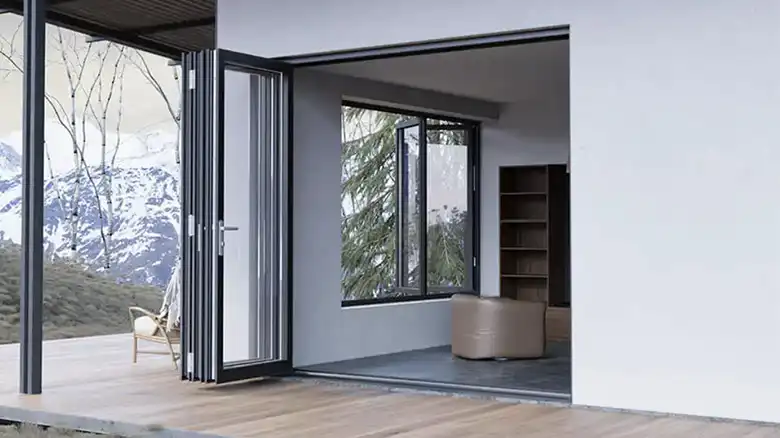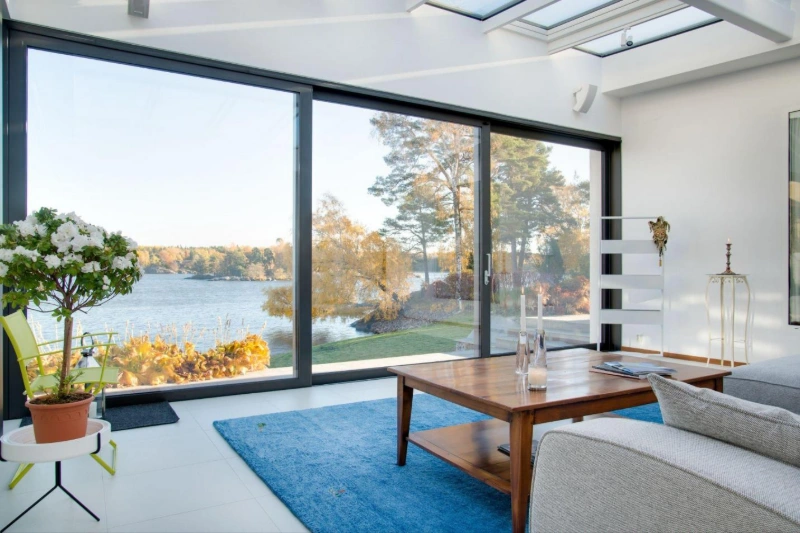
Windows can be one of the major contributors to heat gain during the summer months. If you have single-paned glass windows or older frames, you may find that the heat from the sun is pouring into your house and battling your air conditioning system.
Because so many homeowners in Los Angeles, Orange County, and San Diego are replacing their current windows with energy-efficient aluminum windows, the question is: how do you go about selecting an energy-efficient window when there are so many choices?
This guide provides a simple overview of what features are necessary for heat reduction, what is pure “marketing,” and how to determine which windows will be suitable for your local climate and your budget.
Advantages of Energy-Efficient Aluminum Windows
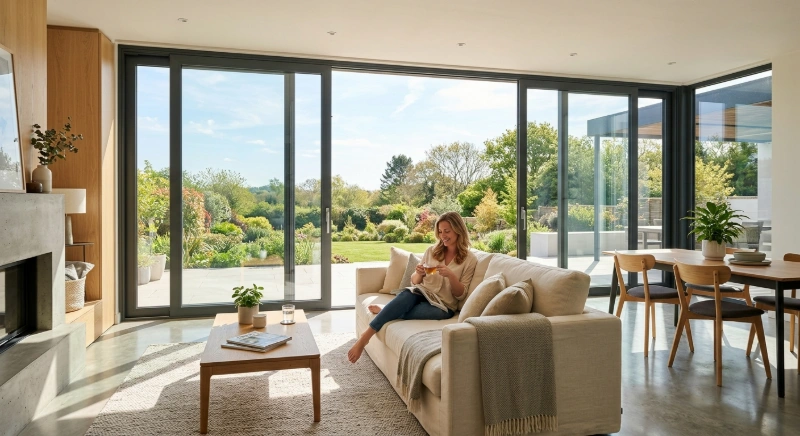
So what do you actually get for the money? A few things, and they’re not small.
- Lower bills, month after month.Better insulation means your AC doesn’t have to run nearly as hard. It’s not a one-time saving either; it compounds every summer you own the house.
- No more “hot rooms.”You know that one west-facing bedroom that turns into a sauna by 4 p.m.? That problem mostly disappears. The whole house holds a steadier temperature.
- Your furniture stops fading.Good glazing filters out most UV light. Hardwood floors, rugs, and that couch you spent too much on, they all keep their color longer.
- It’s quieter inside.The same construction that blocks heat also muffles traffic noise. People rarely shop for this, but everyone loves it afterward.
- Aluminum just lasts.No warping, no rot, no termites. And because the material is strong, the frames stay slim, with big glass, skinny borders, modern look.
Regular windows can’t touch this. The gap shows up in your comfort first, then on your utility statement.
What Type of Aluminum Window Can Be Considered Energy-Efficient?
Fair warning: not every aluminum window earns the “energy-efficient” label. Four features have to be there. Miss one, and performance drops off a cliff.
1. The Thermal Break of the Aluminum Frame
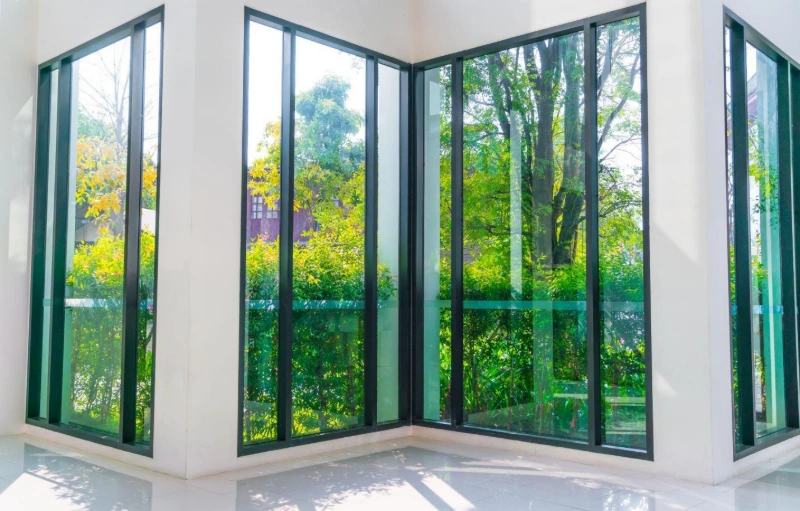
Aluminum frames transfer heat very easily from the outside to the inside of the home. That is why aluminum frames from the ’80s were often referred to as being “hot to the touch,” and as such, gave aluminum windows a bad reputation.
With a thermal break, the manufacturer inserts a piece of insulating polyamide material in between the two (outer/inner) halves of the frame. Heat hits the outside, reaches that plastic barrier, and basically stops.
2. Low-E Glass
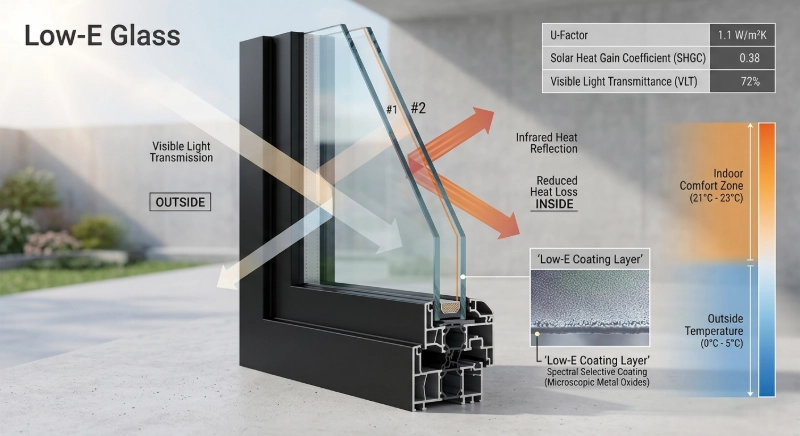
Low-E is short for “low emissivity.” It’s a metallic coating so thin you can’t see it, baked onto the glass, that bounces heat away while letting light through. Sunscreen for your windows, basically.
Anyone in San Diego or the Inland Empire knows what unfiltered afternoon sun does to a room. Low-E blocks a big chunk of that solar heat before it ever gets inside. The room stays livable, and your AC finally catches a break.
Low-E costs more than plain glass. But it keeps paying you back, summer after summer, in lower cooling loads and a more comfortable house.
3. Argon Gas Filling
Argon is a harmless, invisible gas that is denser than air. Traditionally, heat has been able to circulate to cross the gap between two panes of glass.
But because argon is denser than the air that’s normally in the cavity of insulated glass, it greatly reduces the speed of that circulation of heat. So in the summertime, less heat enters your home, and in the wintertime less heat leaves your house. Physics is physics, and it gives you tangible proof.
Argon represents one of the least expensive performance improvements you can purchase, you never need to do anything to maintain it, and it will leak out of your windows at less than 1% per year.
If you have already spent the money on good frames and glass with a Low-E coating, not purchasing argon does not make sense.
4. Sealing System
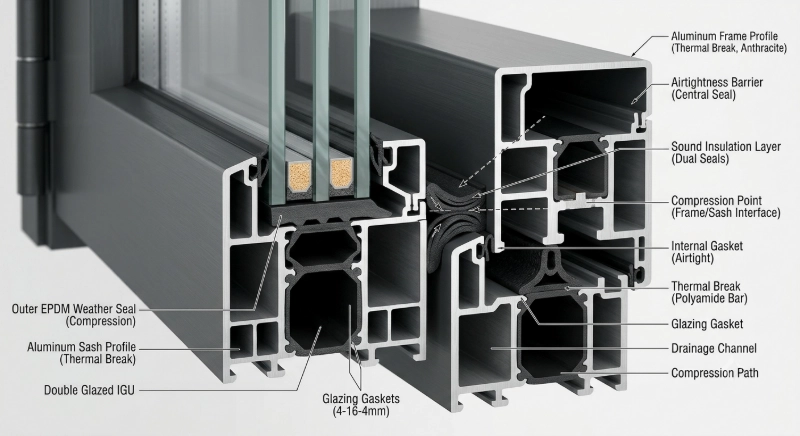
The part of windows that no one talks about at showrooms is the seals themselves. If the best glass has air leaking out around the edges you are losing everything you paid for.
Look at the frame, sash and glazing joints and see if they incorporate EPDM rubber gaskets and multiple layers of sealing. EPDM stays flexible for decades and doesn’t crack under UV, which matters a lot under our sun.
Near the coast, tight seals also keep out salty, damp air; inland, they block dust and hot drafts. Ask about seals before you buy. Always.
Which Opening Style Is the Most Energy-Efficient?
Here’s something most shoppers never consider: how a window opens changes how tightly it closes. And that gap between styles is bigger than you’d think.
Casement Window
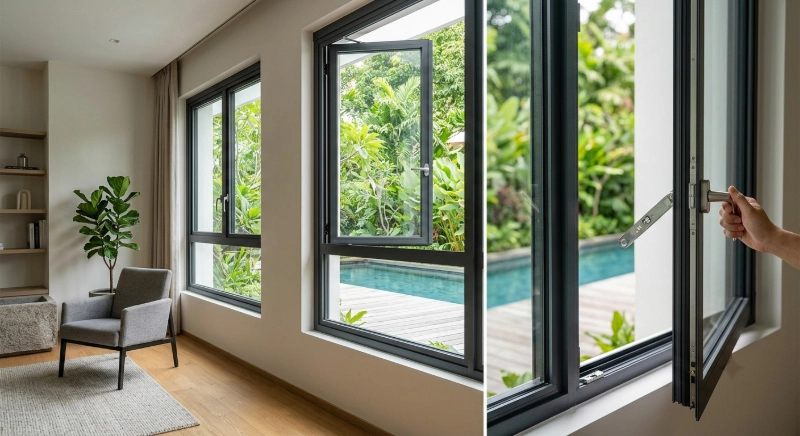
A casement window is hinged on the side and opens outwards like a little door. Cranking it tightens the sash down onto the frame producing compression, which prevents air from coming through.
The other neat thing about this is when it is windy, the wind pushing on the glass makes the window seal tighter. Cool evening? Crank it wide open and pull in the breeze. Brutal afternoon? Lock it down airtight. SUMMIT Casement Windows give you both, which is why they’re the go-to for bedrooms and kitchens.
Awning Window
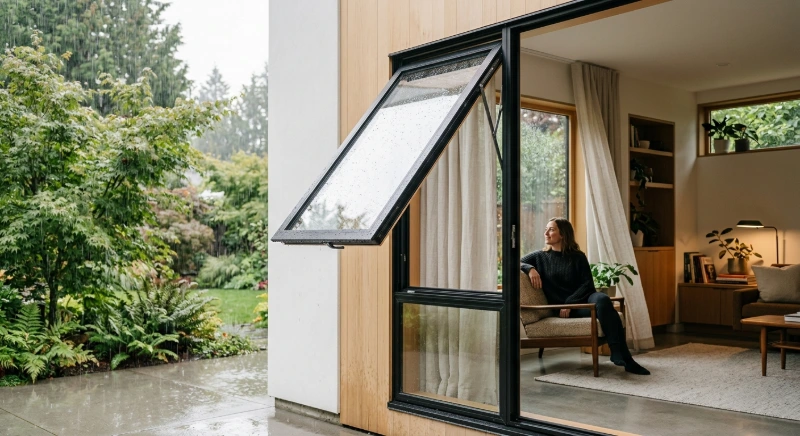
An awning window is a casement’s cousin, hinged at the top instead of the side, opening outward from the bottom. Same compression seal, same excellent airtightness. But it has one party trick casements don’t: you can leave it open in the rain.
The tilted sash acts like a tiny roof, so fresh air comes in while water stays out. If you’ve been assuming ventilation and energy efficiency can’t coexist, this is your answer. They’re great over kitchen sinks, in bathrooms, or stacked above fixed panes. Check out the Summit Awning Windows.
Fixed Window
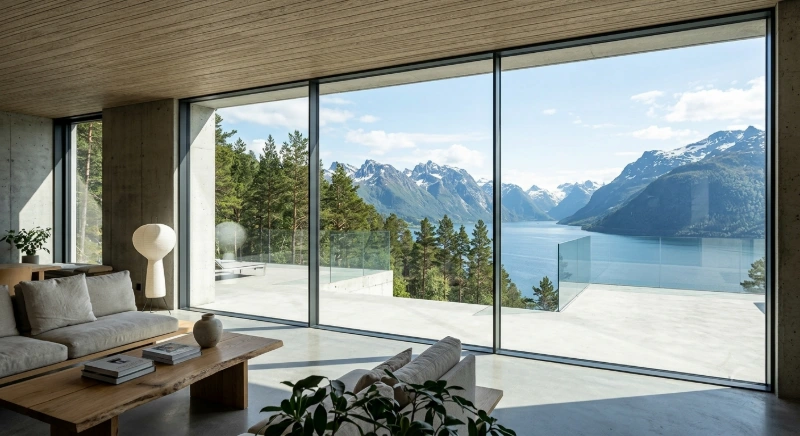
A fixed window doesn’t open. That sounds like a downside, but it’s actually the point. No moving parts means no seams, no hardware, no gaps. It’s the most airtight window that exists, full stop.
You get maximum daylight, an uninterrupted view, and a lower price than an operable window the same size. The smart move? Fixed glass where you want light and views, casements or awnings nearby for airflow.
Performance Indicators of Energy-Efficient Windows
Salespeople will tell you anything. Numbers won’t. These standardized ratings appear on certified windows and let you compare any two products head-to-head.
| Indicator | What It Measures | What To Look For (SoCal) |
|---|---|---|
| U-Factor | How much heat escapes through the window | 0.30 or lower |
| SHGC | How much solar heat gets through | 0.25 or lower |
| VT | How much daylight comes in | 0.40–0.60 |
| Air Leakage | Drafts through gaps (cfm/ft²) | 0.30 or lower |
| Condensation Resistance | How well it resists moisture buildup | Higher is better |
Why Opt for SUMMIT Energy-Efficient Windows?
SUMMIT offers a complete energy saving window system, including a thermal break aluminum frame, low-E glass, argon gas filling and a high performance sealing system. This engineered approach ensures all components work together seamlessly to achieve maximum energy efficiency.
Our aluminum windows meet stringent energy efficiency requirements and are certified by Energy Star, NFRC, CSA, CE and other recognized standards. SUMMIT windows are a safe bet, meeting the requirements of mainstream energy-saving standards.
When you invest in SUMMIT energy-efficient windows, you are investing in long-term value, not just short-term savings. Although cheaper options may seem appealing initially, they can often lead to higher energy bills and ongoing maintenance problems in the long run.
FAQs
Not anymore. That reputation comes from old, non-thermal-break frames. Modern thermally broken aluminum handles desert heat just fine, just confirm the thermal break is there.
Usually 30+ years. Aluminum doesn't rot, warp, or attract pests. Wipe the frames down occasionally and they'll outlive most roofs.
Almost certainly, though the amount depends on what you're replacing. Homes ditching single-pane windows commonly cut cooling costs 10–25%.
No. Quality double glazing with Low-E and argon does the job. Triple glazing is money better spent elsewhere unless you're in a genuinely cold climate.
Barely, around 1% a year in a well-sealed unit. You'll get decades of performance without thinking about it.
Yes, and it's a smart way to manage the budget. Start with the hottest west-facing rooms and work from there.
Not meaningfully, as long as there's a thermal break. Pick whatever color you like.
Conclusion
Here’s your shopping checklist, short and sweet: thermal break frame, Low-E glass, argon fill, quality seals. Favor casement, awning, or fixed styles. Verify everything against NFRC-certified U-Factor and SHGC numbers. Any window that ticks every box will keep your home cooler and your bills lower for decades, that’s the whole game.
Curious what that looks like for your house? Browse SUMMIT’s certified energy-efficient window systems, and grab a free, no-obligation quote. Your home will thank you.