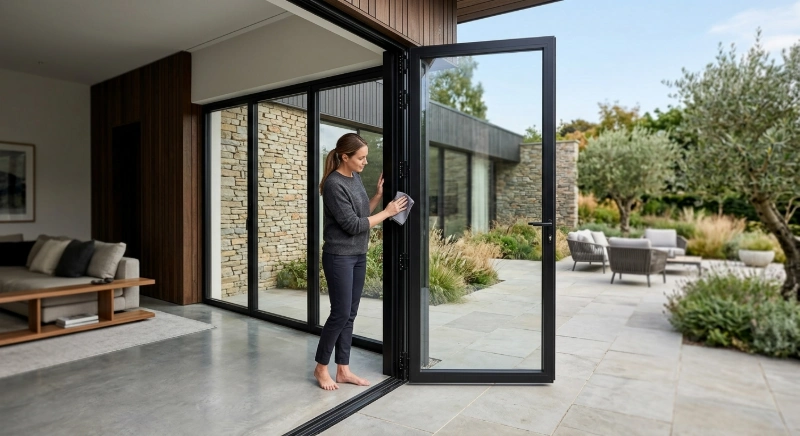

It is 3 PM in July. Your air conditioner has been running since morning. The room still feels like an oven. You drop the thermostat lower. Nothing changes. The electricity bill climbs every week, yet comfort never arrives.
Most homeowners blame the AC unit. The real problem is often the windows and doors. They are the primary pathways for summer heat entering your home. Solar radiation, frame conduction, and air infiltration all work together against your cooling system daily.
To effectively reduce heat gain through windows and doors, you need to understand exactly how heat enters. This article covers the root causes, the problem products, and the best upgrades available. Could the right windows actually cut your cooling costs by 30% or more?
How Does Heat Enter Indoor Spaces Through Windows and Doors?
Heat does not simply push through solid walls. It travels through specific weak points in your home. Windows and doors are the least thermally resistant parts of any building envelope. Three distinct forces drive heat indoors during summer months.
1. Solar Radiation

Solar heat gain refers to heat that enters your home through sunlight. Direct sun passes through the glass and heats the room instantly. Glass also absorbs solar energy and slowly releases it inward as heat.
This creates secondary heat buildup that keeps rooms hot long after the sun moves. West-facing windows are the worst offenders. Areas near the glass can feel 10 to 15 degrees hotter than the rest of the room.
2. Heat Conduction
Heat conduction is the transfer of warmth through solid materials, from hotter to cooler surfaces. Window frames and exterior aluminum door frames are key conduction points. Basic metal frames get extremely hot under direct sun and transfer that heat straight indoors.
Many homeowners do not realize that frame material makes a big difference. Materials like thermal break aluminum windows and vinyl windows conduct heat far more slowly, making them much better choices for summer performance.
3. Air Infiltration
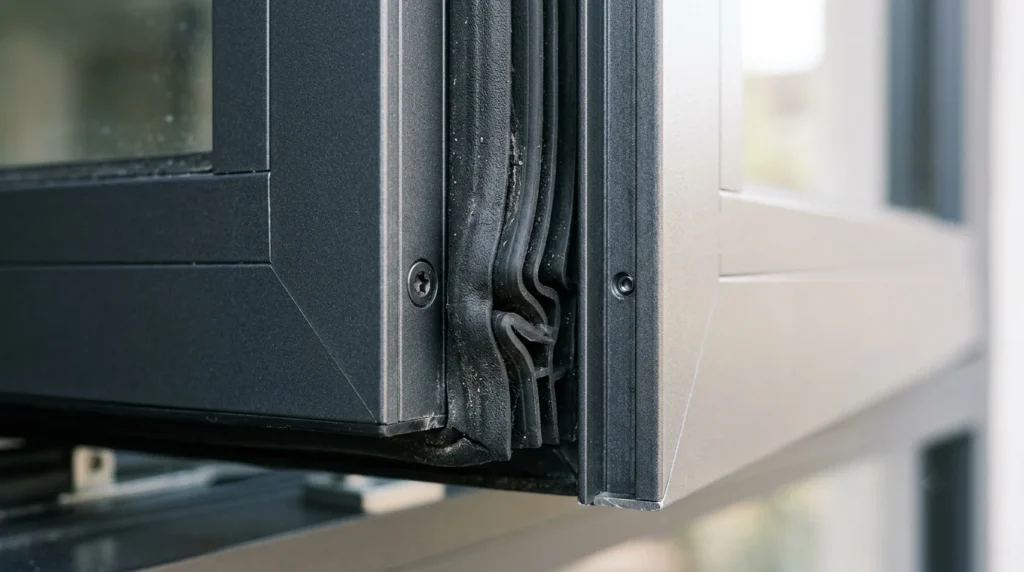
There is more than one way to transfer heat. It can also enter directly through cracks and gaps around windows and doors, and this is where air tightness becomes crucial to summer comfort.
Common sealing issues include worn sealing strips, warped frames and incorrect installation.
Even the opening and closing mechanism itself can cause air leakage over time. Warm outdoor air bypasses your AC completely through these gaps. Lack of cooling efficiency and high bills are good indicators of air infiltration. Sealed exterior aluminum doors or vinyl windows are other effective ways to seal these openings.
Which Types of Windows and Doors Are Making Your Home Hotter?
Identifying the worst-performing products in your home is the starting point for any effective heat reduction plan. Some materials and designs transfer heat far more readily than others. Two categories cause the most significant problems in summer.
1. Single-Pane Windows
Single pane windows are those with one sheet of glass. No air gap, no argon fill or thermal barrier between indoors and outdoors. This basic structure provides very weak insulation performance.
Because of this, solar heat gain moves through single-pane glass almost instantly. Indoor temperatures near these windows rise rapidly in summer. Your AC has to work much harder to compensate. Spaces adjacent to single pane windows are much hotter than the rest of your house.
The solution to the problem is the easiest one: the use of Low-E glass or insulated glazing.
2. Standard Aluminum Windows and Doors
The core problem with standard aluminum windows and doors is rapid heat conduction combined with no thermal insulation structure. Aluminum is a metal with very high thermal conductivity.
A standard exterior aluminum door or aluminum window frame heats up quickly under direct sun. That heat transfers straight through the frame and into your home. Many homeowners assume all aluminum products are the same. They are not.
Standard aluminum has no thermal break, unlike thermal break aluminum windows that block this heat path entirely. Heat flows freely from the outer frame face to the inner face, undermining your cooling system regardless of glass quality.
How Can Windows and Doors Effectively Provide Thermal Insulation?
Blocking heat requires improving three systems together. Glass, frames, and sealing each control a different portion of total heat gain. Upgrading all three delivers the best and most lasting results to reduce heat gain through windows and doors effectively.
1. Glass System Upgrade: Low-E Glass and Double or Triple Insulated Glazing
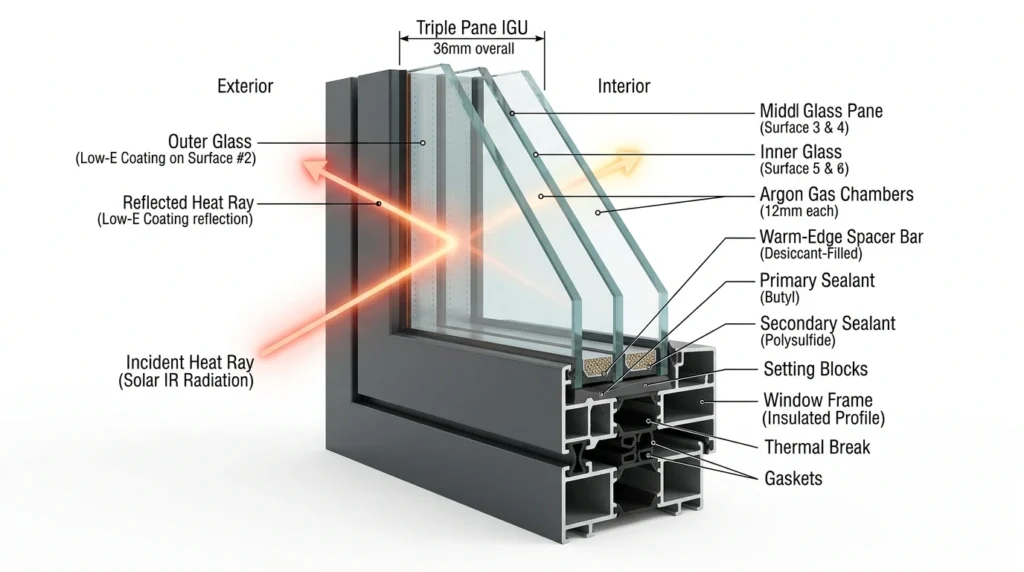
Glass is the core of energy control in any window. It represents the highest percentage of the indoor/outdoor heat transfer. One of the best things you can do is to upgrade the glass.
Low-E glass is coated with a thin metallic layer that reflects infrared radiation and reduces the amount of solar heat gain.
Double and Triple glazing are additional panes of glass between air and argon chambers. Each layer reduces heat transfer significantly.
Together, Low-E glass and insulated glazing can cut solar heat gain by up to 70% compared to single-pane glass.
2. Frame System Upgrade: Thermal Break Aluminum and Vinyl Windows
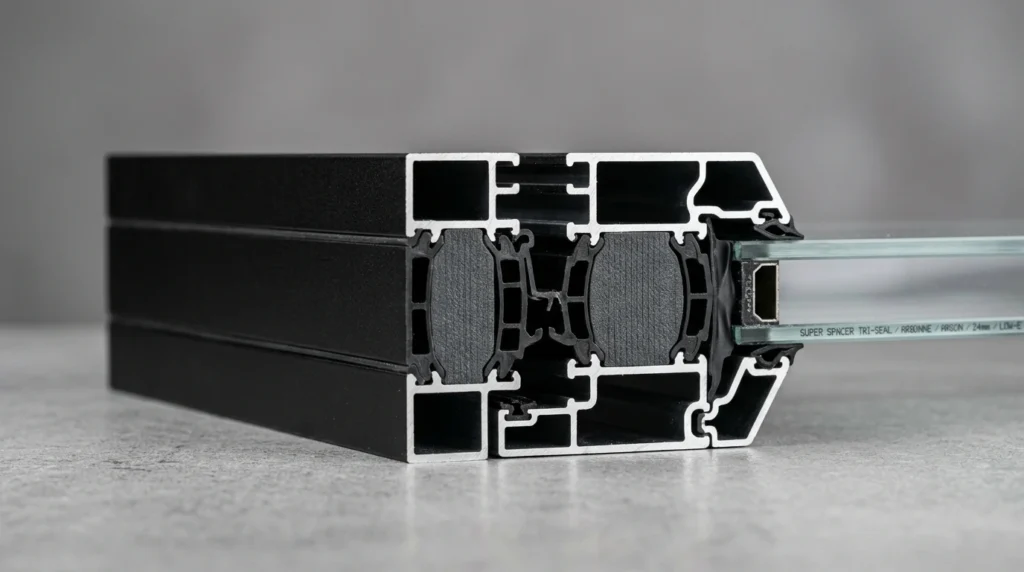
The frame is an important pathway for heat conduction. Even the best glass performs poorly when the frame around it transfers heat freely. Choosing the right frame material is a critical decision.
Thermal break aluminum windows solve this by inserting a non-conductive polyamide strip between the inner and outer aluminum profiles. This strip interrupts the heat path completely. The exterior is in direct sunlight, while the interior is shielded from the heat. You retain the strength of aluminium, and significantly reduce heat transfer.
Another great choice is vinyl windows. Vinyl itself is a very poor conductor of heat. In hot climates, vinyl windows can be expected to seal tightly and are virtually maintenance-free over time.
On both, pay attention to Energy Star, NFRC and CSA credentials. SUMMIT’s thermal break aluminum windows and vinyl windows carry these certifications, giving you reliable assurance backed by real verified data.
3. Sealing System Upgrade: Multi-Layer EPDM Sealing and Air Infiltration Prevention
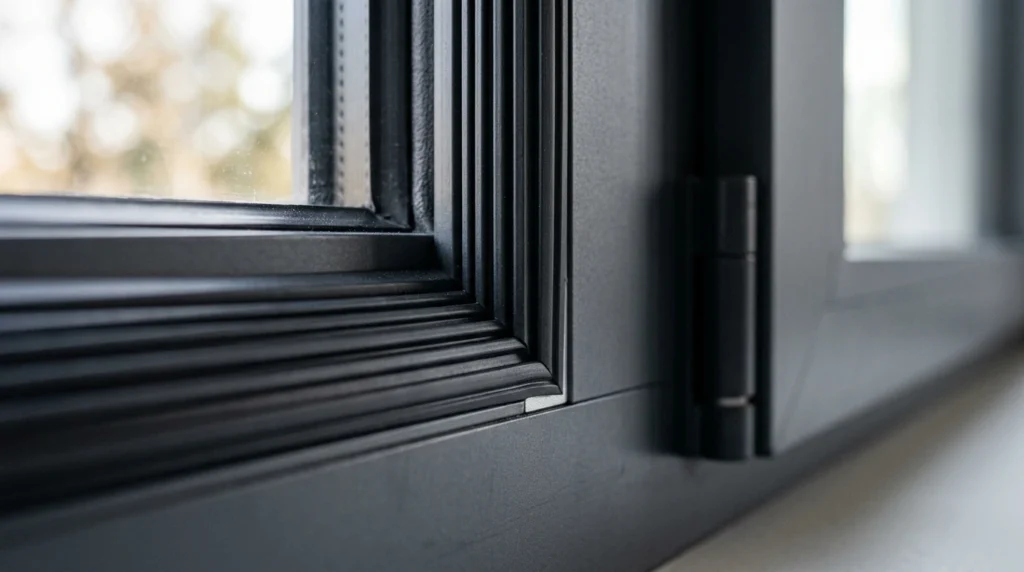
Even a well-insulated frame and glass system loses performance without proper sealing. Multi-layer EPDM sealing and air infiltration prevention are key reinforcement systems that improve overall performance significantly.
EPDM rubber strips are tough, weather-resistant, and compress tightly when the sash closes against the frame. Hot air finds almost no path through a properly sealed EPDM system. Unlike single-layer seals, multi-layer designs create multiple barriers that warm air must overcome.
SUMMIT windows and doors feature multi-layer EPDM sealing structures throughout. When closed and locked, the sash presses firmly against the frame. This tight contact combined with high-performance EPDM strips is what separates a genuinely energy-efficient window from a basic one.
These systems work alongside Low-E glass and thermal break aluminum windows to fully reduce heat gain through windows and doors at every level.
Why SUMMIT Windows and Doors Are Built for Summer Heat
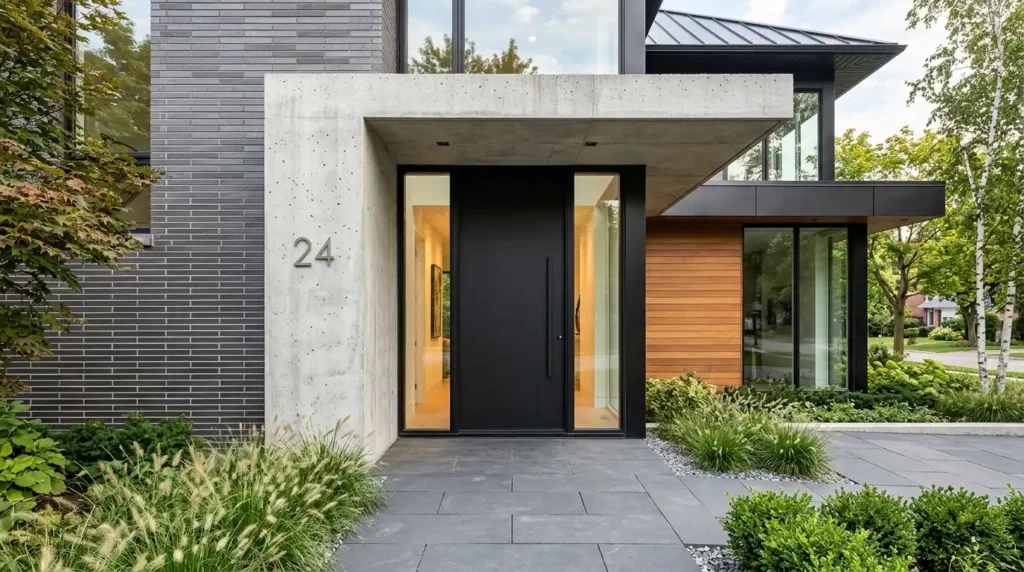
SUMMIT is a professional window and door supplier based in Brea, California. Every product is engineered for real-world climate performance, including intense summer heat, direct solar exposure, and strict energy efficiency standards.
SUMMIT’s product range includes:
- Thermal break aluminum windows in casement, sliding, awning, tilt-and-turn, single hung, and bifold configurations
- Exterior aluminum doors and bifold doors engineered for minimum heat transfer
All SUMMIT products meet Energy Star, NFRC, and CSA certification standards where applicable. The team also provides expert consultation to help you select the right product based on your home’s orientation, local climate, and project budget.
Supplementary Cooling Methods When You Cannot Upgrade Immediately
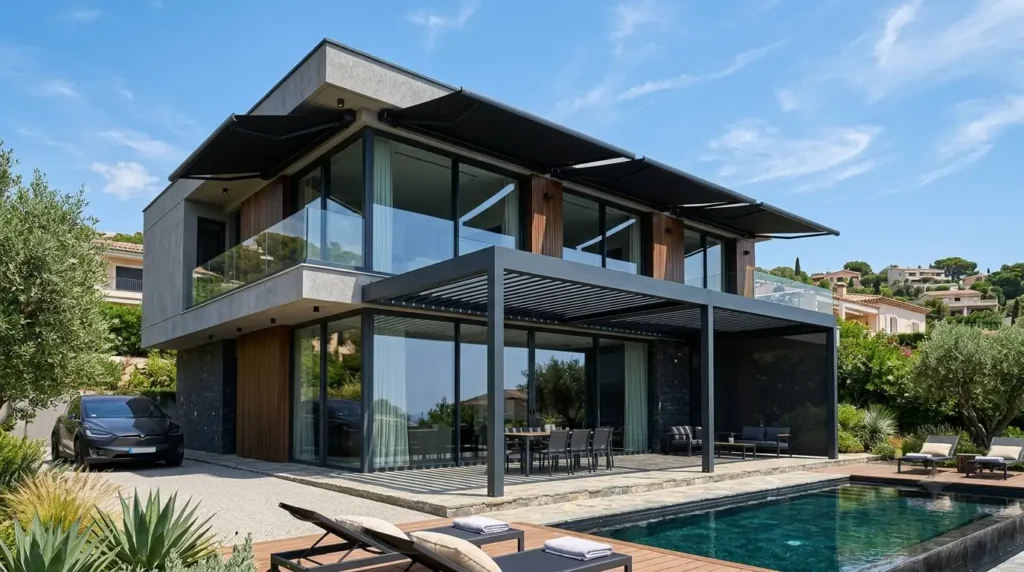
These are all additional ways. These are not window replacement alternatives, but they will make a significant difference in your planning.
Exterior Awnings: Ensure that the sun does not hit the glass. With appropriate installation, an awning on a west or south window can block over 60% of the solar heat gain.
Louvered Shading Systems: These can be opened or closed to regulate the direct sunlight throughout the day. Best in the afternoon sun on west facing windows.
Thermal Curtains and Blinds: Light-colored, reflective curtains will work to keep sunlight out. Cellular shades are made of material that has an air cushion, which acts as an insulator. Keep them closed during high sun hours for optimum results.
Solar Window Films: These adhesive films can be installed over a portion of the windows to reduce exposure to infrared radiation without the entire window being replaced. A low cost alternative for a future upgrade to Low-E Glass or Thermal Break Aluminum Windows is to use these.
Frequently Asked Questions
Warm air around closed windows, hot frames and places that are not cooled down are important. An energy audit can determine if windows are the primary source of heat gain.
Yes. Upgrades to the windows are most effective in the summer months when they most directly receive the most intense sunlight, and should be made first on windows on the west and south sides.
Find the SHGC number. Lower means less solar heat enters. A low U value is good all-round insulation (less than 0.30). These two numbers will tell you more than any product description will.
Highly recommended for professional installation. If not installed correctly, gaps are created that cause air leakage and remove the thermal performance benefits of the window.
Yes. Vinyl will not warp and is resistant to moisture and high heat and humidity. Resists paint failure and can be left unmaintained for many years with a reliable shape and seal.
Heat will still conduct through the old frame. Glass and frame must work together. Upgrading only the glass delivers partial improvement but leaves a significant heat pathway open.
Yes. SUMMIT supplies thermal break aluminum windows, vinyl windows, and exterior aluminum doors for both residential and commercial applications. Contact the team at summitdw.com for project-specific guidance.
Properly framed and sealed good quality Low-E windows will last 20-30 years. Sealing strips should be checked regularly for maximum thermal performance throughout their life span, typically every few years.
Conclusion
To reduce heat gain through windows and doors, you need to tackle all three causes together.
The three routes of solar gain, conduction through frames and air infiltration through gaps are measurable and contribute to your discomfort and energy bill during the summer.
Up-front cost is a deterrent for many homeowners. The reality is that upgrading to Low-E glass, thermal break aluminum windows, or vinyl windows with quality EPDM sealing pays back consistently through lower energy bills every summer.
Your AC runs less. Your home stays cooler. The investment works for you year after year without ongoing effort.
Waiting costs more in the long run. SUMMIT Windows and Doors offers certified, tested products built for exactly these conditions. Contact SUMMIT today to request your free quote and make this the last summer you spend fighting indoor heat.