Most homeowners spend weeks choosing a front door. They compare finishes, styles, and glass options before making a final decision. The frame usually gets far less attention.
That is surprising because the frame is responsible for holding the entire door system, excluding air and water infiltration, holding the locks that keep your home safe, and determining how much your door holds up over the years of everyday use.
There are different materials for exterior door frames that are appropriate for various budgets, climates and housing requirements. California puts every exterior door to the test. Hot summers, strong UV rays, and salty coastal air can wear down some materials much faster than expected.
Choosing the right frame helps your door last longer and perform better in these conditions. Choosing the wrong exterior door frame material here means you will be making this same decision again sooner than you planned.
Common Exterior Door Frame Materials
Here is a fast comparison before getting into the details on each one.
| Material | Durability | Energy Efficiency | Maintenance | Cost |
|---|---|---|---|---|
| Thermally Broken Aluminum | Very High | High | Very Low | Medium-High |
| Fiberglass | Very High | High | Very Low | High |
| Standard Aluminum | Very High | Medium | Very Low | Medium |
| Vinyl | Medium-High | High | Very Low | Low-Medium |
| Wood | Medium | Medium-High | High | Medium-High |
| Steel | High | Low-Medium | Medium | Medium |
Aluminum Door Frames
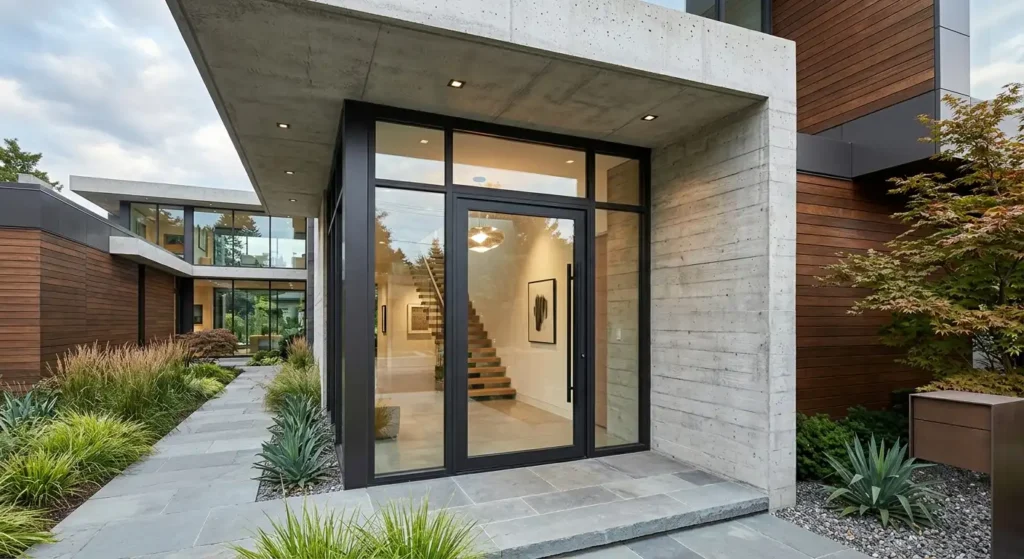
Aluminum is one of the most widely used exterior door frame materials for good reason. It is durable, lightweight, and anti-corrosion. Has shape-ability when loaded and requires virtually no maintenance to keep it clean.
The only drawback to regular aluminum door frames is its thermal conductivity. It conducts heat well, which is bad when you are trying to retain conditioned air during the hot summer months in California.
What aluminum does well:
- Resists fading and degradation from UV.
- Withstands corrosion from salt air along the coasts.
- Uses a thin profile for contemporary minimalistic designs.
- Low maintenance after installation
Where it falls short:
- Standard aluminum transfers heat readily through the frame
- Not the best choice if energy efficiency is your top priority without a thermal break
For California homes dealing with heat, UV, and salt air, thermally broken aluminum is the more complete solution than standard aluminum profiles.
Vinyl Door Frames
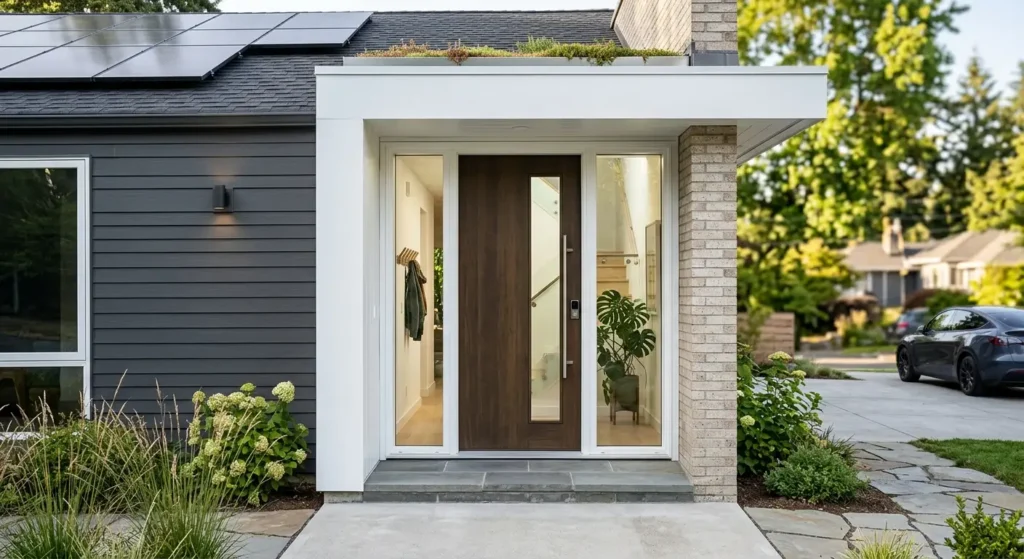
Vinyl door frames offer a practical balance of affordability, energy efficiency, and low maintenance. They perform well in many residential applications and do not require painting or sealing.
What vinyl does well:
- Is not corrode or deteriorate due to corrosion
- Does not need to be painted or sealed
- Provides good natural thermal insulation
- Maintains a cooler temperature due to minimising the transfer of heat through the frame
- Ideal for most common residential door applications
Where it falls short:
- Lower structural strength than aluminum or fiberglass
- Not suited to oversized or heavy-duty exterior doors
- Ultra-narrow frame profiles are not achievable with vinyl
- Lower-quality products can soften or warp under sustained California heat
If you choose vinyl, look for high-quality frames with internal steel reinforcement. The added reinforcement improves strength, reduces movement over time, and provides better long-term stability, especially in areas with high temperatures.
Wood Door Frames
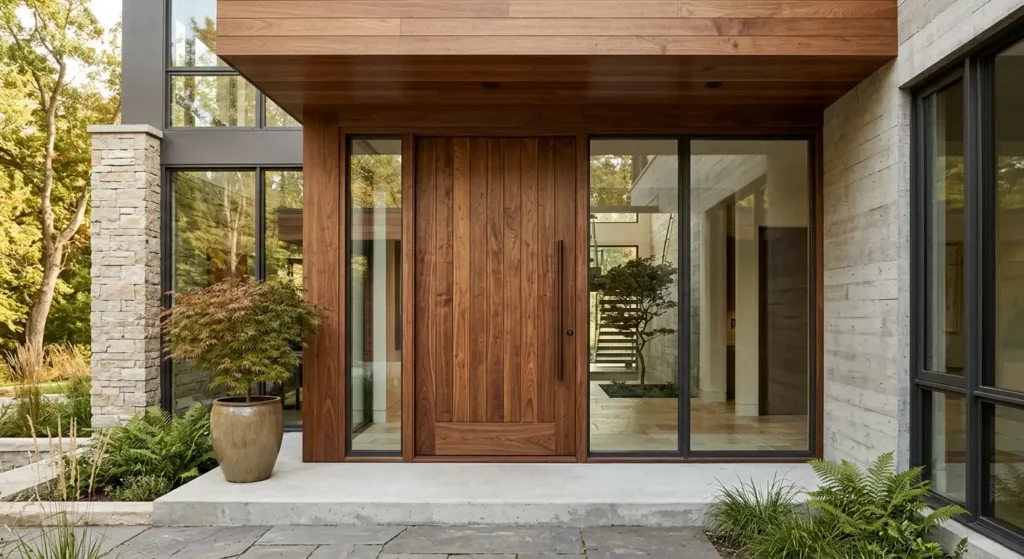
Wood door frames offer a natural appearance that other materials struggle to match. Its grain, warmth, and traditional character make it a popular choice for classic and craftsman-style homes.
What wood does well:
- Natural and beautiful, contributing to curb appeal and home value
- Excellent natural heat insulation.
- Can be custom-sized and formed without difficulty compared to other materials
- With care, it can be a good performer in the dry, inland California climate
Where it falls short:
- Eventually gets cracked, warped and rots in waterlogged situations
- Pests are able to injure plants when they are left untreated.
- Requires regular painting, sealing and anti-corrosion maintenance
- Deterioration is significantly enhanced along the California coastal area.
Constant moisture protection is essential for wood frames to function optimally over time. Regular sealing, painting, and inspections are especially important in California’s coastal areas, where salt air and moisture speed up wear and reduce the life of untreated wood.
Fiberglass Door Frames
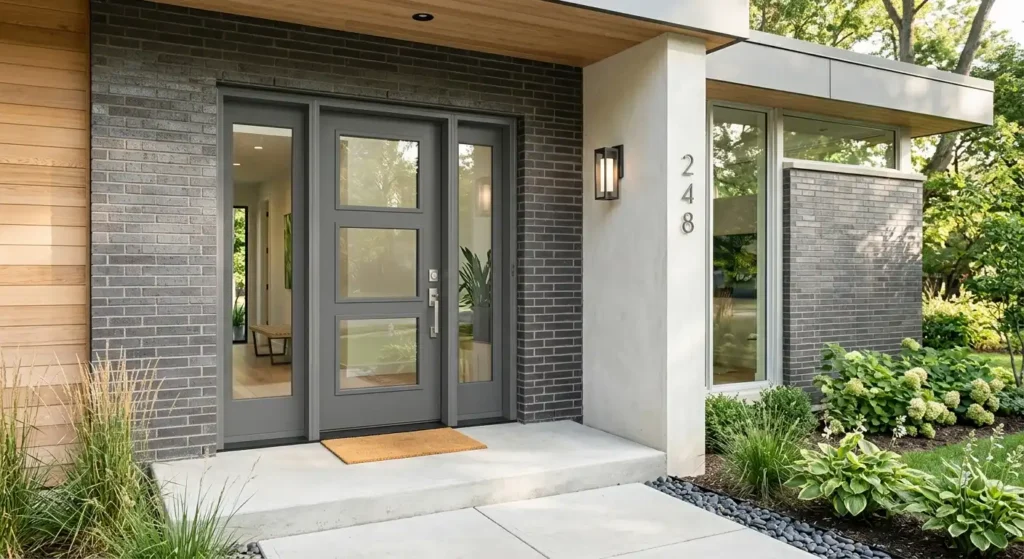
Choosing a home that has a fiberglass door frame is a great option for homeowners who are looking for long-lasting durability and low maintenance door frames. It has many of the desired characteristics that are not found in other frame materials and is still performing well even in harsh conditions.
What fiberglass does well:
- Not subject to rust, rot, cracking or insect attack.
- Can work well in hot, humid, rainy and cold environments.
- Provides good heat insulation to lower energy bills
- Tolerant of salt spray in coastal California.
- Easy to maintain over the life of the product
Where it falls short:
- Slightly more expensive initial investment than vinyl and similar to high-quality aluminum systems.
- There are wide differences in style and customization options available from different manufacturers.
While the initial price of fiberglass is higher, many homeowners can offset the expense over time because of reduced maintenance and better energy efficiency and service life. It often requires fewer repairs and replacements than lower-priced materials.
How to Choose the Right Door Frame
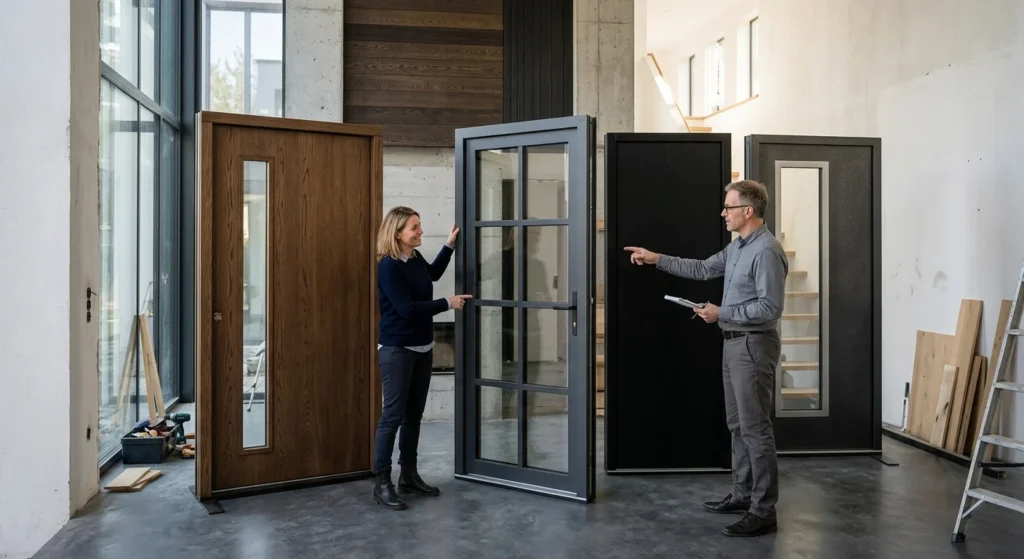
Thermally broken aluminum and fiberglass provide long term performance, durability and weather resistance in most climates in California for homeowners who plan to remain in their home for many years.
Make sure to take three steps before you make a final choice on material.
The process of making the right decision:
- Inland areas, such as Fresno, Sacramento or Bakersfield: high temperatures, high UV, low humidity, wide temperature range day-night.
- Expansions facing the seas: San Francisco, Los Angeles, San Diego: salt air, humidity, consistent moderate temperatures
- Select material appropriate to your climate.
- High heat and UV: prioritize UV-resistant, deformation-resistant materials. Standard vinyl without reinforcement is risky here.
- Coastal salt air: prioritize corrosion resistance above most other factors. Aluminum and fiberglass handle this well. Wood and untreated steel do not.
Weather resistance narrows the field. The other factors determine the final choice within that narrowed group.
Focusing on Energy Efficiency
Most people think energy efficiency comes from the door itself. In California, poor door frames allow outdoor heat to enter during summer and cooled indoor air to escape. That forces your air conditioner to run longer, which increases electricity use and monthly energy bills.
Key factors that affect frame energy performance:
- Material thermal conductivity: Standard aluminum has good heat conductivity. Vinyl and fiberglass conduct at much lower rates. A thermally broken aluminum frame interrupts the conductive path structurally.
- Structural design: Whether the frame includes a thermal break, weatherstripping integration, and multi-point sealing directly controls how much air moves around the frame.
- Sealing performance: The best material underperforms if installation leaves gaps or if seals wear without replacement.
Materials that perform well on energy efficiency:
- Thermally broken aluminum
- Fiberglass
- High-performance reinforced vinyl
Look for doors certified by Energy Star. That certification confirms the full system, not just the door panel, meets independently verified efficiency standards.
Low Maintenance Cost
California’s climate adds extra stress to exterior door frames. Strong sunlight, high temperatures, daily temperature changes, and salty coastal air all increase wear over time. Materials that require frequent painting, sealing, or repairs often become more expensive than their original purchase price suggests.
Materials that require frequent painting, sealing, or repairs often become more expensive than their original purchase price suggests.
Maintenance requirements by material:
| Material | Painting Required | Rust Treatment | Seal Inspection | Insect Treatment |
|---|---|---|---|---|
| Thermally Broken Aluminum | No | No | Periodic | No |
| Fiberglass | No | No | Periodic | No |
| Vinyl | No | No | Periodic | No |
| Wood | Yes, regularly | No | Yes | Yes |
| Steel | No | Yes | Yes | No |
Thermally broken aluminum and fiberglass are among the best options if you’re looking for reduced maintenance and reduced long term costs. Both materials are able to withstand the California climate and have significantly lower maintenance needs than wood or untreated steel.
Why Are More and More Homes Choosing Thermally Broken Aluminum?
As the popularity of thermally broken aluminum continues to grow, so do the reasons behind its appeal to more and more homeowners.
There has been a definite trend in the U.S. toward clearer sustainability in residential renovation and new buildings. Homeowners who were previously selecting wood, standard aluminum or vinyl are opting for thermally broken aluminum frame systems.
This is not happening because of a single advantage. It is happening because of four converging demands:
- Rising energy efficiency expectations.Utility costs are climbing, and energy efficiency ratings affect home valuations. Homeowners are scrutinizing every component that affects thermal performance, including the frame.
- California-specific climate challenges.Sustained heat, intense UV, and coastal salt air expose the weaknesses of wood and standard aluminum faster than they appear in milder climates. Materials that perform adequately elsewhere show their limits sooner here.
- The shift toward low-maintenance living.Modern households increasingly expect building materials to perform for decades without regular painting, sealing, or treatment. That expectation has moved from a premium preference to a mainstream demand.
- Architectural trends favoring slim profiles. Larger glass openings and minimalist facades favor aluminum’s structural efficiency over bulkier vinyl or wood profiles.
- Standard aluminum conducts heat at a rate that undermines energy efficiency
- The thermal break inserts a low-conductivity barrier between the inner and outer aluminum sections
- That barrier interrupts the conductive path without reducing structural strength
- The result is aluminum performance on strength and aesthetics, with fiberglass-level performance on energy efficiency
SUMMIT’s thermally broken aluminum door dsystems are built specifically around these demands, combining structural performance, energy efficiency, and modern design for the conditions California exterior doors homeowners face year-round.
FAQs
Not always, but often yes. A new door that is tied to an inadequate frame will not perform well from the start if the existing frame is warped, poorly sealed, or not constructed of a material appropriate for your climate.
Both thermally broken aluminum and fiberglass offer very long service life and require very little maintenance. Compared to wood or regular vinyl, either one of these has a clear advantage under the same circumstances.
Yes, for most residences in California. Energy savings from reduced heat transfer are realized over a number of years of operation and are most significant in the summer when cooling loads are highest.
Good quality, internally steel-reinforced vinyl can be relied upon in most of California's climate. Reinforced vinyl may melt or buckle after prolonged exposure to high temperatures. Unreinforced vinyl may soften or buckle when exposed to high temperatures over an extended period of time.
Look for drafts around the frame perimeter, temperature differences on the inside near exterior doors, or higher than normal cooling expenses. If the frame conducts heat or if the seals have deteriorated, it will appear in all three.
Thermally broken aluminium or fibreglass. They both perform well in resisting salt air corrosion over time. Without intensive ongoing maintenance, wood and untreated steel are not good options.
Conclusion
The right material for exterior door frames depends on your climate, your maintenance tolerance, and how long you plan to stay in the property.
- Woodsuits traditional aesthetics where ongoing maintenance is acceptable
- Vinylworks well for budget-conscious households on standard residential doors
- Fiberglassdelivers high performance and low maintenance door frames for long-term residence
- Thermally broken aluminumbalances structural strength, energy efficiency, and modern design, and handles California’s heat, UV, and coastal conditions better than most alternatives
Think about what your home actually faces year-round. Then choose accordingly.
Request a quote from SUMMIT to get a recommendation built around your specific climate and project requirements.