You finally got the big sliding glass door installed. The living room feels bigger, light’s everywhere, and the backyard feels like part of the house now. Then summer shows up. By 3 pm the sun’s heating the couch directly, and you can’t sit there without squinting.
Later that evening, with the lights on inside, you realise anyone walking past can see straight into your living room while you’re relaxing in your pajamas. That’s when most homeowners start thinking seriously about the right window coverings.
For sliding doors, it always comes down to two options: blinds or curtains. Both can give you privacy and control the light, but they do it in different ways, and the difference isn’t just aesthetic.
It affects how easy the door is to use every day, how much cleaning and maintenance you’ll have to do, and even how well your home stays cool in summer and warm in winter.
Here is the guide on all the different options of doors and their pros and cons so that you can choose the best one for yourself.
Differences Between Blinds and Curtains
Choosing between sliding glass door blinds and curtains comes down to how you want to balance privacy, light control, style, and convenience. While both can cover large glass doors effectively, they perform differently in everyday use.
Blinds
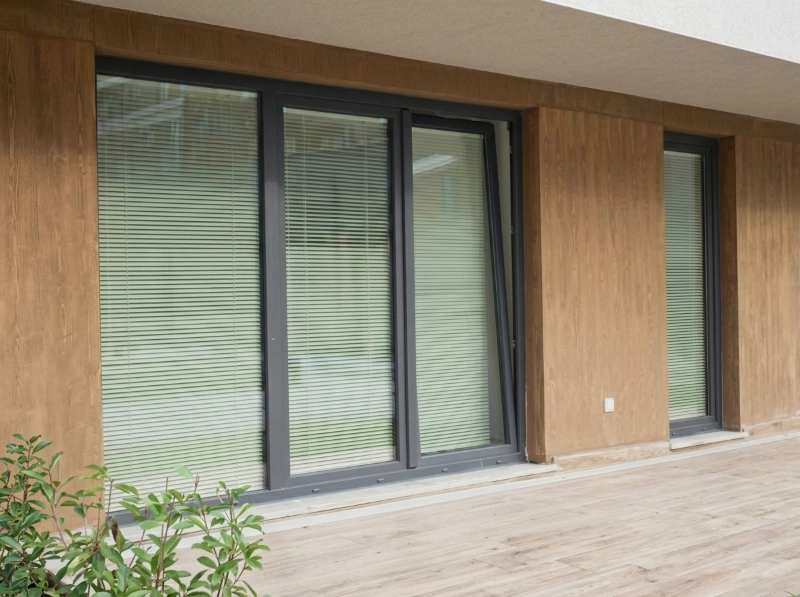
Here are the advantages and disadvantages of blinds:
Advantages:
Practical light control: Blinds are the more practical option. The slats let you tilt them to whatever angle you want, with a little light peeking through, or shut tight and dark, which is a level of control curtains for sliding doors just can’t offer.
Low maintenance: Cleaning is basically nothing: a wipe-down or a quick pass with the vacuum attachment, and you’re done. No fading fabric, no washings.
Space-saving design: If your living room’s on the smaller side, sliding glass door blinds don’t eat up space as curtain panels bunched at the sides can.
Disadvantages:
Aesthetics and warmth: The downside is that blinds can feel a bit cold, but not cozy. If you want your living room to feel warm and lived-in, blinds don’t fit best. They do the job, but there’s something about them that reads more office than living room.
Incomplete blackout: If you’re chasing real blackout, you want the room pitch dark for movie night, or you sleep during the day because of your work schedule, blinds aren’t quite enough on their own.
Long-term wear: On a bigger door, those slats get a lot of daily use, and over time they can warp, chip, or just stop closing evenly. Nothing dramatic, but it happens, and it usually means spending a bit more on a heavier-duty set to begin with if you know the door’s going to get used constantly.
Curtains

Here are the advantages and disadvantages of curtains:
Advantages:
Warmth and style flexibility: Curtains just feel warmer. There’s something about fabric that makes a room look finished in a way slats don’t, and you’ve got unlimited choice in color, texture, and pattern to match whatever look you’re going for.
Superior blackout capability: If blackout’s the goal, curtains win. A good lined or blackout style blocks light in a way sliding glass door blinds just don’t, which makes a real difference in a bedroom where you want it dark.
Thermal insulation: There’s a bonus too: heavier curtains for sliding glass doors add a layer of insulation, so the room holds onto warmth a bit better in winter and stays cooler when it’s hot out.
Easy style updates: And whenever you’re ready for a change, swapping out curtains is a lot less of a project than tearing out hardware. You just take one set down and put another up.
Disadvantages:
Daily operational hassle: The catch is convenience, plain and simple. On a wide sliding door, you’re pulling curtains fully open every time you want to use the door and pushing them shut again, which gets old fast if you use that door a lot.
Higher overall cost: Big doors also need long rods and a lot of fabric, so the cost adds up quicker than you’d expect.
Maintenance and limited adjustment: Fabric collects dust and can fade if it’s getting hit with sun all day, so it needs actual washing now and then, not just a wipe. Curtains don’t offer the same level of light control. Most of the time, it’s either fully open or fully closed unless you layer them with sheer curtains.
Quick Comparison
To help you decide faster, here’s a side-by-side comparison of sliding glass door blinds and curtains based on the features that matter most in everyday use
| Factor | Blinds | Curtains |
|---|---|---|
| Light Control | Adjustable and precise | Mostly on or off |
| Privacy | Strong, adjustable coverage | Strong when fully closed |
| Ease of Use | Never blocks the door | Must be pulled back to open it |
| Blackout Performance | Decent | Stronger, especially lined styles |
| Insulation | Moderate | Better |
| Cleaning | Wipe or vacuum | Needs real washing |
| Durability | Slats wear with heavy use | Fabric fades and thins |
When Should You Choose a Sliding Glass Door Blind?
Picture your actual routine for a second. If you’re out on the patio every day, grilling, letting the dog do its playing, or just moving between the living room and the yard, then curtains for sliding glass doors that need to be pulled open and shoved back every single time are going to become a small daily annoyance. Sliding glass door blinds solve that on day one, since they never sit in the path of the door.
They’re also worth considering if your space is tight. A living room that’s a bit cramped doesn’t need extra fabric bunching up on either side of the frame. If you’ve curtains that turn gray with dust after a few months near a busy door, that’s a maintenance issue blinds don’t have.
When Should You Choose Curtains for Sliding Glass Doors?
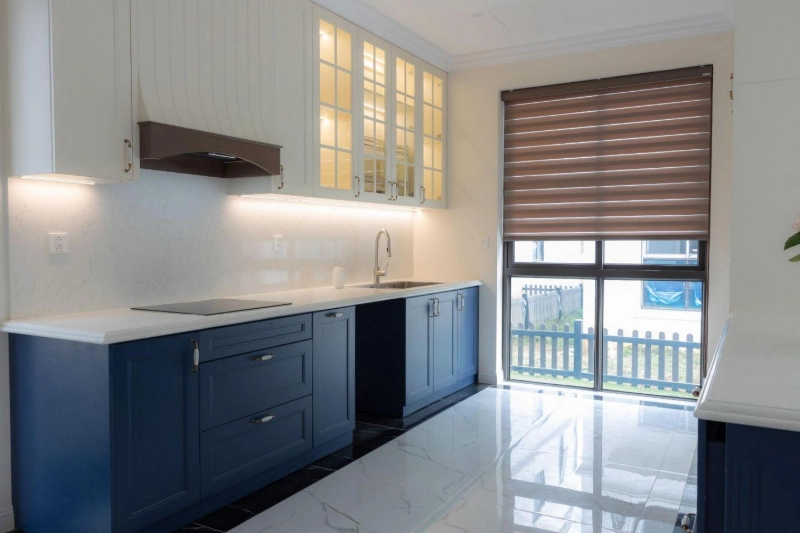
Curtains are the better call when how the room feels matters as much as how the door functions. If blinds feel a little too office-like for your taste and you want the room to feel warm and personal, fabric does that instantly in a way slats really don’t. They’re also the winner if you want a blackout bedroom or media room.
If you like refreshing the space or enjoy redecorating, swapping curtains is simpler than swapping out hardware. If style matters more to you than how you’re opening and closing that door, curtains are the best.
Expert Recommendation: Sliding Glass Door with Built-in Blinds
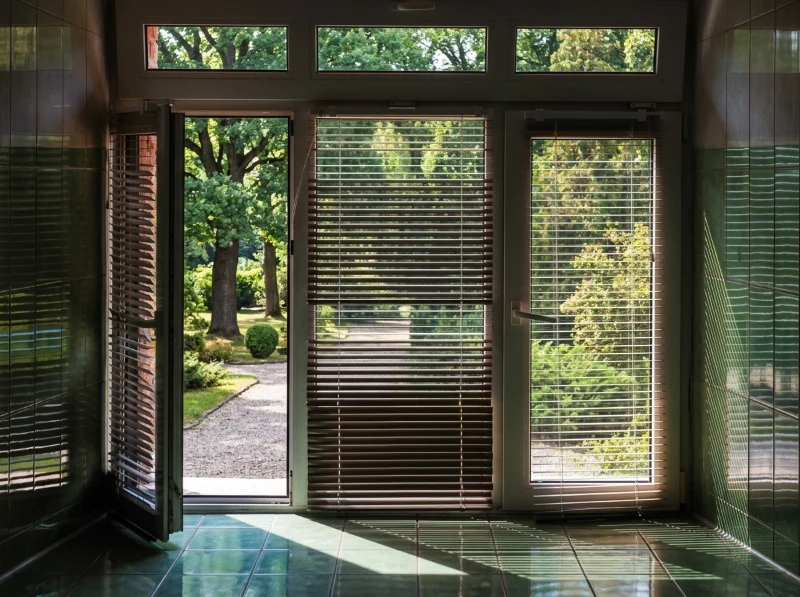
If you want natural light, privacy, low maintenance, and a clean look, the SUMMIT team’s honest take is this: get a Sliding Glass Door with Built-in Blinds. You’ll get rid of the dusty blinds and curtains that get in the way, because the blinds are between the glass panes, protected from dust and everyday wear, and they never block the door track.
With SUMMIT’s sliding glass door built-in blinds version, you can open, close, or angle the blinds with a remote, so you get that open, airy feel of a big glass door without dealing with the usual hassle.
Conclusion
If you’ve read all of this and you’re still stuck, it usually comes down to one real question: do you care more about convenience, or coziness and full light control? If it’s convenient, go with sliding glass door blinds. If it’s coziness and blackout, curtains are worth the extra upkeep.
If you’d rather not choose between the two, a Sliding Glass Door with Built-in Blinds from SUMMIT is built to give you both, worth a conversation with the SUMMIT door team about what fits your home and how you use it.
FAQs
Blinds, generally. They don't get in the way of the door track, while curtains require extra fabric and a long rod, which adds cost and bulk. Blinds are the safer pick for daily convenience.
Yes. Blinds control the light getting inside your house, while curtains provide warmth or additional blackouts at night. It costs more upfront, but you get the strengths of both.
Yes. Thick curtains add insulation that reduces heat loss in winter and heat gain in summer. Thin, lightweight fabric won't do much, so choose lined if you want to save energy.
Curtains need a wash every few months, more if they're getting direct sun. Blinds need a wipe or vacuum every couple of weeks.
Most likely, no. Built-in blinds are installed together with the door and are ideal when you are looking for new doors rather than old doors. It's good to talk to professionals to understand the feasibility.
Both work well fully closed, but curtains with a tight weave or blackout lining tend to block outside visibility a bit more completely after dark. Blinds still do a solid job, especially angled correctly.
If you worry about maintenance and cleaning, yes, as it requires no cleaning at all compared to other curtains that gather dust or fabrics hanging down. The initial investment is higher, but it works better in the long run.
Yes. Fabric tends to show visible fading over time in strong sun, while sliding glass door blinds, especially vinyl, aluminum, or faux wood, hold their color and shape much better long-term.