Ask anyone who’s replaced windows more than once, and you’ll hear the same regret: they picked based on looks first. A style they liked, a price that felt fair, done deal. The window performed fine in the showroom. It just wasn’t built for their house.
Here’s what actually decides how a window performs: the climate around it. Temperature swings, humidity, sun exposure, wind, rainfall; these change what a window needs to do. That’s why the same casement window can feel great in one home and disappointing in another, even if they’re miles apart.
So before you fall for another good-looking frame, let’s talk about what your climate demands.
Different Climates and Their Characteristics
Every climate creates its challenges for windows. Knowing the climate type is the primary step toward a smart window replacement.
Cold regions bring long winters and a big temperature gap inside and outside. The window’s job is simple: trap heat, keep cold out. Hot regions flip the problem entirely. Cold air isn’t the issue. Sun pushing heat inward is, so the window has to block that heat without blacking out the room.
Humid and coastal air brings a different condition altogether. Salt spray, constant moisture, heavy rain– these conditions wear down materials fast if the window wasn’t built for it. And mixed climates? They throw all of the above at you across a single year. Heat retention in January, heat rejection in July, from the same set of windows.
There’s no universal window. What works depends on where you live, which direction windows face, and how the room’s used. When you know your climate, the window configurations get easier to pick.
Key Window Configurations to Consider for Different Climates
Check out the window configurations for different climates:
Cold Climate
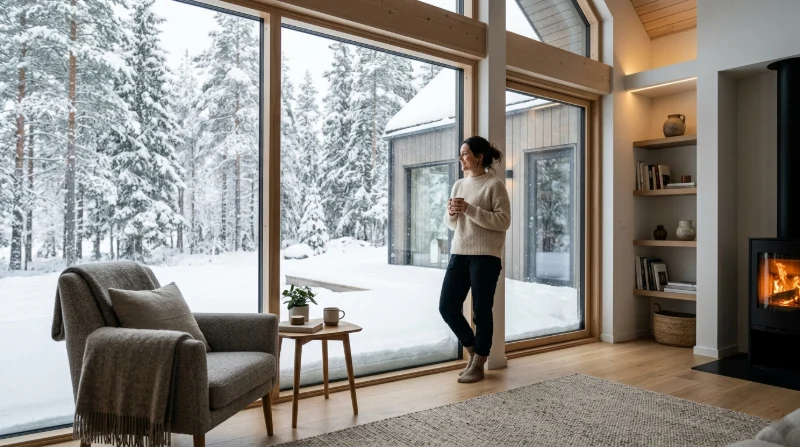
You know the feeling. It’s January, you’re sitting near the window with a blanket on, and there’s a cold draft entering. The heater’s running for hours. That corner of the room never quite catches up. Homeowners in California’s colder pockets- Tahoe, the higher Sierra Nevada- deal with this every winter without fail.
In cold climates, the goal is to keep as much indoor heat as possible. Start by checking the U-Factor, which measures how quickly heat escapes through the glass the lower the U-Factor, the better the insulation. Double- or triple-pane glass provides an extra layer of insulation, while a Low-E coating helps reflect heat back into the room instead of letting it escape through the glass.
Frame material matters just as much. For instance, a Vinyl Window is less likely to break in cold weather and doesn’t transfer cold the same way plain metal does. By adding seals and quality weather stripping, there will be no more drafts coming in.
Hot Climate
Now picture July. Sunlight enters through the glass, and within an hour the room feels like an oven. The AC’s been running nonstop. It still feels warm and sticky. Anyone in the Central Valley or a desert city like Palm Springs already knows this scene by heart.
Here, the enemy isn’t outdoor heat. It’s solar heat gain, how much of the sun’s energy actually makes it through the glass. SHGC, the Solar Heat Gain Coefficient, measures that.
Lower is better. Look for Low-E coatings built specifically for heat rejection, since they cut solar radiation while still letting natural light through.
Frame choice matters here too. A Thermal Break Aluminum Window uses an insulating layer between the metal, which stops heat from moving through the frame. Smart shading helps as well. A lot of buyers chase brightness and ignore solar heat gain completely, and that’s usually where the regret shows up a year later.
Humid and Coastal Climates
Live near the coast, and you’ve probably already met the sticky hinge, the rusted latch, the window that suddenly won’t slide the way it used to. Homeowners from Half Moon Bay down through parts of San Diego run into this constantly. Salt air speeds up corrosion. Constant moisture puts real stress on seals and frames.
Durability earns its keep as insulation does. Look for corrosion-resistant hardware and marine-grade fasteners for exposure, not just weather. A Vinyl Window resists rot and rust; however, untreated wood or basic metal frames can’t. Good weatherstripping and properly sloped sills matter too, keeping water moving away from the house instead of pooling and finding a way in during the rainy season.
Mixed Climate
Mixed climates are their own kind of tricky, mostly because nothing stays the same for long. A homeowner in the inland Bay Area might need heat retention in January and heat rejection by August, out of the same windows. That rules out any single-focus fix pretty fast.
Instead of chasing one perfect number, think balance. A reasonable U-Factor for insulation, a solid SHGC for solar control, a Low-E coating that holds up across seasons, not just one.
Frame material counts here too. A Vinyl Window or fiberglass frame handles seasonal expansion and contraction better than materials that shift with every temperature swing. And don’t assume every window in the house needs to match. A south-facing window deals with a different sun load than one facing north, even under the same roof.
Comparison Table
Want the short version? Here it is.
| Climate Type | Common Problem | Key Focus | Recommended Configuration |
|---|---|---|---|
| Cold | Heat loss, cold drafts | Low U-Factor | Double or triple-pane, Vinyl Window frame, tight seals |
| Hot | Solar heat buildup | Low SHGC | Heat-rejecting Low-E glass, Thermal Break Aluminum Window |
| Humid or Coastal | Rust, leaks, moisture damage | Durability, waterproofing | Corrosion-resistant hardware, Vinyl Window frame |
| Mixed | Seasonal performance swings | Balanced U-Factor and SHGC | Vinyl or fiberglass frame with Low-E coating |
Other Factors to Consider
Climate sets the baseline. It’s not the complete story. Two houses on the same street need different windows, and it comes down to how people live in them.
Think about daily use. A home office might need better noise blocking. A nursery might call for safety features nobody thinks twice about in a garage. Orientation matters too, since south and west-facing windows take more sun than those facing north or east.
Maintenance gets overlooked. Some materials need repainting or resealing every few years. A Vinyl Window can go a long time with barely any upkeep at all. Budget plays into it as well. A Casement Window usually seals tighter than a sliding window, which helps efficiency, though it costs a bit more going in.
There’s the bigger question: how long are you staying? Ten years in this house is a different conversation than fixing it up before you sell. That answer shapes what kind of window replacement makes sense.
Conclusion
There’s no single best window sitting out there waiting to be found. The right choice comes down to matching your climate, your home, and how you actually live in it. Cold climates want insulation. Hot climates want solar control. Coastal homes want durability. Mixed climates want balance. That’s really the whole equation.
If you’re still not sure where you land, that’s what SUMMIT Windows is for. We look at your climate, your home’s layout, and how you use each room, then recommend windows built to solve your actual problem, not just fill the opening in your wall.
FAQs
A quick search of your zip code usually does it, or a call to your local utility provider. Once you know your zone, the right performance factors start to sort themselves out.
Yes, it opens outward like a door, which allows adequate ventilation without losing inner space. It is most suited for kitchens and bathrooms or narrow entrance walls where a sliding window will not work.
For most homes, yes. Better insulation and solar control mean lower energy bills and a comfortable house. How fast it pays depends on your current windows and climate.
A Vinyl Window gives strong insulation at a lower price. A Thermal Break Aluminum Window is stronger and slimmer, with insulation built into the frame. Which one wins depends on the climate.
It can, as long as it balances U-Factor and SHGC well. Look for coatings and frames built for years of performance, not one season.
Most windows last 15 to 20 years. Drafts, foggy glass, frames that stick or won't stay open- all signs it's time to look into window replacement.
Yes, if your current windows are old or single-pane. How much you save depends on the climate, your home's size, and the window configurations you choose.