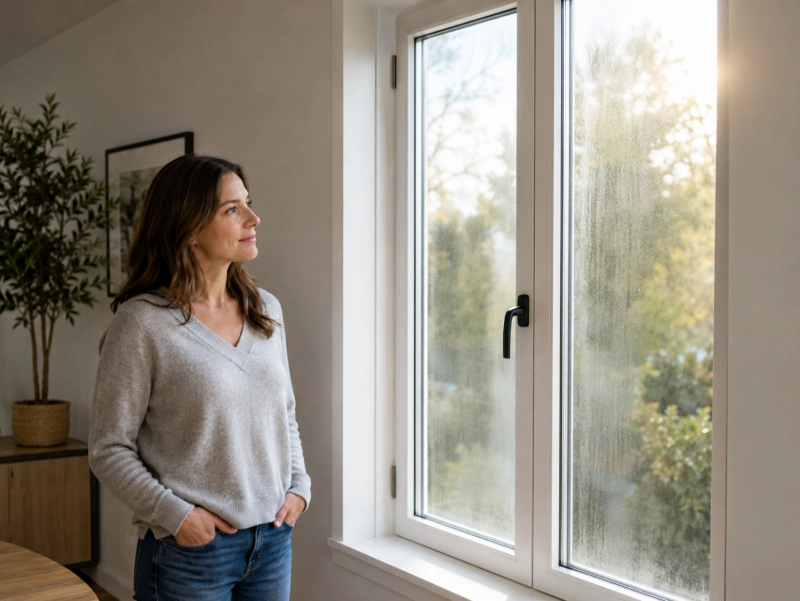
Many homeowners notice fog forming between glass panes. Some deal with rusted hinges in coastal areas. Others experience cold drafts in the early morning, when the window is completely closed. This often leads homeowners to consider casement window repair vs replacement.
That’s a frustrating situation. Initially, it seems to be a minor problem. However, in the long run, it can affect comfort, daylight, and even energy bills. Home Window Repair is the first option many homeowners resort to because it is believed to be quick to fix their issue.
The question now arises. Is it worth mere hundreds of dollars to fix the window, or to take it out and get a new one? And which of the two, casement window replacement, would be the more sensible in the long run?
Both options are described in this guide in an easy manner. It will also assist you in knowing when an Energy-Efficient Casement Window upgrade will be more advantageous and when some repair will suffice, in an effort to make a cost-effective choice for your house.
Which Problems Are Suitable for Repair?
Broken or Damaged Glass
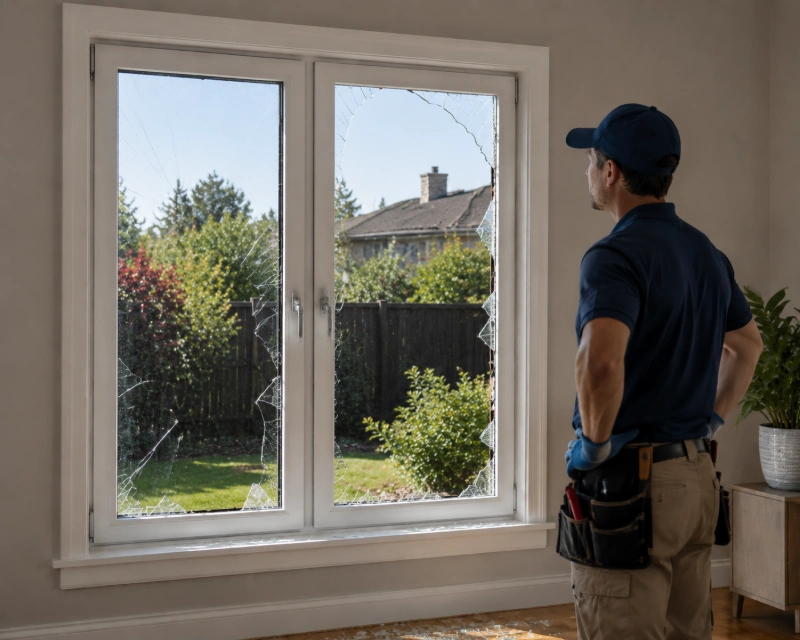
Damage to glass is common in casement windows. It can occur when children play ball near windows, pets hit the glass, or during yard work and moving furniture or tools. Cracks can also result from strong winds, branches, or small earthquakes.
In most instances, complete replacement is unnecessary. When the frame is in good condition and the sash can open, then the glass can only be repaired. Insulated glass units or units that are damaged and fogged can also be repaired without the entire window being replaced.
This assists homeowners in saving needless expenditure while maintaining the same window look.
Seal Failure
Seal failure usually shows drafts or fog between the glass panes. In summer, you might feel warm air coming in around the window while in winter, cold air may leak inside. Over time, seals may also be destroyed by salt air and UV in the coastal regions.
In most cases, it is possible to repair casement windows when the problem consists of: worn weather stripping, cracked caulking, fogged insulated glass seals or a minor air leakage. In case the frame is solid, then it does not require complete replacement.
Minor Window Frame Damage
Exposure to the sun, moisture and everyday utilisation can result in window frames fading or wearing out. Minor scratches, minimal corrosion or a minor misalignment can also arise with time.
These problems can usually be fixed. It is possible to adjust hinges, sealant cracks or surface damage to get normal functioning without necessarily replacing the whole casement window.
Which Situations Require Replacement?
Rotten Window Frames
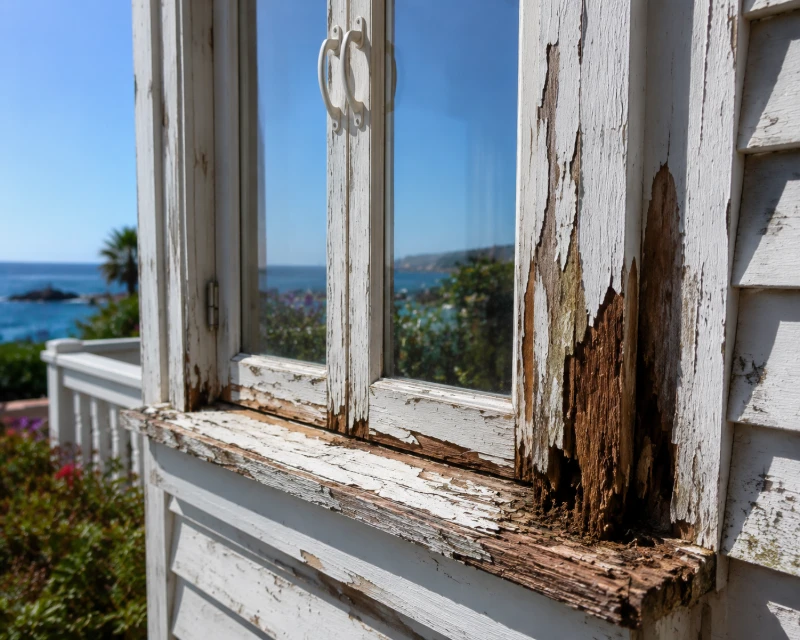
Rot in window frames is a severe problem. It is common in coastal regions of California, such as Los Angeles, Orange County, and San Diego. Moisture and seawater accelerate wood destruction. Due to the rainy season, frames remain wet for long periods. Powerful UV rays also weaken protective paint.
When there are clear signs of rot, then home window replacement would be required. These are black stains, mould, or a musty smell on the frame. Crumbling wood edges, cracks and swelling are also warning signs. When a window is difficult to open or close, it shows structure is failing.
Under these circumstances, it cannot be repaired. The problem propagates within the frame and is incurable. The safest and most permanent way of insuring your house and its construction is by replacing it.
Multiple Repairs
The same casement window keeps breaking down repeatedly, so it is no longer a smart thing to make a repair over the long term. Most householders repair their problems time and again, only to have them reappear in a few days. Then the repair of the casement window cost began to mount.
Repeated repairs are not cost-effective. The worst of all is that it is just the symptoms that are getting mended and not the actual cause. Hardware also becomes weaker over time, seals become old and minor problems become continuous performance problems.
Replacement is more likely to be the way to go in such cases. The root problem is resolved by creating a new window rather than a temporary one. It is also a single-step sealing operation and energy performance enhancer.
In the long term, replacement of windows can be more affordable. Homeowners will receive a lasting solution that enhances comfort and saves them from future repair costs, rather than paying to have their homes repaired multiple times.
Significant Energy Loss
In cases where casement windows have become inefficient, repairs can only be temporary. Even after correcting minor problems, you might continue to feel drafts, an increase in the indoor temperatures, or discomfort in certain rooms. In such instances, replacement is a sure long-term solution.
This is more widespread in California. During summers, temperatures remain long and hot, particularly in the inland regions. Humidity and wind also affect coastal areas and gradually destroy seals. Meanwhile, the prices of electricity are still among the highest in the country.
Due to this, the energy loss would be costly in the long run. Minor repairs are not able to completely reestablish insulation performance. Weak seals, old frames and gaps have remained, allowing air to escape.
This can be prevented at the root by new energy-saving casement windows. It helps to insulate, minimise air leakage and stabilise inside temperatures. This results in a reduction of energy consumption as well as an enhancement of long-term savings to homeowners.
Repair vs Replacement Cost Comparison
The repairs to the windows might appear to be cheaper initially. The problem can be resolved in a couple of moments by a simple repair. Repairs are, however, short-term solutions. After some time, issues may recur.
In the initial stages, window replacement cost is more expensive. It is, however, a long-term investment. It enhances efficiency in energy, comfort and durability.
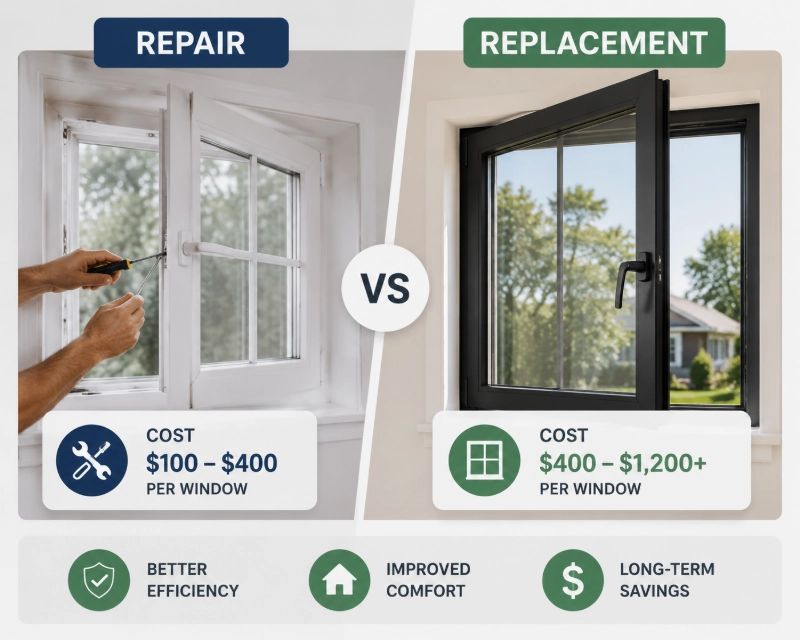
The following is a basic comparison of casement window repair vs replacement to assist you in making the decision:
| Factor | Repair | Replacement |
|---|---|---|
| Initial Cost | $100 – $400 per window (minor repairs) | $400 – $1,200+ per window |
| Service Life | Short-term fix | 15–25 years or more |
| Energy Efficiency | Limited improvement | Significant improvement |
| Maintenance Cost | Low initially, but recurring | Very low after installation |
| Long-Term Cost | Can become expensive over time | More cost-effective long-term |
| Comfort Level | Temporary improvement | Stable indoor comfort |
Small, isolated problems are better repaired. Replacement is appropriate in situations where the problems continue to recur or where there is a lot of energy wastage.
Key Decision Factors
Window Age
Window age is also an important factor in deciding whether to repair or replace a window. Materials weaken over time. Seals dry out. Hardware loosens. Even frames are deprived of their original performance.
This occurs more rapidly in certain areas in California. Wear is accelerated by strong sun and salt coastal air, moisture and seasonal rains. Due to this reason, the older windows tend to exhibit problems sooner than anticipated.
An easy age guide will enable homeowners to make a better decision.
- In case your windows are between 0 and 10 years old, it is normally sufficient to repair them. The majority of the problems are minor, like seals, hardware or minor glass problems.
- When the age of your windows is 10-20 years, then the performance should be evaluated. It is common to have frequent drafts, fogging or increasing energy bills that can be indicative of underlying problems.
- Replacement is usually the better option if your windows are 20 years old or older. There are various parts that begin to break down simultaneously at this stage. Although repairs still remain possible, they might only do so to provide short-term relief.
Old windows are also found to have difficulties in maintaining energy efficiency and indoor comfort. This can be enhanced by replacing them with modern casement windows that are energy efficient to enhance sealing, minimise air leakage and minimise long-term energy expenses.
Window age is not just a number. The extent to which a repair would still be valuable as compared to replacement is a good gauge of that.
Frequency of Problems
One of the most important questions that any homeowner ought to pose is straightforward. Is this a case once only, or is it recurring every time?
Seldom are repairs normal. A broken hinge, a loose handle or a minor seal problem can occur occasionally, and they can be easily repaired.
But recurrent troubles are evidence of a warning. And, unless you continue to fix the window each year, or the drafts are coming right after the sealing, you can probably expect the system to wear out.
Homeowners also report that in most instances, the hardware gets stuck or becomes loose once again after repair. Even glass or seals can not guarantee the removal of fogging.
Such repetitive problems usually imply that the window is at the end of its life. At this point, the repair is temporary and not cost-effective.
Replacement provides a solution that is more stable than paying for repeat fixes. It addresses the underlying problem and enhances both the long-term performance and comfort.
Energy Efficiency
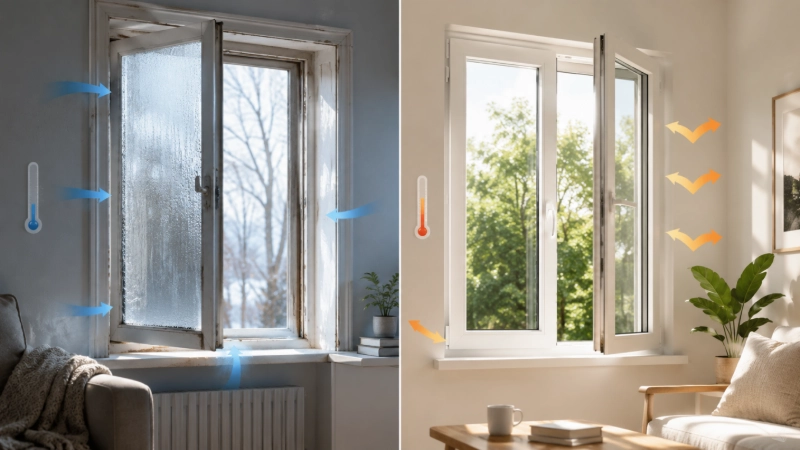
Homeowners are very concerned with energy efficiency. Poor windows are costly to maintain, affecting electric power bills and comfort in the home.
Between the panes of glass, you may see fog. The frame can be a source of drafts. Rooms closer to the windows can be either warmer or colder in summer or in winter.
Air conditioners can also operate longer. Some parts of the house have uneven temperatures.
These indications indicate energy loss by windows. Minor repairs can be of little assistance. Nevertheless, they are normally unable to completely remedy insulation issues.
A replacement of the windows is usually preferable. The new casement windows are more energy efficient, less prone to air leakage and enhance control of temperature.
This results in reduced energy bills and enhanced comforts in the day-to-day.
Why Choose SUMMIT Energy-Efficient Casement Windows?
Energy-efficient windows provide long-term value that repair cannot match. When you repair small, local problems, the solution remains only temporary. They are not effective in enhancing the overall performance of older windows. The heat loss and air leakage continue to take place over time.
Solutions to the problem lie in the design of new energy-efficient windows. They enhance insulation, minimise energy wastage and assist in minimising electricity bills each month. They also save on the recurrent maintenance expenses and enhance comfort indoors on a year-round basis.
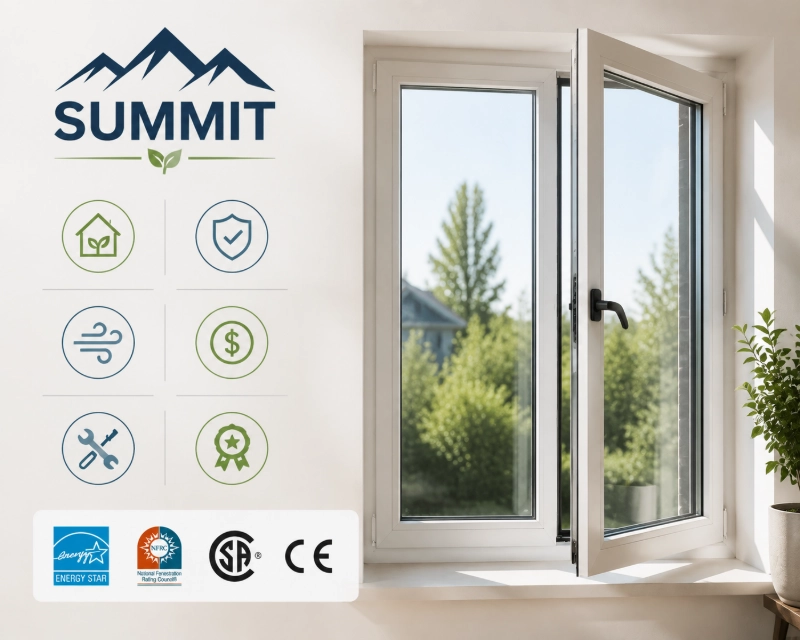
For home window replacement, SUMMIT offers energy-efficient casement windows designed for long-lasting performance, better insulation, and improved indoor comfort. They have ENERGY STAR, NFRC, CSA and CE certifications. This guarantees quality and trusted efficiency standards, which are tested.
They also have high-performance glazing and high thermal insulation. These minimise heat loss and enhance the stability of the temperature indoors. The system of sealing is also strong, thereby reducing the air infiltration.
Homeowners will have the option to have a more comfortable home, less energy consumption and fewer repairs to consider in the future with SUMMIT windows.
FAQ
Short-term repair is less expensive. It merely corrects particular problems, not complete operation, particularly with old windows. There may be more expenses in case of recurring problems. Repair should only be done to small, isolated damage.
When the problems become recurrent or cause discomfort, they require replacement. Symptoms are drafts, fogging or ineffective functioning, particularly in older or coastal houses. These signify system breakdown; hence, replacement is more economical in the long run.
It is true that you cannot resolve all seal issues. You can repair weatherstripping and caulking to guarantee long-term sealing performance. But exposed insulated glass frequently continues to fog. In case the frame is fine, then it is sufficient to repair.
Yes, new windows normally save on bills. They enhance insulation, reduce air leakage, and enhance comfort indoors throughout the year. This reduces the heating and cooling requirements. Upgrade in case there is noticeable energy loss.
The life span of casement windows is normally 15-25 years. Lifespan is based on the material, climate and maintenance. Weather extremes, high seas, or rough weather will diminish the durability, based on the quality of maintenance and installation.
Begin with a professional check-up. It assists in finding actual harm and cost variations with a reliable contractor. This will save on unnecessary expenditures. Request a repair vs replacement quote prior to making a decision.