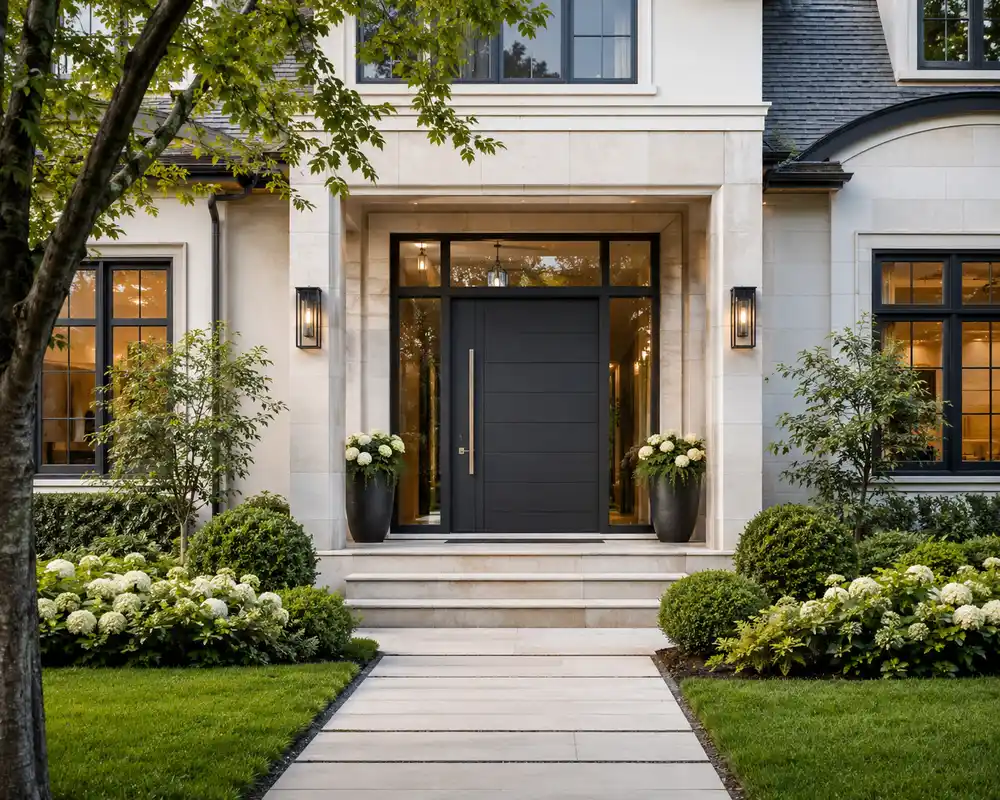
Replacing a front door often begins with one important question: which style and design will best fit your home?
The same color can look ideal on a sample but then conflict with the color of the brick, siding, windows, or the roof when installed. The identical issue occurs with style. A smooth door would not be fitting for a classic house.
The front entry door is one of the most visible features of your home’s exterior. The correct decision can enhance the curb appeal, the initial impression, and make an exterior makeover seem more of a whole rather than a collection of parts.
Choosing the right entry door style and color should not be based only on current trends. Take into account architecture, colors around, climate, maintenance, and day-to-day usage. This guide elaborates on how to compare such factors and make a decision to Choose the Right Entry Door Style and Color that suits your home.
What Are the Most Common Front Entry Door Colors?
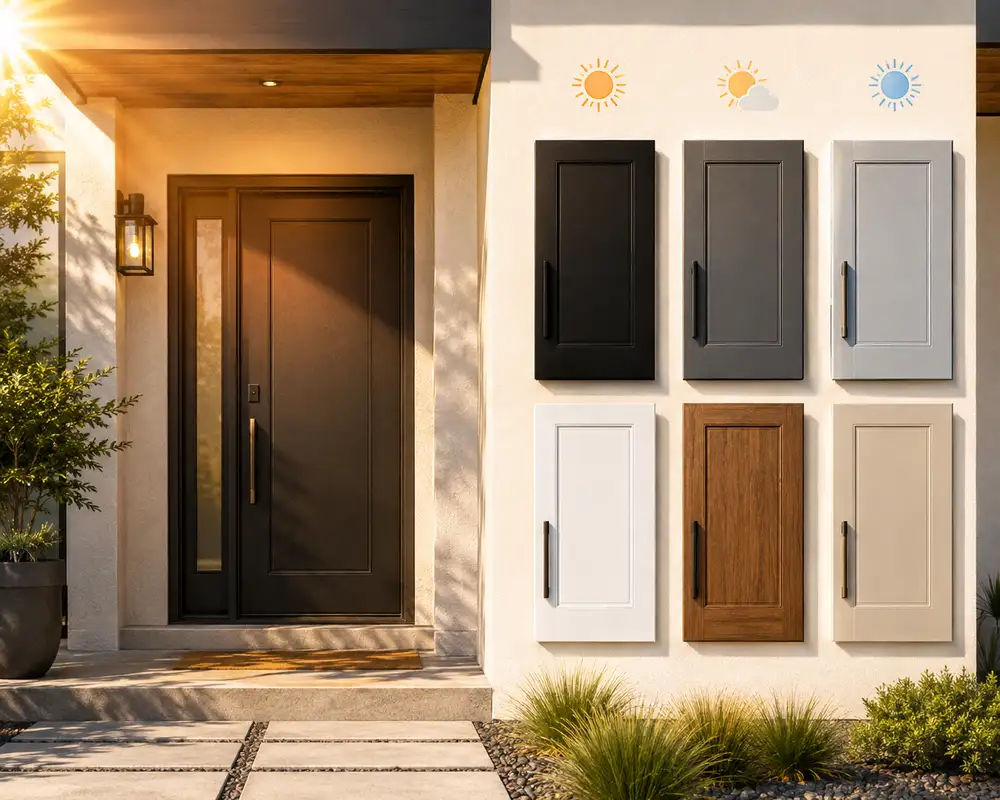
Choosing the right entry door style and color can be challenging , as homeowners can find dozens of different colors on the Internet but cannot envision the end product on their own house. What appears to be a good color in a showroom might not appear to be the same when it is on the brick, siding, roof, or window frames.
The example of a white-walled house with black window frames may be used as an example, where a black entry door is more acceptable. Nevertheless, a house with natural elements of stone or wood can appear to be more harmonized with a wood grain finish.
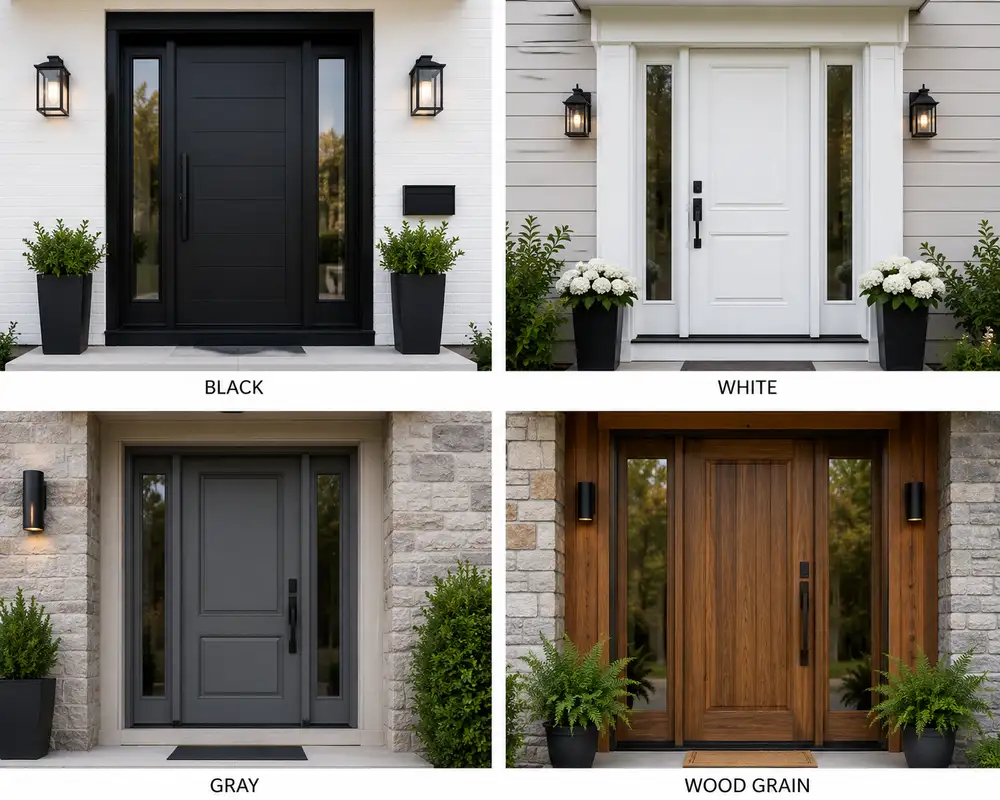
The most popular colors now are black, white, gray, and wood grain. The reason why these colors are still popular is that they can be used in various architectural designs and they can accommodate evolving exterior designs.
Black
Black residential entry doors are appropriate in modern and industrial homes as well as traditional homes. They establish a vivid visual relationship with black window frames, metal details, and the lighter exterior walls.
Nevertheless, black surfaces may exhibit dust, fingerprints, and scratches. A family with kids or a high traffic of guests may require a more frequent cleanup to keep the doors well-appearing.
White
White doors are suitable in coastal, minimalist, and traditional houses. They are easily compatible with light siding, neutral walls, and traditional exterior designs.
A house owner in a desert or in an area that is dusty might observe that dirt would appear sooner on a white surface. Regular cleaning can be used to keep it looking good.
Gray
Gray offers a real-life alternative to black and white. It is properly compatible with stone, concrete, brick, and modern exterior design.
The color is also applicable to homeowners who would prefer an unobtrusive door that does not need to be cleaned frequently as compared to light colors.
Wood Grain
Wood grain finish is suitable in farmhouses, crafts, and traditional houses. They blend in harmony with stone walkways, brick walls, and gardens.
Maintenance requirements depend on the coating, material quality, and local weather conditions. Houses that receive a lot of sunlight or which are in a humid climate require tough finishes for low maintenance entry doors.
| Door Color | Best Match | Matching Difficulty | Maintenance Needs |
|---|---|---|---|
| Black | New houses, white, black window frames. | Medium | Should be cleaned often because of noticeable spots. |
| White | Sea, minimalistic, traditional houses. | Low | Easy to show dirt and requires cleaning up. |
| Gray | Stone, brick, contemporary designs. | Low | To be upheld more easily than lighter colors. |
| Wood Grain | Farmhouse, natural, craftsman exteriors. | Medium | Needs protective finishes to be used in the long-term. |
Rather than just adhering to a temporary trend, compare the modern entry door styles with the exterior features that you already have. The most appropriate decision is the one that appears to be appropriate at present and will be available to your house in the future.
Which Front Entry Door Colors Are More Energy Efficient?
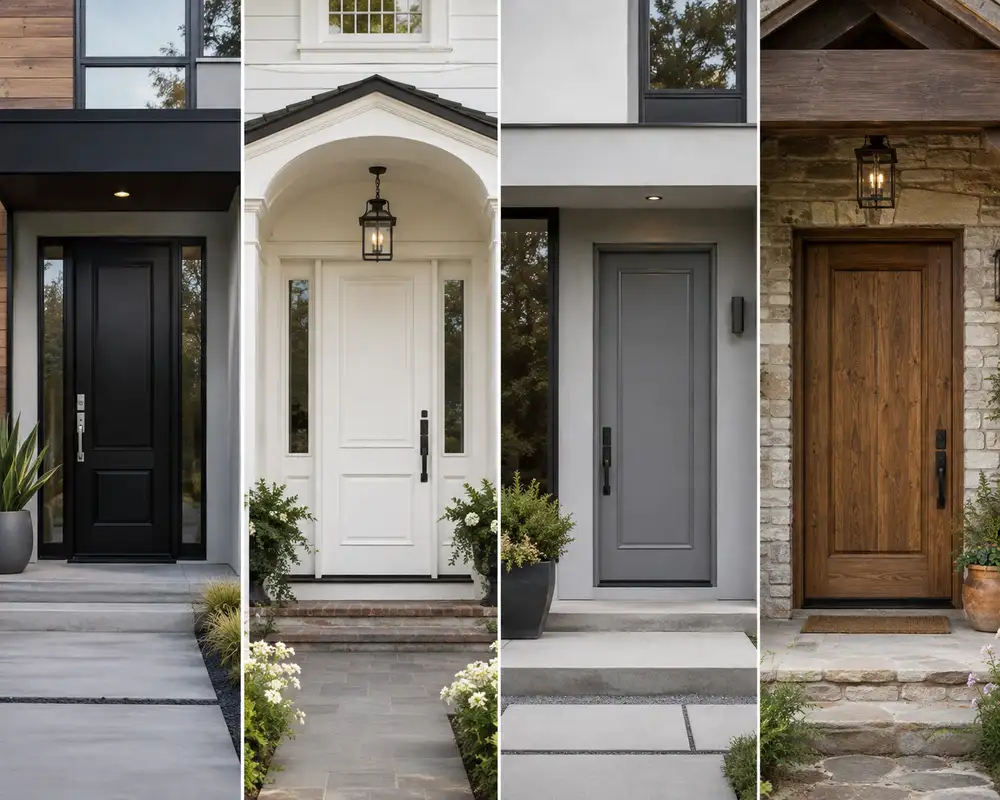
Many homeowners worry that a dark entry door may increase indoor heat during summer. This is one of the concerns of houses in which the entrance is directly facing the afternoon sun.
The color of the door can influence the amount of solar heat the surface absorbs. Dark colors tend to capture more heat as compared to light colors, which reflect sunlight. Nevertheless, color is not the determinant of energy performance.
These factors may be compared before choosing a right entry door style and color to become familiar with the real differences.
| Front Entry Door Color | Heat Absorption | Suitable Conditions | Important Considerations |
|---|---|---|---|
| Black | High | Cold temperatures or dingy doorways. | Add high resistance to hot places. |
| Dark Gray | Medium to High | Moderate climates. | Offers darker look with a bit less heat retention. |
| Light Gray | Medium | Most climates. | Maintains a look and feel of the heat. |
| White | Low | Warm and sunny places. | Scatters sunlight, and might need additional cleaning. |
| Wood Grain | Depends on finish | Different climates. | Apply weatherproofing to withstand weather. |
| Beige/Tan | Low to Medium | Hot weather and natural surroundings. | Corresponds to a great number of outdoor materials. |
In houses where a hot climate is observed, a lighter color can be used to minimize the surface temperature. Nevertheless, the most significant factor is the way the door is designed.
When you want a darker colored entrance, emphasize insulation, energy-saving glass, and good sealing. An appropriate door can give you the look you desire and the functionality your house requires.
Factors to Consider
Surrounding Environment
Your house is not by itself. The immediate area influences the appearance of your entry door when it is installed. Most homeowners choose a color based on a sample but later find out that the color does not fit with the exterior walls, yard, or with the rest of the houses.
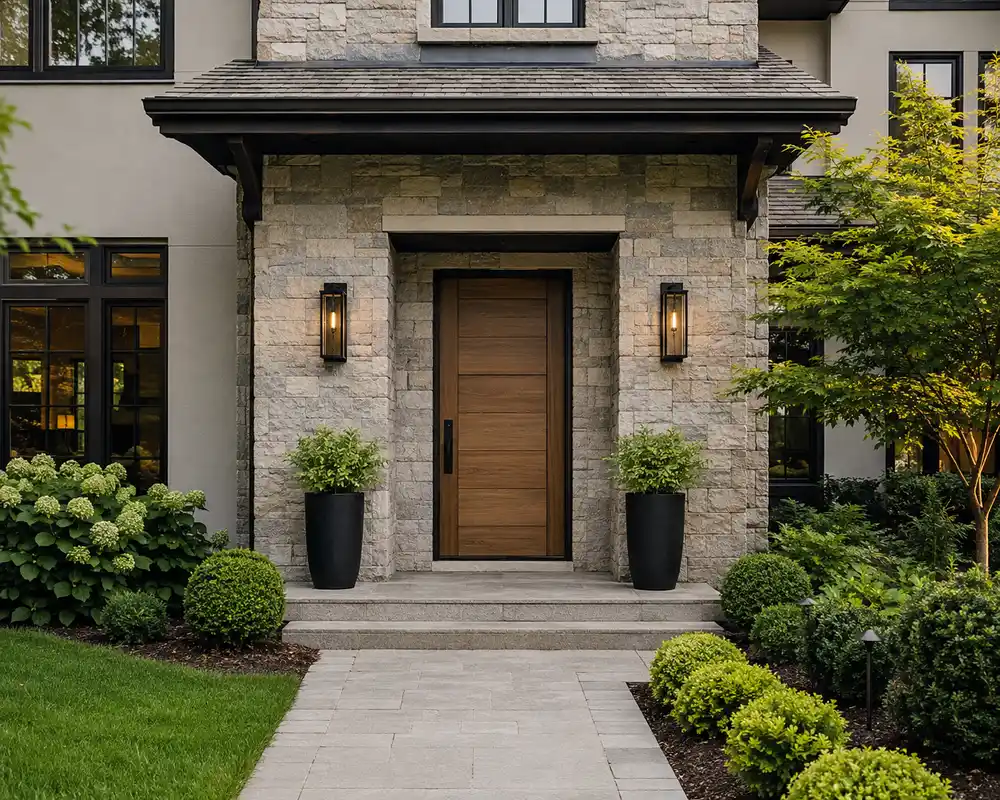
Begin by glancing around the items near your door. A stone exterior can be combined with wood grain finishes, and a home with white siding can be balanced with a darker aluminum door.
The lighting also makes colors vary. Dark colors would be heavier when shaded at the entrance, and some finishes would be brighter when there is strong sunlight.
Even the landscape is important. The final look depends on the green gardens, the concrete walks, and the houses that are adjacent. The harmonious entrance makes a natural flow between the house and the environment.
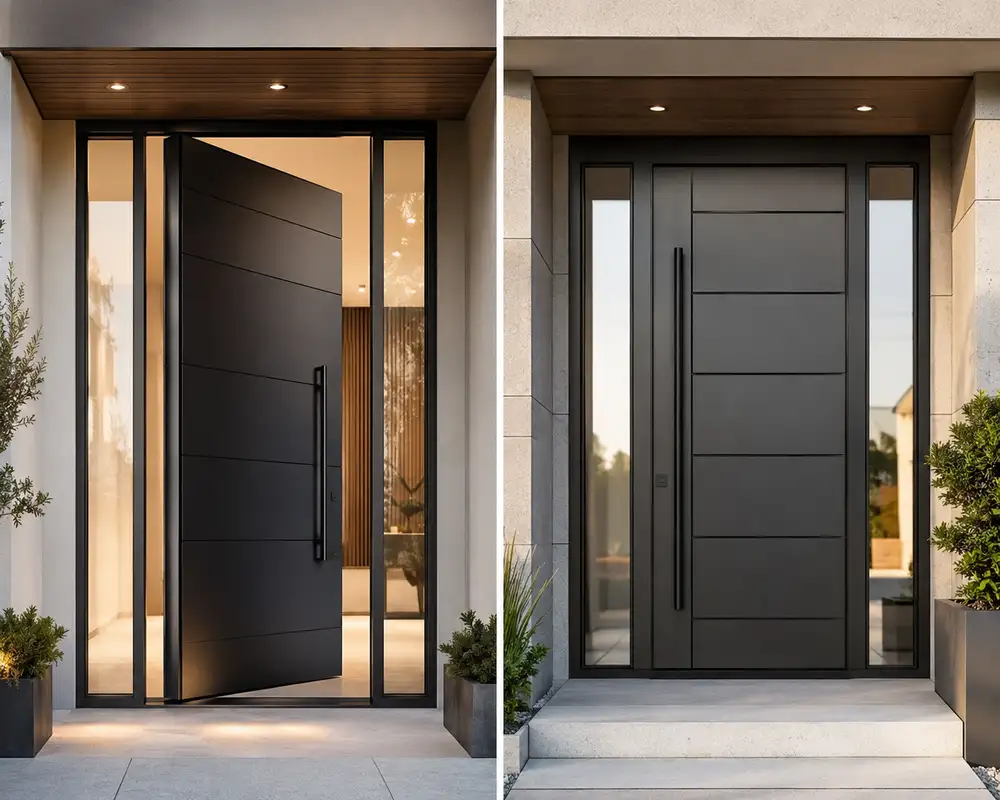
In the case of homeowners who would like to do a complete upgrade, SUMMIT offers customized solutions, such as Aluminum Pivot Entry Doors and Aluminum Hinged Entry Doors, to fit various exterior styles and project demands.
Home Style
The correct entrance door ought to be adapted to the nature of your house. Even a high-quality door can be out of place when selected to work with a design that is incompatible with the architecture.
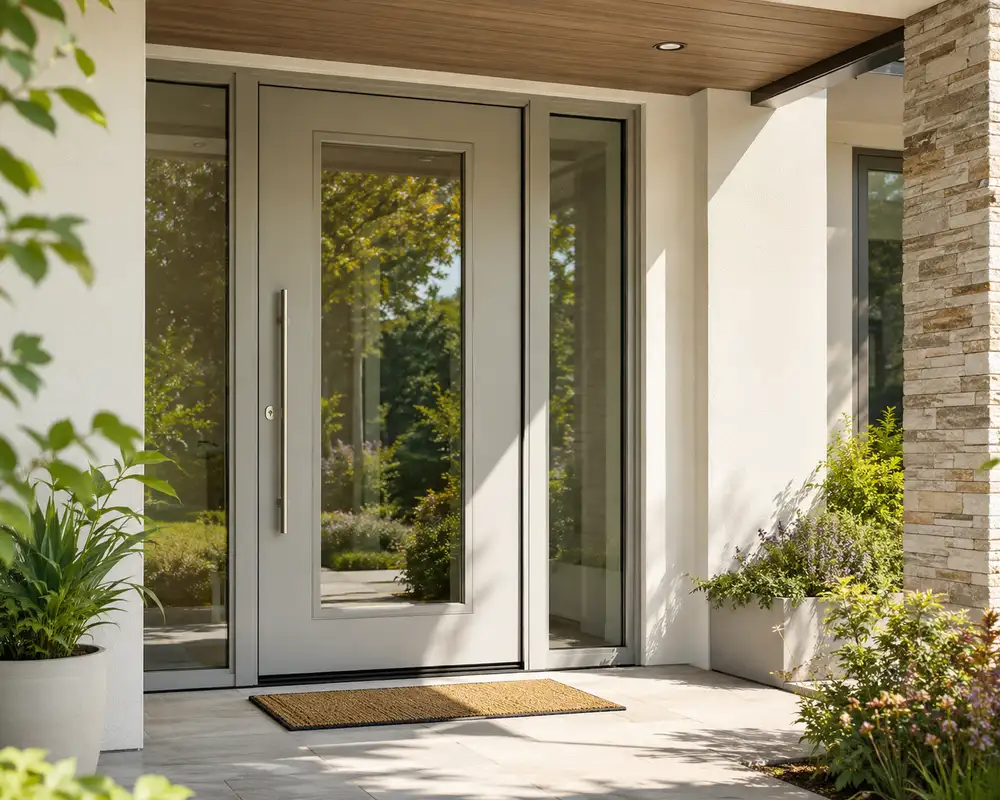
Contemporary houses tend to be compatible with clean styles, massive areas of glass, and aluminum cladding. Simple exterior lines are usually accompanied by black, gray, and neutral colors.
Classic homes generally suit elaborate panels, decorative glass, and traditional finishes. The designs of wood grain can be related to the brick or stone designs.
Farmhouse houses tend to accommodate natural textures, basic hardware, and natural colors. The homes at the coast tend to have lighter colors and designs which permit more natural light.
The roof shape, windows, exterior materials, and existing details are some of the details that you should look at to find out the home style that you are in. These aspects can steer you into an appropriate design.
Using a Color Wheel
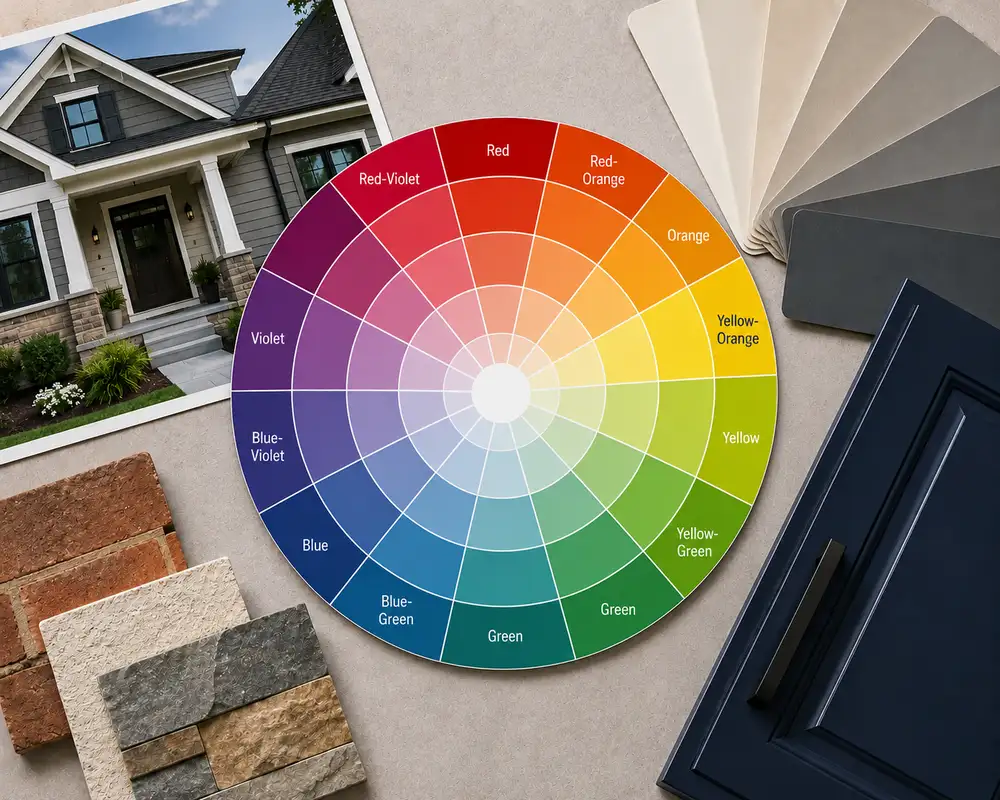
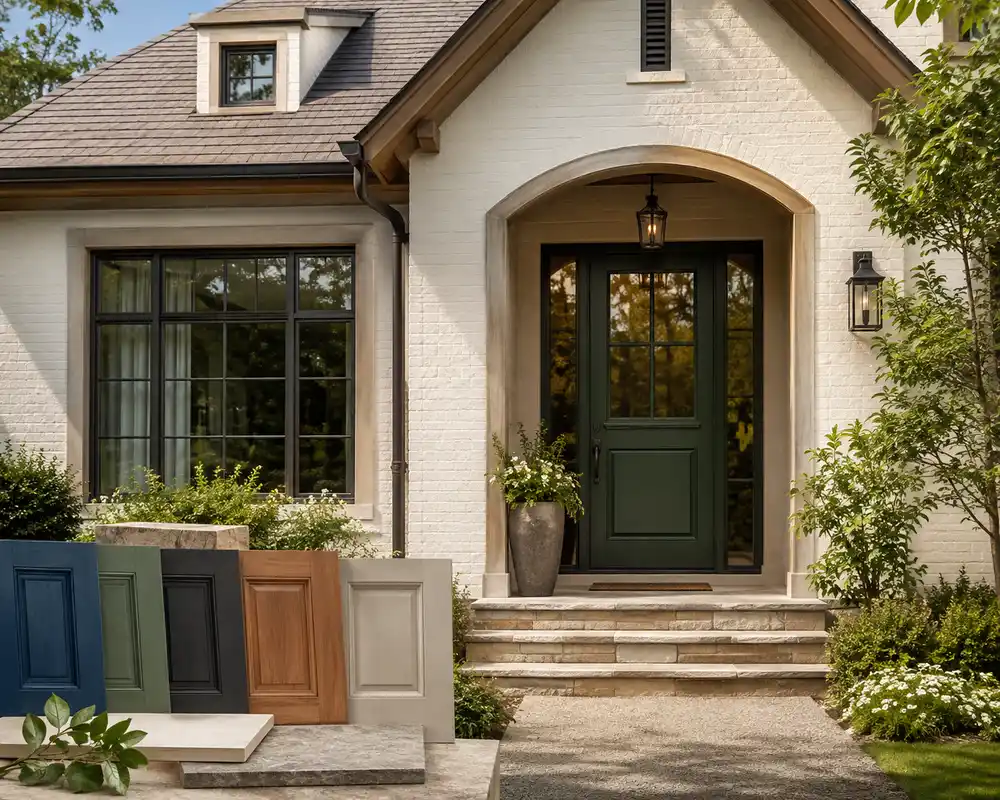
The color wheel can guide homeowners against adopting a door color that contrasts with the rest of the exterior. It offers an easy option of comparing the various shades and then settling on the final choice.
Begin with the main exterior color of your house. This may be brick, siding, stucco, or stone. Next, contrast the potential door colors with smaller details like window frames, roof, and outdoor details.
As an illustration, a beige exterior can be combined with dark brown, green, or maroon red doors. Black, blue, and lighter gray can all be used with a gray home.
A color wheel can be of great help when choosing bold colors. Numerous homeowners are fond of sunny colors but fear that they can become inappropriate in a couple of years. The relationship between colors can be tested to prevent costly errors.
Nevertheless, the color wheel is not all you should rely on. Take samples outside since natural lighting may alter the sample. The aim is to develop a door color that aids the whole exterior design.
Maintenance Requirements
Looking is one thing, but maintenance is also a factor to consider. An attractive door that was installed should also be able to maintain its performance in the changing weather conditions.
Dark colors like black would exhibit fingerprints, dust, and scratches more easily. This might involve additional washing in busy homes or where there is high exposure to the outside.
Light colors have the capacity to look clean, but can easily become dirty. Houses close to the roads or construction sites might require additional repairs.
Durability is also influenced by the choice of materials. Moisture, sunlight, and changes in temperature can be managed in aluminum entry doors, which have protective finishes. Wood surfaces might require further protection in wet areas or in coastal areas.
Always take into account your local weather conditions and time to maintain your design before making a design selection. The need to repair in the future can be minimized by a durable finish, proper sealing, and good construction.
Stay True to Your Own Style
Keeping up with trends may be inspirational, but your entrance door must be appropriate to your home and not just imitate someone else. A trendy color can appear great on the internet but might not be suitable with your exterior material.
Begin with the already existing features. Examine your walls, windows, roof, and landscaping, and then choose a style.
Provided you want to use a bold color, do it sparingly. A bright blue or green door can work when it relates to other aspects of the exterior. A neutral design can be more appropriate if you intend to make modifications to other components of your house in the future.
Consider what the door will be like a couple of years down the line. A balanced design tends to be appealing over a longer period compared to a design that is focused on short-term trends.
Through custom entry doors provided by SUMMIT, homeowners will be able to choose appropriate colors, finishes, and designs that will suit their architectural style, but will also support long-term use.
Conclusion
When one thinks of the design of home, environment, weather conditions, and maintenance requirements, it becomes easier to choose the right entry door style and color. Rather than trendsetting, consider a solution that complements your outward look and is also sustainable.
Before you make a final decision, compare your walls, windows, lighting, and landscape. This will assist you in choosing a durable entry door that appears natural and is not out of place in the long run.
SUMMIT provides tailored entry door solutions with options of colors, glass, finish, and design flexibility. Be it an Aluminum Pivot Entry Door or Aluminum Hinged Entry Door, SUMMIT assists in designing a door that meets the needs of your home.
Call SUMMIT and discuss the appropriate options and identify the appropriate entry door solution for your project.
FAQs
The optimal color will be based on your outer materials, lighting, and architecture. Compare your walls, windows, and roof with the door and then make your decision. Ask for a sample finish; how it appears in daylight.
Yes, an appropriate entrance door can enhance the curb appeal, security, and comfort in everyday life. Select a long-lasting material and good construction to get long-term value on your investment.
Trends are helpful to give ideas, but not to decide. Choose a design that complements your house and will last long.
Yes, a lot of manufacturers provide customization options. Choose from various colors, glass options, finishes, and styles to make a door that meets your needs.