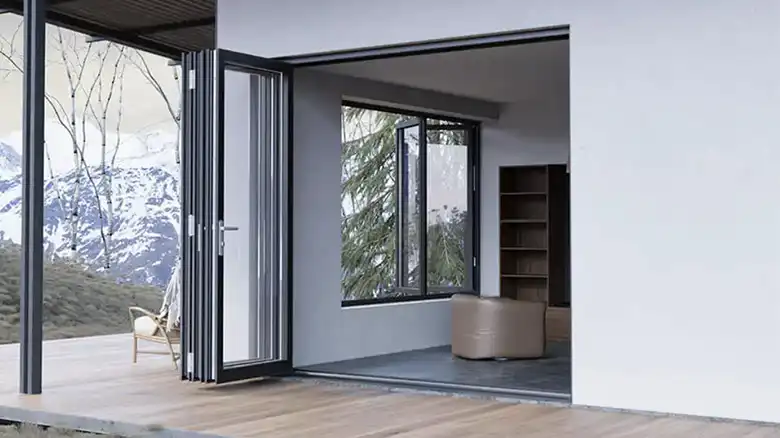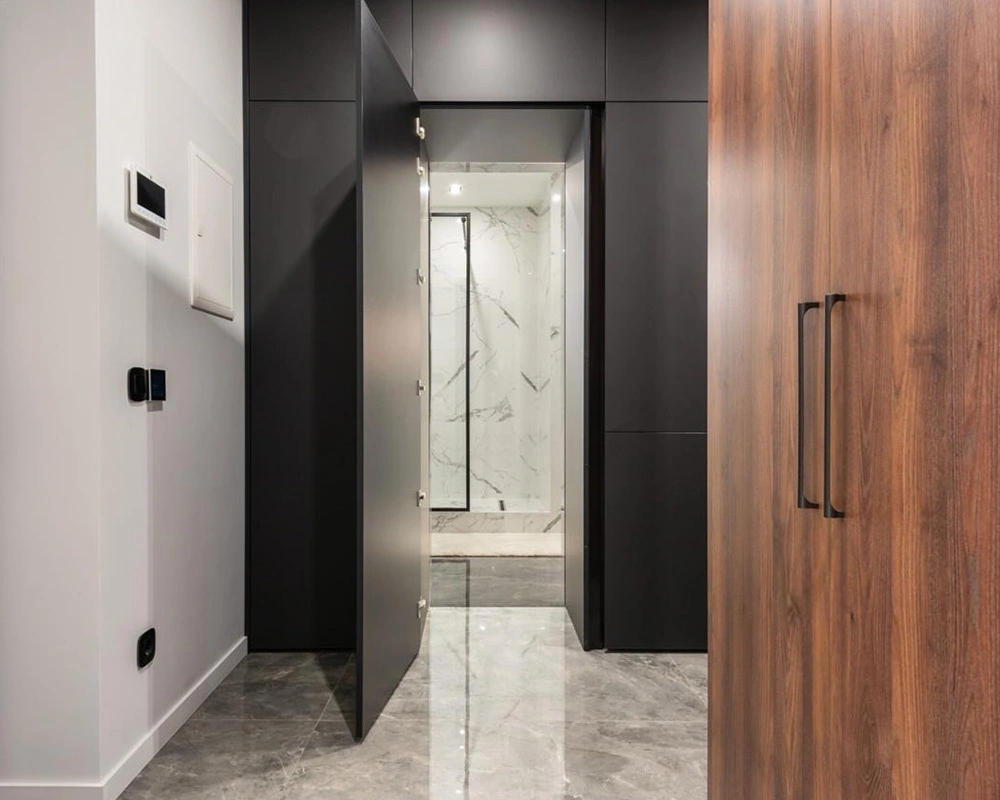
Your front door gets stuck every January. By April it swings fine again, and you stop thinking about it. Then one year it doesn’t loosen up, the hinges start groaning, and you realize the door has been quietly embarrassing the rest of the house for a while now.
So you start looking. And about ten minutes into looking, you find pivot doors.
They’re everywhere in design photos, and yes, they look fantastic. Big slab, no visible pivot hinge system , swings open like the front of a hotel. The question nobody answers in those photos is whether one belongs in your house — or whether a well-built traditional entry door would serve you better and leave money in the budget for something else.
Both types of doors are secure, efficient, and aesthetically pleasing. What separates them is scale, cost, and how much construction you’re willing to do to get there. Let’s get into it.
Pivot Doors
How They're Built
1: The Pivot Instead of Hinges
No side pivot hinges system. A pivot door turns on a vertical pin set in from the edge of the slab — typically eight to twelve inches in, depending on how big the door is. Small change on paper. Big deal in practice.
Think about how hinges operate on a normal pivot door: they are responsible for carrying the entire weight of the door for twenty years, constantly and without any break.
This is why doors start to sag, jam, and drag over time. A pivot carries that load through a different path, closer to the center, which is why these doors can be built enormous and still stay square.
2: What It Lets You Build
It also opens up the material list. Thick solid wood. Heavy glass. Steel. Weights that would chew through a standard hinge door set in a few seasons. Architects love them for that reason, and honestly, so do most people the first time they push one open.
3: The Part Everyone Gets Wrong
A pivot door is only as good as its hardware. Everybody shops the slab. The pivot system is what’s actually doing the work. Cheap out there and you’ll be chasing alignment problems in year three on a door that still looks beautiful, which somehow makes it worse.
Living With One
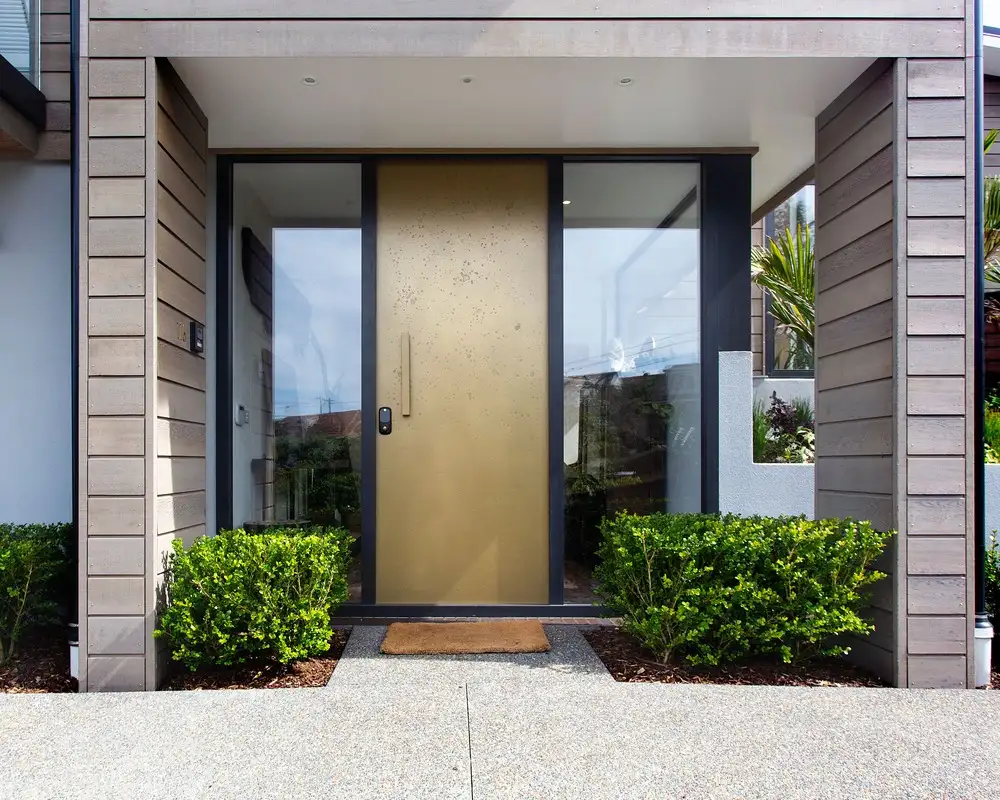
Here’s the part that surprises people. A big pivot door is easy to open. Lighter to the hand than the hinged door it replaced, usually, even when it weighs three times as much. And because it swings through a wider arc, the entry feels bigger when it’s open. Guests notice. That’s most of the appeal, and there’s nothing wrong with wanting that.
The catch is space. Pivot doors need clearance the way a dining table needs clearance — you have to leave room for the thing to move. And fitting one usually means work on the surrounding structure, not a straight swap into the frame that’s already there. Some houses take that easily. Others need framing before the conversation even starts.
Traditional Entry Doors
Why They're Still the Default
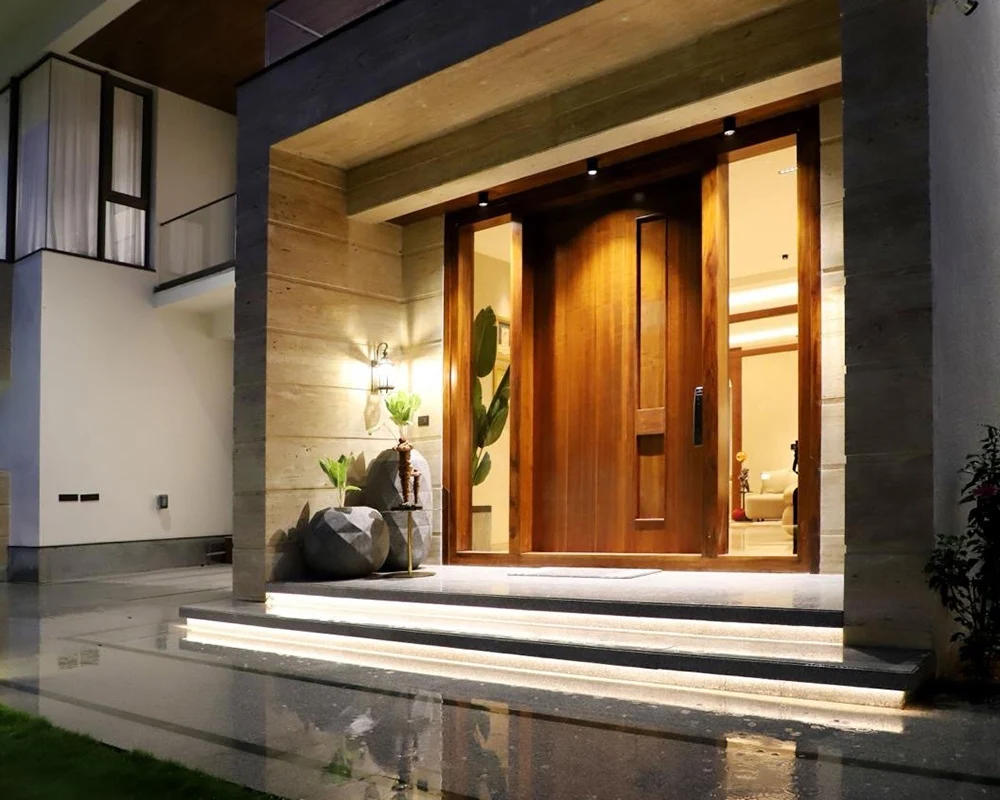
Hinged doors haven’t stuck around out of inertia. They fit the openings builders already frame, they hang on hardware every supplier stocks, and installing one rarely means touching the wall. When you’ve got a contractor booked for three days and not three weeks, that’s the whole ballgame.
And “traditional” doesn’t mean tired. Entry doors come in fiberglass, steel, wood, and aluminum, and the material is what drives performance — not the hinges. A vinyl entry door hits different numbers than an aluminum entry door, and an insulated entry door core changes both again – the same way a wood pivot door and a glass pivot door behave nothing alike despite hanging on identical hardware. Material first, hinge second.
Steel and fiberglass entry doors in particular put up strong insulation numbers without custom pricing, which is worth a look if you’re trying to get the heating and cooling savings to pay for part of the job.
Where They Hold Up, and Where They Don't
There’s a belief floating around that standard doors are the soft option on security. Not true. Multi-point locking system, reinforced frames, impact-rated glass — all of it is available on ordinary entry doors, usually as a checkbox upgrade rather than a custom build.
And when something does eventually need fixing, parts are cheap and any contractor with a screwdriver knows the system.
Where they fall short is presence. A great standard door looks like a great standard door. It’s not going to stop anyone in the driveway. If that reaction is specifically what you’re buying, no amount of good hardware on a hinged door gets you there, and you’ll know it every time you pull up.
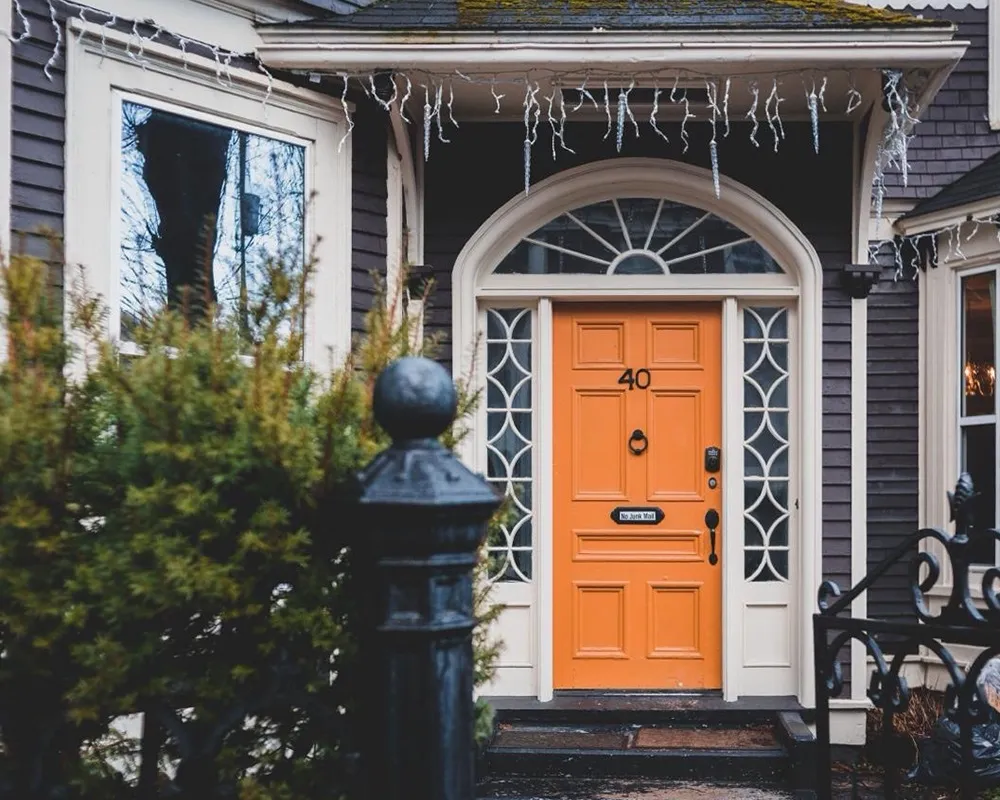
Key Differences Between Pivot Doors and Entry Doors
Side by side, the real differences are these:
| What Matters | Pivot Door | Traditional Entry Door |
|---|---|---|
| How It Opens | Turns on a pin set in from the edge | Swings on hinges down one side |
| How Big You Can Go | Very big. That's basically the point | As big as hinges can carry, which is plenty for most houses |
| What People Notice | The door | The house |
| Space It Needs | Room to swing, plus room to stand out of the way while it does | Fits the opening you already have |
| Getting It Installed | Often means opening up the framing first | A day, sometimes less |
| Security | Strong, assuming the engineering is right | Strong, with multi-point locks — same as anything else |
| Efficiency | Very good with a proper thermal break | Also very good, with an insulated core and seals that seat properly |
| Upkeep | Check the pivot hardware now and then | Hinges and weatherstripping. Anyone can handle it |
| Cost | Bring a bigger budget, and budget the install separately | The easiest place to save money on this project |
| Down the Road | Helps sell a modern house | Never a mistake |
Pivot doors win on scale and drama. Entry doors win on cost, speed, and never having to think about them again. Both are legitimate reasons to buy a door.
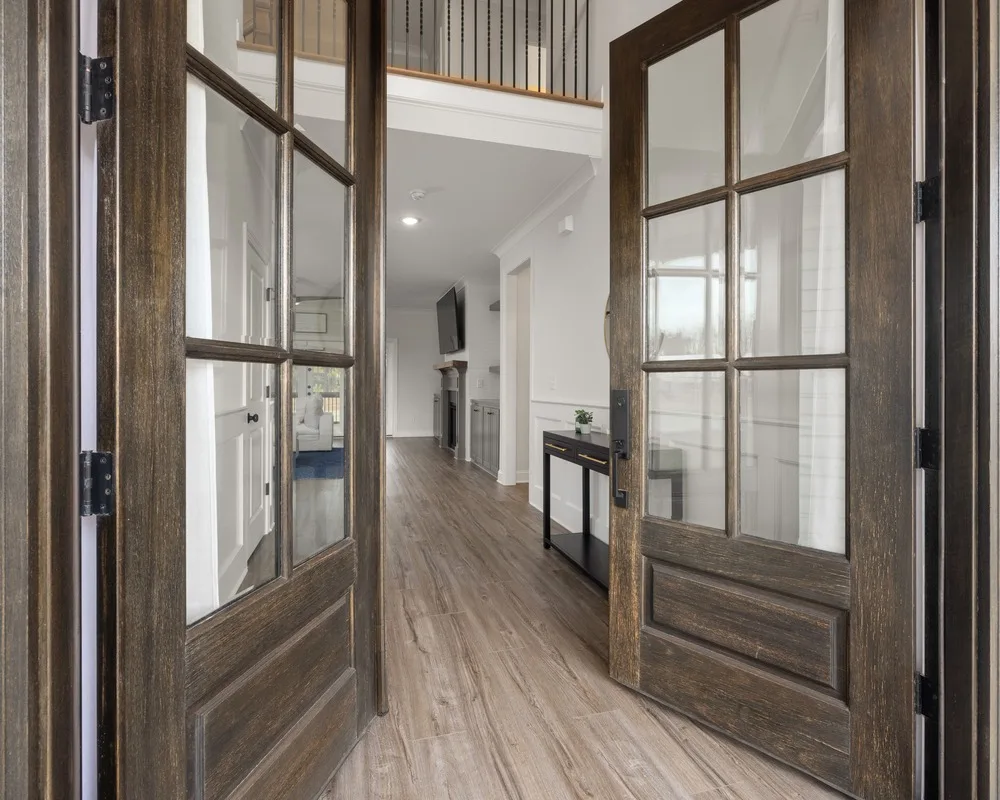
Which One Is More Suitable for Your Home?
Got room at the entry and a house that leans modern or custom? A pivot door will do something for your front elevation that a standard door simply can’t. That’s the case for one: when the entrance is meant to be a feature, not just a way in.
Working with a conventional opening, a fixed number, or a contractor who’s booked solid next month? Traditional entry door, and you’re giving up very little. Security and thermal performance are solved problems on a good hinged door — they have been for years.
Either way, check the certifications before you sign anything. Energy Star, NFRC, CSA, CE. Those mean somebody tested the door who wasn’t also trying to sell it to you. Everything else on the spec sheet is a claim.
SUMMIT is worth pricing on both sides of this. A SUMMIT pivot door is engineered to hold alignment at large custom sizes — which, per the hardware point above, is the part that actually determines whether you’re happy in five years. A SUMMIT entry door brings the same thermal break entry door in a format that drops into a normal opening. You’re picking a style, not trading performance for one.
Conclusion
There’s no winner here in the abstract. There’s only what fits your house, your opening, and your number.
Pivot door if you want an oversized, architectural entrance and the space to support it. Traditional entry door if you want proven, quick to install, and easy on the budget without giving up security or efficiency.
One piece of advice regardless of which way you lean: buy from someone who makes both. A company that only builds pivot doors will always find a reason your house needs a pivot door.
SUMMIT manufactures both, with thermal break technology built into the line, so the recommendation you get has something to do with your actual opening. Send them your measurements and see what they say.
FAQs
No. Security comes from the lock, the frame reinforcement, and whoever installed it. How the door opens barely factors in.
Usually, yes. Custom engineering, heavier materials, and a longer install all add up — and the install is the part people forget to budget for.
No. It needs swing clearance and real structural support. Some homes need modification first, and that work should be priced before you fall in love with a slab.
A little. The pivot hardware wants a check now and then to stay aligned. Hinges are simpler and every contractor already knows them.
Both do fine with thermal break construction and decent weatherstripping. The materials matter far more than whether it pivots or swings.
A good pivot door lifts curb appeal, especially on modern homes. But a quality traditional door appeals to more buyers, so it's not the slam dunk it sounds like.
Look for marks from Energy Star, NFRC, CSA or CE. Independent testing, not in-house marketing.
A manufacturer that builds both, like SUMMIT, can look at your entryway and tell you which one actually works there — including when the answer is the cheaper one.