Your neighbor’s patio umbrella ends up in your living room. Not through the door. Or it’s quieter. The first real storm of the season rolls through overnight; you sleep through the whole thing, and in the morning there’s a puddle sitting on a sill that has never once leaked in eight years.
Nothing broke. Nothing made a sound. There’s just water where water has no business being, and now you’re standing there in your socks at 7am wondering how long that’s been happening.
And here’s the part that gets everybody: nobody thinks about their glass windows and doors until there’s a cone on the weather map. By then your options are duct tape and hope.
Every decision that actually helps gets made months earlier, on some boring Saturday when it’s 74 and sunny and this is the last thing on your mind.
In this article we will discuss what storms actually do to windows and doors, how to tell whether yours are up to it, and what’s worth the money.
What Damage Can Storm Weather Cause to Windows and Doors?
1. Structural Damage
Forget the single dramatic gust. That’s the movie version. What actually kills a frame is sustained pressure. Wind leaning on the same window for six hours — push, ease off, push again.
Frames don’t snap under that. They creep. Which is why you almost never catch it happening. You catch it later, when the back door gets fussy about latching. Or there’s a whistle on windy nights that you can’t locate and eventually stop hearing.
And the verdict is always the same: hardware’s worn out. New strike plate. Adjust the latch. Fine for another season.Except the hardware was never the problem. If the frame has moved, adjusting the latch doesn’t move it back — it just makes the symptom quieter, which is worse, because now you’re not looking.
2. Glass Damage
Wind almost never breaks a window by itself. It’s the delivery service.
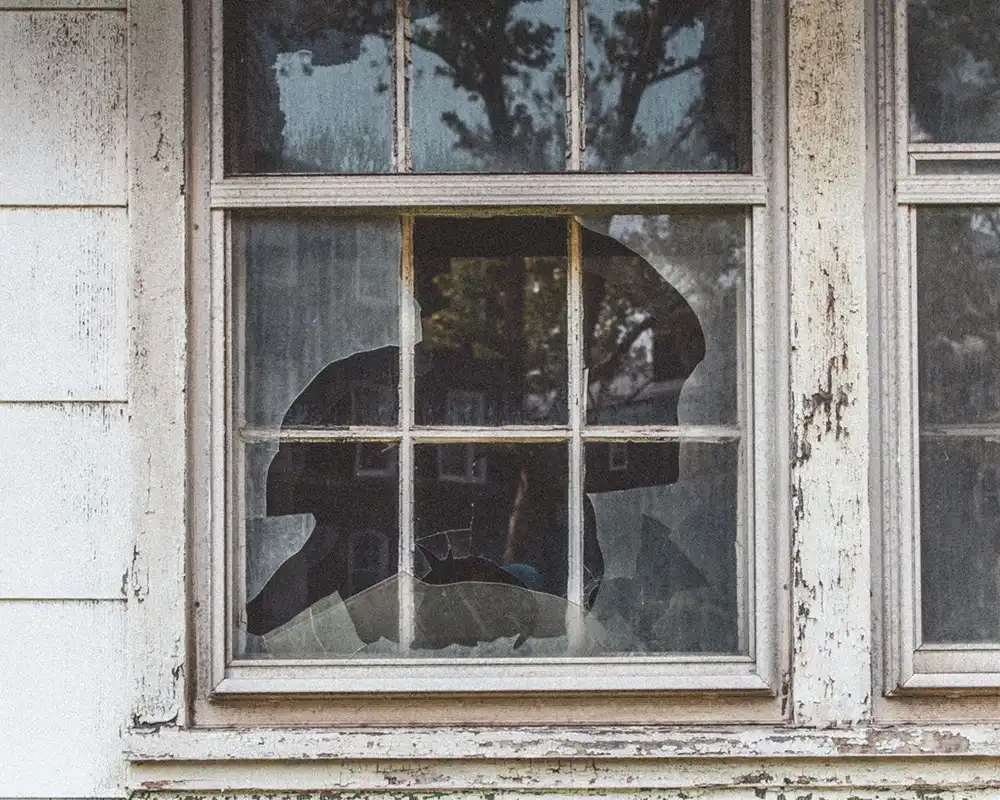
A branch. Somebody’s fence panel. A strip of roof flashing off the house on the corner, doing about sixty. Standard glass gets no vote in that conversation. And the broken pane is where it starts, not where it ends.
Now you’ve got glass across the floor, people walk on barefoot and a hole in the side of your house with rain coming through it sideways at three in the morning. Flooring. Drywall. The sofa you waited eleven weeks for.
The glass ends up being the cheapest line on the invoice, and it isn’t close. Which is the whole argument for impact-resistant glass — it’s one of the few things you buy once that puts a hard ceiling on how bad that night is allowed to get.
3. Interior Damage and Water Leakage
Sometimes storm damage doesn’t break anything at all. It just starts to smell. There is something odd in the extra room that wasn’t present last week. A patch of the wall under a window is a bit different in color but can be noticed only in the late afternoon light when searching for it. It is a seal, but not a glass one.
Failing weatherproofing doesn’t pour. It wicks. Finds a gap you’d never spot from inside the room and works at it, quietly, for a season or two.
By the time it’s obvious you’re not talking about a strip of weatherstripping anymore. You’re talking about mold or a soft patch in the framing and someone cutting a hole in your wall to find out how far it traveled. Same starting point. Completely different number at the bottom of the page.
Are Your Glass Windows and Doors Suitable for Storm Weather?
1. Windows and Doors: Materials and Structure
Before glass comes into it at all, what’s the frame?
Aluminum windows and doors
Aluminum windows and doors are the best strength-to-weight ratio of the mainstream options. That’s the entire reason you see so much aluminum wherever the wind maps look bad.
Vinyl windows and doors
Vinyl windows and doors are cheaper and do not rust, which is an actual plus. However, vinyl has a problem with heat and stresses and will lose rigidity, which is worth considering if living in a hot stormy place before signing the deal.
Fiberglass
Lands between the two. Durable, and it moves less with temperature than vinyl does.
None of that makes one of them the right answer. A house four blocks off the water has a different problem than one twenty miles inland, and your local code has usually already figured that out for you. The job is matching the frame — and the structure holding it — to what your specific address deals with.
Thermal break aluminum windows and doors
The thermal break is a non-conductive barrier running through the frame, and it’s doing two jobs at once. It adds strength. And it stops the frame from conducting heat straight through your wall like a metal spoon left in soup.
One of those jobs matters during the storm. The other one matters the other 360 days.
SUMMIT builds around it across the whole range — casement windows, casement doors, sliding windows, sliding doors. So you’re not buying storm performance and then paying for it every month on the energy bill.
2. Glass Types
Frame gets you halfway. Glass is the rest, and it’s where the money changes the outcome most.
Standard annealed glass
The baseline and the worst version of every story. No meaningful impact resistance, and it breaks into long, sharp pieces — the ones you’re still finding behind the bookcase in October.
Tempered glass
Stronger, and when it goes, it goes into small, blunt chunks instead of blades. Much better if someone’s standing nearby. But it can still fail all at once, and when it does, the entire pane leaves at the same time.
Laminated glass
This is the one that changes what happens next. Two panes are bonded around an interlayer, so it cracks instead of shattering and usually stays in the frame after a hit.
Spiderwebbed window you replace next Tuesday, versus an open hole and a wet living room. That’s the real choice, and it gets made at the quote stage, months before anybody knows a storm is coming.
SUMMIT carries standard, laminated, and low-E across the window and door lines, so being in a serious risk zone doesn’t mean choosing between storm-resistant windows and normal things like UV control and insulation. You get the laminated glass and the low bills.
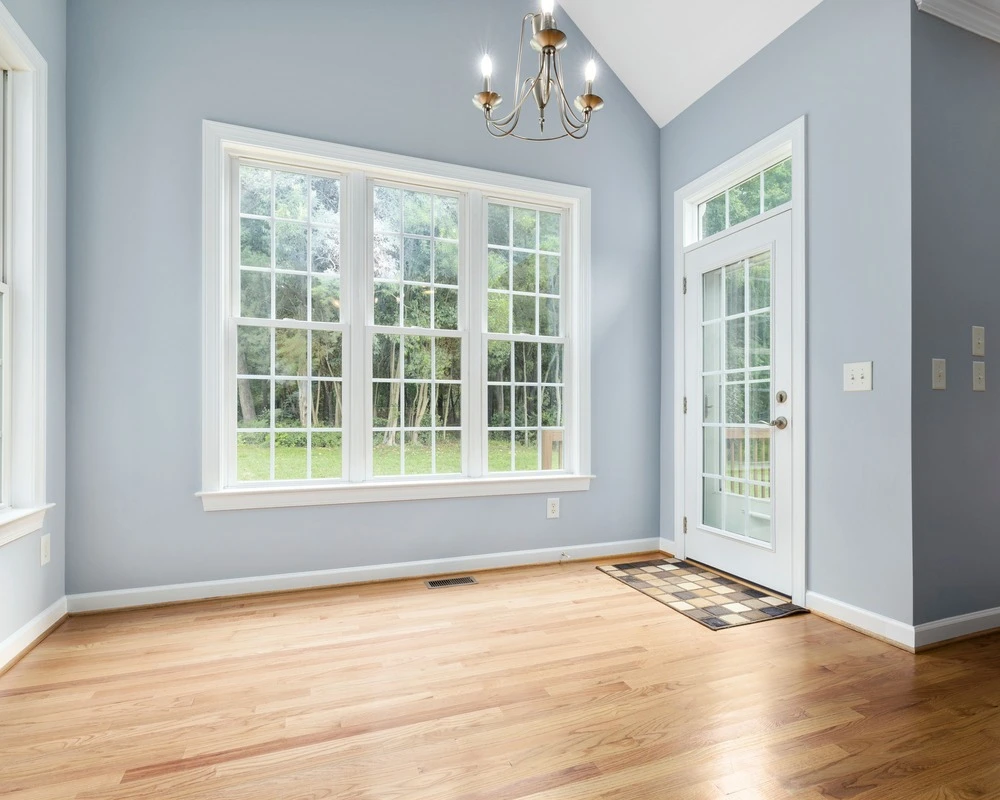
3. Certifications and Performance Ratings
Anybody can print “storm-rated” on a brochure. Nobody checks. That’s why the tested numbers exist.
Start with the Design Pressure (DP) rating — how much wind load the unit takes before it fails. Measured, not claimed. Higher is better.
Small thing worth doing: ask the salesperson for the DP rating of the exact unit they’re quoting. If they can’t produce it, you’ve learned something useful for free. Then water resistance testing, which is how well it keeps rain out under pressure. Not a garden hose on a calm afternoon. Pressure.
After that, NFRC and ENERGY STAR, covering how it performs in ordinary weather. Both mean somebody independent tested it. Most of SUMMIT’s window and door products carry Energy Star, NFRC, and CSA certification — which lets you compare numbers instead of adjectives.
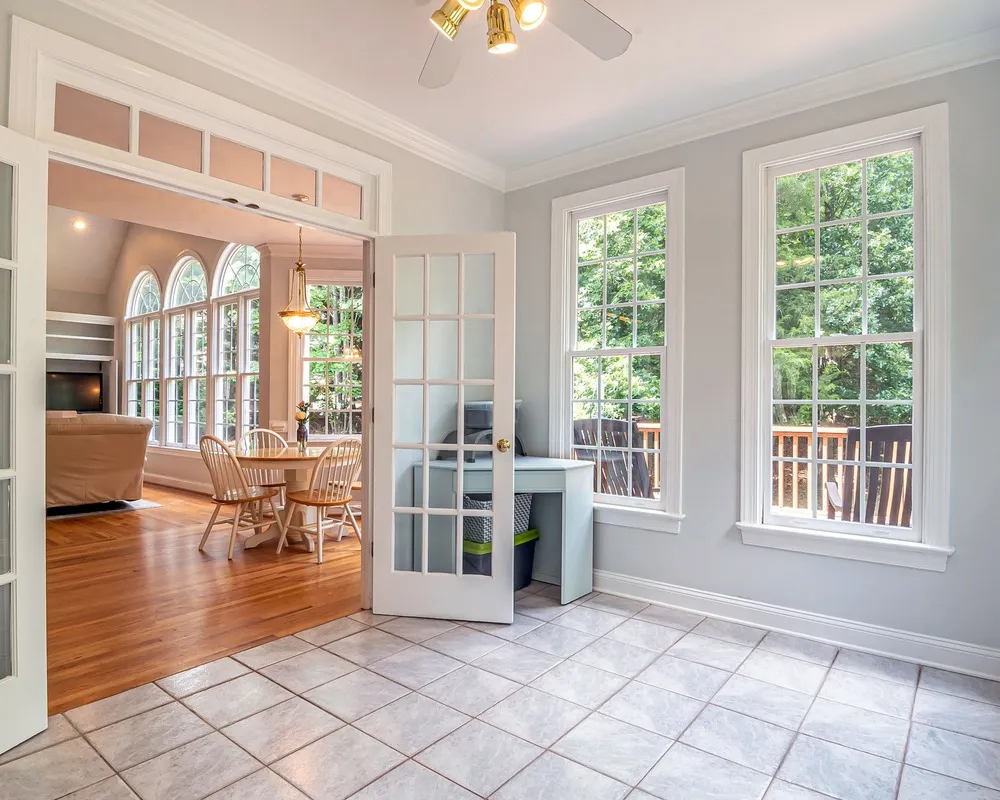
More Tips for Protecting Windows and Doors
1.Inspect the Surrounding Environment of Windows and Doors in Advance
Walk your property before the season. And don’t look at the windows. Look at everything near them. Patio chairs. Terracotta pots. The grill cover. That branch that’s been getting closer to the guest room window every summer and that you’ve been meaning to deal with since 2026. All of it is ammunition once the wind gets up.
Moving it into the garage takes one afternoon and costs nothing, which makes it the single best return in all of hurricane preparedness. There is no other step on this list with that math.
2. Install Storm Shutters or Window Film
Good windows are one layer. Shutters and film are a second. Shutters are simple: a physical barrier, nothing reaches the glass.
Film works differently. It doesn’t prevent a break — it holds the pane together afterward, which cuts the injury risk and keeps most of the weather on the correct side of the wall.
Neither one turns a weak window into a strong one, and anyone telling you otherwise is selling. What they buy you is margin. Margin is worth a great deal at three in the morning.
3. Perform Regular Maintenance and Inspections
Even good windows want to look at them now and then. Seals harden and shrink. Hardware backs off maybe a quarter turn per year. A gap you’d have laughed at in year one is a real leak by year five.
New doesn’t get a pass either. Performance slides quietly, long before anything looks wrong from where you’re standing.
Once a year: check the weatherstripping, work every lock and latch to make sure it fully engages, and run your hand around the frames, feeling for staining or softness. Twenty minutes. Same list as the gutters, same weekend as the gutters.
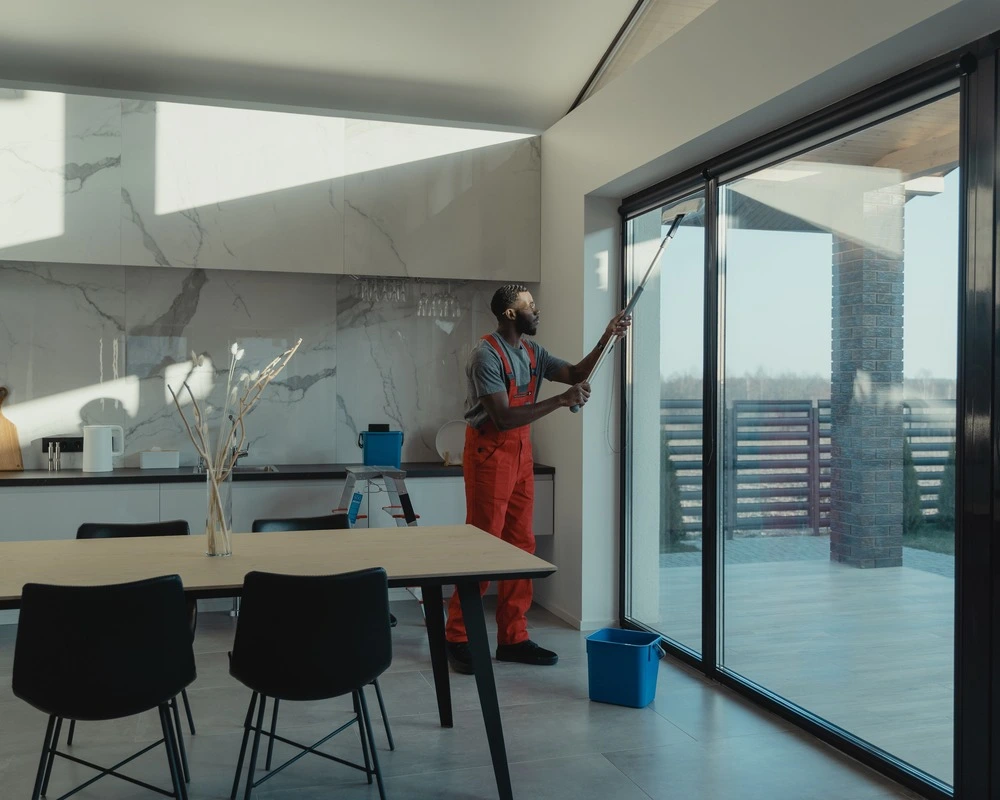
Conclusion
Storms almost never take a house down in one move.
What actually happens is a frame that softened two seasons ago, a seal that quit last spring, and glass that was never rated for impact to begin with. Then one storm shows up and collects on all three at once.
Knowing where you stand means knowing what your windows and doors were built to handle. “Nothing’s broken yet” isn’t the same as ready. It’s just a smaller sample size.
If you’re not sure — and most people aren’t, which is normal — SUMMIT can tell you. Thermal break aluminum construction, laminated glass where it’s needed, and certifications that back up what’s printed on the sheet.
Request a quote from SUMMIT and get an answer based on where your house actually sits and what it actually faces.
FAQs
Look for a Design Pressure (DP) rating and an NFRC or ENERGY STAR label on the unit itself. No label, no paperwork, no idea who installed them? Get somebody to look at the frames and glass before the season, not during it.
It beats standard glass. But laminated is what you want if you're serious about it, because it tends to stay in the frame after an impact instead of leaving you with a hole.
Aluminum has the better strength-to-weight ratio, which is why it dominates in high-wind regions. Vinyl is still a perfectly good, cheaper choice where the risk is lower — it's a budget decision, not a quality one.
No. Shutters protect the glass and do absolutely nothing for a frame or seal that's already going. Use both, not one.
Once before the season, once after anything major. A lot of storm damage stays invisible until you go looking for it on purpose.
Yes, and it's the one people underestimate every time. Water past a failed seal turns into mold and rot over a couple of years without a single pane ever breaking.
Energy Star, NFRC, CSA, CE, and a documented DP rating. Those come from independent testing. The rest of the brochure is copywriting.
Before. Always before. Wait, and you're paying emergency prices, sitting in an install queue behind your entire neighborhood, and hoping the storm that finally convinced you isn't also the one that does the damage.